.png)
.png)
.png)
-1.jpg)
Gunter Van Craen - CDIO at Bekaert - Embracing Digital Transformation


.jpg)
Belgium Dec 4, 2025 Invitation Only Physical english
CIONET is committed to highlighting and celebrating female role models in IT, Tech & Digital, creating a leadership programme that empowers and elevates women within the tech industry. This initiative is dedicated to showcasing the achievements and successes of leading women, fostering an environment where female role models are recognised, and their contributions can ignite progress and inspire the next generation of women in IT.
Read More.png)
International Dec 9, 2025 Public Virtual english
The CIONET Awards 2026: Part 1, the premier celebration of excellence in digital mission and leadership. During this event the spotlight falls on two of the most critical arenas in modern enterprise: Applications & Architecture and Data & AI. Prepare for a dynamic session where each nominee will present their groundbreaking achievements.
Read More
Netherlands Dec 9, 2025 Invitation Only Physical english
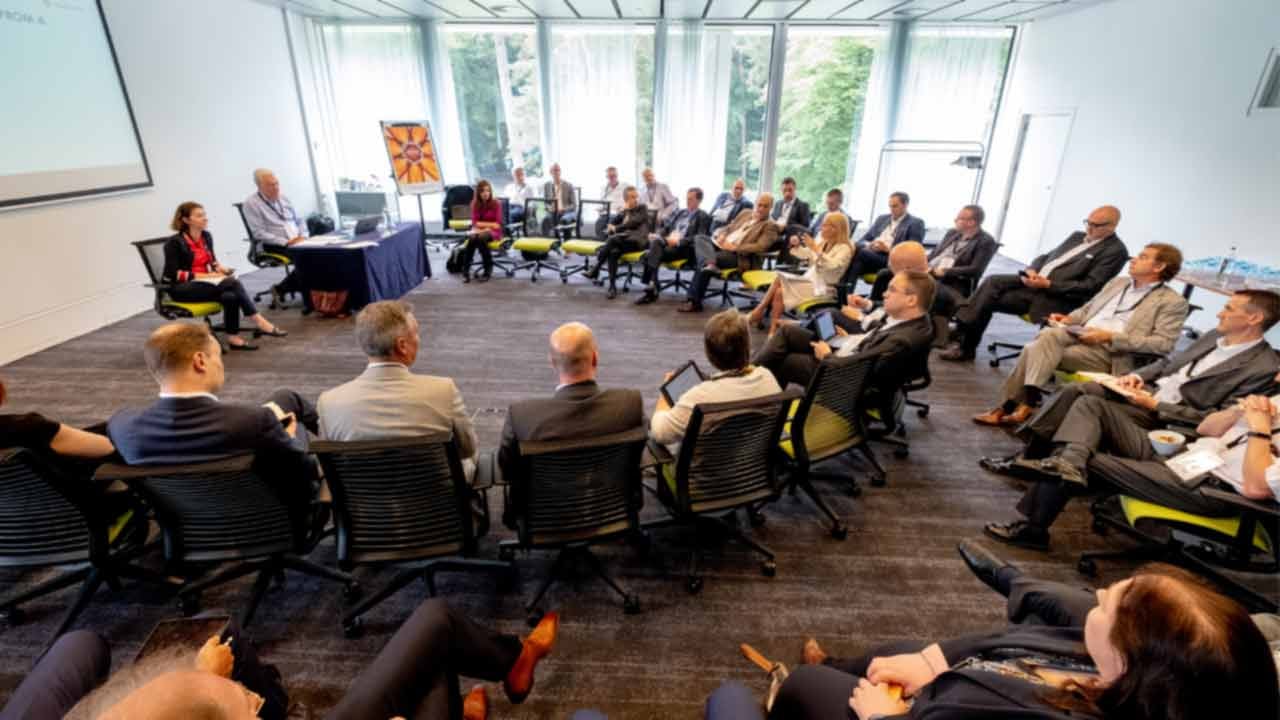
Digital transformation and ongoing economic uncertainty are intensifying the pressure on IT leaders to do more with less. In this environment, gaining precise control over IT costs—while continuing to deliver effective, efficient, and innovative technology operations—is more critical than ever. At this exclusive CIONET Executive Roundtable, hosted in partnership with It’s Value, we will explore how Technology Business Management (TBM) principles can help CIOs and IT leaders make data-driven financial decisions that drive measurable business value. Key Discussion Themes Turning data insights into smarter IT investment decisions Setting priorities for cost optimisation and maximising ROI Quantifying and communicating the business value of IT initiatives Evaluating the principles of FinOps and the implications of public, private, and hybrid cloud environments for cost management Embedding effective change management to drive adoption and alignment Achieving tangible business outcomes from AI initiatives while maintaining fiscal discipline The evening will also feature a fireside chat with Sunil Anand, Global Head of Technology Business Management at National Grid. Sunil will share practical lessons and key milestones, retracing the National Grid cost management journey. This dinner offers a unique opportunity to: Exchange experiences with peers facing similar challenges Gain insights from TBM experts and industry practitioners Reassess your own IT financial strategy in a relaxed, collegial setting Join us for an evening of insight, discussion, and connection—designed to help you strengthen IT’s role as a true business value driver.
Read More.jpg)
Italy Dec 10, 2025 Invitation Only Physical italian
Questa roundtable esclusiva offrirà a CIO, CISO e Leader di ITOps/Engineering un confronto diretto per individuare le migliori strategie di Innovazione che, attraverso l'observability, ottimizzino il Return of Investment.
Read More.jpg)
Belgium Dec 11, 2025 Country Members Physical english
Imagine being able to monitor, simulate, and optimise an entire city, factory, or supply chain in real time. Next-generation digital twins are making this vision a reality, transforming how we manage and understand complex systems. By creating dynamic virtual replicas of physical assets and processes, digital twins allow organisations to predict issues, optimize performance, and make data-driven decisions with unprecedented accuracy.This event will explore how digital twins are being used across industries to revolutionize the way we operate and maintain large-scale, intricate systems—whether it’s the infrastructure of a smart city, the efficiency of a factory floor, or the resilience of global supply chains.Examples of Digital Twins in Action:Smart Cities: Urban planners can use digital twins to simulate traffic flow, monitor energy usage, or predict the impact of weather events on infrastructure. This enables cities to optimize resources and improve the quality of life for their citizens.Factories of the Future: Manufacturing plants are leveraging digital twins to monitor equipment in real time, prevent downtime, and optimize production lines. With predictive analytics, factories can avoid costly breakdowns and improve overall efficiency.Supply Chain Management: Complex supply chains, spanning continents and industries, can be modeled as digital twins to track shipments, simulate disruptions, and optimize logistics. Businesses can reduce inefficiencies and respond faster to market demands.Key Themes:Real-Time Monitoring and Simulation: How digital twins provide real-time insights into complex systems, allowing for dynamic response and optimization.Predictive Power: Leveraging AI and data analytics, digital twins help organisations predict and mitigate issues before they happen, from equipment failures to supply chain bottlenecks.Scalability Across Ecosystems: Digital twins aren’t limited to individual assets—learn how they can be scaled across entire ecosystems like smart cities or global supply chains for maximum impact.Building Trust and Security: With digital twins handling critical infrastructure and sensitive data, what are the security and governance frameworks needed to ensure trust in these virtual systems?Why You Should Attend:Next-generation digital twins are no longer just a concept—they are revolutionizing industries by offering a new way to manage complexity. Whether you’re looking to optimize a city, factory, or supply chain, this event will provide practical insights into how digital twins can transform your organisation’s operations and drive future innovation.
Read More
Netherlands Dec 11, 2025 Invitation Only Physical dutch
Navigating tommorrow's threatscape: Cybersecurity insights for digital leaders. Op 28 november in de 3D Makers Zone in Haarlem.
Read More.png)
Bridgestone EMIA is the regional Strategic Business Unit of Bridgestone Corporation, a global leader in tires and rubber. When its high-performance computing (HPC) infrastructure began to reach capacity during periods of peak usage, the company began looking into the potential of Microsoft Azure for HPC as a supplemental resource.
Virtual tire development itself is meant to enhance the product design process in terms of sustainability, efficiency, and flexibility. And coupling virtual development with Azure high-performance computing could be the perfect way to further enhance those benefits.Wolfgang De Salvador: R&D Coordinator for R&D Virtualization - Bridgestone EMIA
Bridgestone Europe, Russia, Middle East, India, and Africa (Bridgestone EMIA) is the regional Strategic Business Unit of Bridgestone Corporation, a global leader in tires and rubber, building on its expertise to provide solutions for safe and sustainable mobility.
Headquartered in Zaventem, Belgium, Bridgestone EMIA employs more than 20,000 people and conducts business in 40 countries across the region.
Bridgestone EMIA operates 15 tire plants, a major R&D center, and a proving ground, and it serves customers in an extensive retail network with thousands of touchpoints.
Each year, Bridgestone Corporation spends €780 million (over USD912 million) globally on research and development. As a key element of Bridgestone’s overall strategy, Bridgestone EMIA R&D is pursuing a digital transformation of its entire R&D operation by virtualizing its main processes. This entails intense use of simulations and data-driven, predictive models for virtual tire development, which can be very computationally intensive.
Bridgestone’s virtual tire development technology allows the company to design a digital tire, test it virtually, and fine-tune it before manufacturing prototypes or beginning physical testing. This allows Bridgestone to avoid creating approximately 200 prototype tires for each project, leading to a nearly 60 percent reduction in CO2 emissions and raw material requirements. For these purposes, access to high-performance computing (HPC) resources capable of running both implicit and explicit simulations is crucial.
Traditionally, Bridgestone has kept these resources on-premises, but this status quo might be about to change. The company’s Digital Engineering department, which is responsible for granting access to HPC resources, has begun testing the benefits of HPC in the cloud. “Virtual tire development itself is meant to enhance the product design process in terms of sustainability, efficiency, and flexibility,” says Wolfgang De Salvador, R&D Coordinator for R&D Virtualization at Bridgestone EMIA. “And coupling virtual development with Azure high-performance computing could be the perfect way to further enhance those benefits.”
The issues that the Digital Engineering department wants to solve are common. An on-premises HPC infrastructure requires sizeable upfront investment. This investment is an estimate of the company’s overall HPC needs, but as product design deadlines draw near, R&D usage spikes. If this usage exceeds the company’s HPC capacity, the result is a backlog of business-critical simulations. “We’re wary of the potential for product delays,” continues De Salvador, “and we don’t want to feel locked into a set maximum computing capacity. That’s why we’ve begun exploring the benefits of Microsoft Azure and how we might progressively hybridize our infrastructure and move operations into the cloud.”
If De Salvador’s reasons for exploring the benefits of HPC in the cloud sound familiar, it’s because they mirror the reasons most companies consider moving their on-premises infrastructures to the cloud. The difference, notes Luigi Lobello, IT Digital Innovation Leader at Bridgestone EMIA, is how “HPC multiplies the key drivers responsible for a move to the cloud.”
By progressively moving HPC workloads to Azure, especially during periods of high demand, Bridgestone EMIA is aiming to create a step-by-step cloud adoption strategy that marries the performance and scalability of the cloud with an increased return on investment for its existing on-premises infrastructure. “We want to preserve business continuity while progressively embracing the cloud,” adds Paolo Filetti, Head of Digital Engineering at Bridgestone EMIA. “When the scalability of the cloud is required, we want employees to be able to switch over to that hardware with as little disruption as possible.”
While researching the options available to them, the Bridgestone EMIA team noted the strong development and support of HPC solutions at Microsoft. The team initiated a proof of concept (POC) with the hope of meeting multiple criteria. During peak usage hours, Azure for HPC resources would need to be provisioned on demand. These resources would also need to be automatically decommissioned as demand returned to normal. Additionally, these transitions would need to be highly secure by design and completed transparently for any users. “We expected a performance hit when running HPC workloads in the cloud,” says De Salvador. “We would have been satisfied if the POC had a less than 20 percent performance reduction, but our results in Azure were far better than that. They matched performance of our on-premises infrastructure.”
To achieve these results, Bridgestone EMIA tested a number of different Azure virtual machines (VMs) and VM configurations. “For some simulations in which we benefit from having a large number of cores on a single VM, Azure machines like the HBv3-series work well for us,” says De Salvador. “And if the needs of a researcher who’s running simulations on a single machine change, we can quickly and easily switch to an array of high-throughput, low-latency VMs running InfiniBand.”
As Bridgestone EMIA kicked off its HPC on Azure POC, H-series VMs quickly came into focus based on their ability to use InfiniBand. Ultimately, 90 percent of the simulations that the company ran during the POC used the technology, with the other 10 percent being conducted on individual H-series machines. After a minimal amount of initial setup, the POC proceeded at a rapid pace. Immediately, the POC team noted how the addition of Azure VMs improved their ability to adjust the dimensions of a given simulation on the fly. No longer would a fixed number of cores need to be pre-provisioned for each simulation. Instead, each simulation’s computational needs could dictate its hardware allocation.
“What was really impressive to me was how minimal the configuration burden was, regarding out-of-the-box HPC on Azure,” says De Salvador. “With only a few adjustments to the operating system configuration files, we’ve been able to move our simulations to InfiniBand interconnected VMs in Azure. In the same way, developing our ad-hoc scheduler bursting integration has been straightforward because our HPC expertise was easily translatable to Azure services.”
As the planning stages of a potential HPC migration to Azure progress, Bridgestone EMIA has also begun examining the benefits of Azure CycleCloud. “The autoscaling capabilities of Azure CycleCloud are going to be very useful as our blending of on-premises and cloud infrastructure changes over time,” says De Salvador. “Many commercial and open-source schedulers, including those we use, are available out of the box with Azure CycleCloud. That openness of design has made our cloud migration plans very simple.”
Bart Kerkhofs, Vice President of IT for Bridgestone EMIA, sees the addition of Azure for HPC VMs to his department’s options as a step toward something fundamentally new. “From an IT perspective, our goal in adopting Azure for HPC and other new technologies is to create a digital playground,” says Kerkhofs. “That digital playground will be at once scalable, agile, highly secure, and sustainable—and in that ecosystem, Bridgestone employees will be able to freely and easily collaborate on and co-create our best new ideas.”
Put together, the results of Bridgestone’s POC point toward a potent future state for the company. “The main benefit of HPC on Azure is how seamlessly you can put out-of-the-box VMs into service to supplement on-premises infrastructure,” says De Salvador. “The same can be said about running Linux for HPC applications on Azure using CycleCloud and how well the available Linux images support HPC technologies like InfiniBand on Azure. It’s almost as if we have infinitely scalable on-premises infrastructure, but without the traditional costs and maintenance responsibilities.”
By removing the potential for backlog in the R&D process and increasing the company’s overall computing capacity on demand, the Digital Engineering department can guarantee a high level of service to its in-house customers and maintain the company’s competitive edge. Bridgestone also sees Azure as a way to reduce its reliance on a persistent cycle of on-premises hardware refreshes further down the line. “We can have constant access to the latest and newest hardware,” says De Salvador. “Each time we move a simulation to the cloud, we have the opportunity to opt for the newest, most powerful VMs available—the benefits of which can be transferred downstream to our customers through reduced time to market.”
Bridgestone’s existing HPC infrastructure also benefits in terms of sustainability, as does the potential agility of the company as a whole. Resources can quickly and transparently be provisioned in the cloud when the R&D department needs them, and they can be decommissioned when they’re no longer required, reducing operating costs. This on-demand usage allows Bridgestone EMIA to maximize overall resource usage through sharing, which helps minimize the environmental impact of R&D operations.
“We’re by definition a multicloud environment at Bridgestone,” says Kerkhofs. “In practice, however, our collaboration with Microsoft has often led to the co-creation of fantastic solutions like the one we’re developing for our HPC workloads. That kind of close relationship is part of why, within our regular cycle of on-premises hardware replacement, we’re exploring how to migrate more workloads to Azure.”
Find out more about Bridgestone EMIA on LinkedIn, Facebook, YouTube, and Instagram.
Our collaboration with Microsoft has often led to the co-creation of fantastic solutions like the one we’re developing for our HPC workloads. That kind of close relationship is part of why, within our regular cycle of on-premises hardware replacement, we’re exploring how to migrate more workloads to Azure.Bart Kerkhofs: Vice President of IT - Bridgestone EMIA

Gunter Van Craen - CDIO at Bekaert - Embracing Digital Transformation
-Dec-01-2025-02-57-28-6056-PM.png)
Raul Jimenez - Transforming Data and AI Governance at Sika
-2.jpg)
Carla Milovanov - Navigating Transformation: Insights from Landal's CIO
-1.png)
Claudio Balbo - Senior Director and Head of IT Architecture at Intesa Sanpaolo - Revolutionizing Core Banking
-1.jpg)
Angélique Bidault-Verliac - CDPO, SNCF Connect & Tech - Data, AI, and Customer-First Transformation
-2.png)
Rajat Dhawan - Group Chief Digital & Technology Officer at Soho House - How Data & AI Enhance Member Experiences
The role of the CIO has evolved from managing systems to shaping outcomes: growth, resilience, and competitive edge are now won or lost in the technology arena. Today ’ s CIOs must balance stability with innovation, control costs while attracting scarce talent, and modernise legacy infrastructure while adopting emerging technologies.
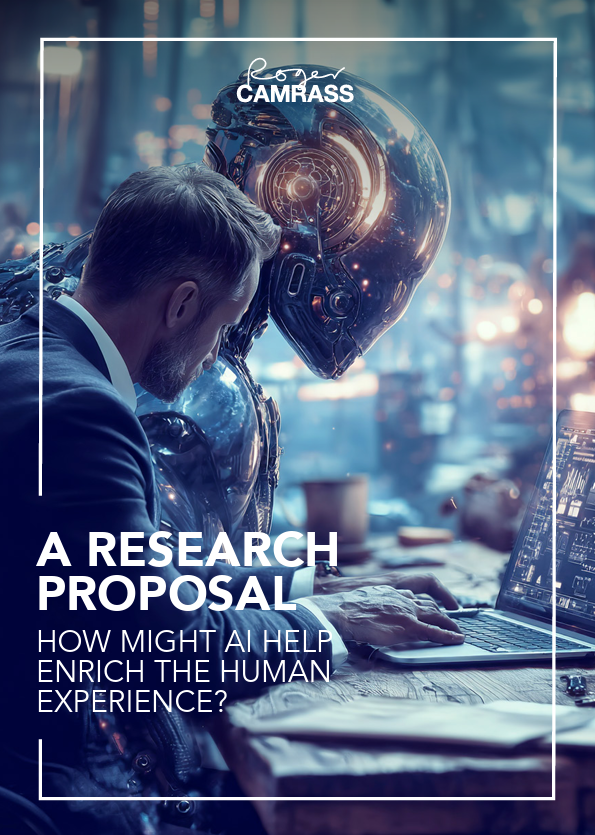
As AI transitions from a specialised tool to an all-pervasive force, understanding its profound implications for our human lives is no longer merely academic but an urgent imperative for social well-being and strategic preparedness.
Geopolitical tensions have dominated the headlines for over two years now. In this context, the cyber threat landscape is also evolving rapidly. The protection and security of critical infrastructure – both physical and digital – is becoming increasingly important.
.png?width=600&height=600&name=Anna%20Kopp%20(1).png)