-3.png)
.png)
.png)

-1.jpg)
Gunter Van Craen - CDIO at Bekaert - Embracing Digital Transformation


.jpg)
Italy Dec 10, 2025 Invitation Only Physical italian
Questa roundtable esclusiva offrirà a CIO, CISO e Leader di ITOps/Engineering un confronto diretto per individuare le migliori strategie di Innovazione che, attraverso l'observability, ottimizzino il Return of Investment.
Read More.jpg)
Belgium Dec 11, 2025 Country Members Physical english
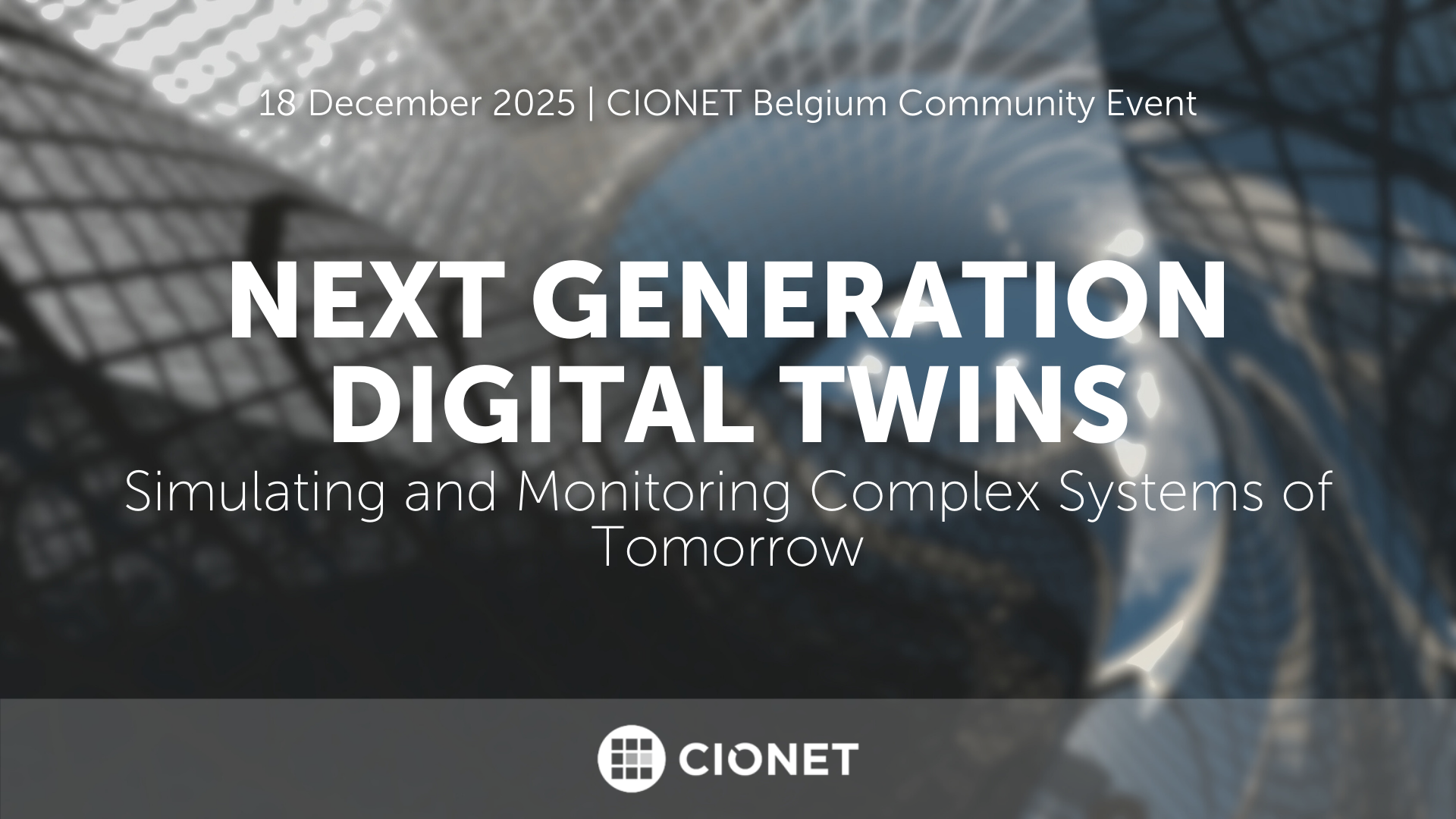
Imagine being able to monitor, simulate, and optimise an entire city, factory, or supply chain in real time. Next-generation digital twins are making this vision a reality, transforming how we manage and understand complex systems. By creating dynamic virtual replicas of physical assets and processes, digital twins allow organisations to predict issues, optimize performance, and make data-driven decisions with unprecedented accuracy.This event will explore how digital twins are being used across industries to revolutionize the way we operate and maintain large-scale, intricate systems—whether it’s the infrastructure of a smart city, the efficiency of a factory floor, or the resilience of global supply chains.Examples of Digital Twins in Action:Smart Cities: Urban planners can use digital twins to simulate traffic flow, monitor energy usage, or predict the impact of weather events on infrastructure. This enables cities to optimize resources and improve the quality of life for their citizens.Factories of the Future: Manufacturing plants are leveraging digital twins to monitor equipment in real time, prevent downtime, and optimize production lines. With predictive analytics, factories can avoid costly breakdowns and improve overall efficiency.Supply Chain Management: Complex supply chains, spanning continents and industries, can be modeled as digital twins to track shipments, simulate disruptions, and optimize logistics. Businesses can reduce inefficiencies and respond faster to market demands.Key Themes:Real-Time Monitoring and Simulation: How digital twins provide real-time insights into complex systems, allowing for dynamic response and optimization.Predictive Power: Leveraging AI and data analytics, digital twins help organisations predict and mitigate issues before they happen, from equipment failures to supply chain bottlenecks.Scalability Across Ecosystems: Digital twins aren’t limited to individual assets—learn how they can be scaled across entire ecosystems like smart cities or global supply chains for maximum impact.Building Trust and Security: With digital twins handling critical infrastructure and sensitive data, what are the security and governance frameworks needed to ensure trust in these virtual systems?Why You Should Attend:Next-generation digital twins are no longer just a concept—they are revolutionizing industries by offering a new way to manage complexity. Whether you’re looking to optimize a city, factory, or supply chain, this event will provide practical insights into how digital twins can transform your organisation’s operations and drive future innovation.
Read More
Germany Dec 15, 2025 Public Virtual german
Angesichts wachsender Cyberbedrohungen und der zunehmenden Automatisierung von Geschäftsprozessen blicken CIOs auf eine ereignisreiche Zeit zurück. Umso spannender ist die Frage, welche Herausforderungen und Chancen die IT-Welt künftig erwarten. ngesichts wachsender Cyberbedrohungen und der zunehmenden Automatisierung von Geschäftsprozessen blicken CIOs auf ein ereignisreiches Jahr 2024 zurück. Umso spannender ist die Frage, welche neuen Herausforderungen und Chancen die IT-Welt im Jahr 2025 erwarten.AA
Read More
Belgium Dec 16, 2025 Invitation Only Physical english
This CIONET Round Table will focus on how the IT department can be the enabler that unlocks organisational efficiencies and helps to improve the employee experience. We will explore how CIOs and Digital Leaders can fundamentally transform the internal service experience by breaking down organizational silos, orchestrating complex cross-functional workflows, and leveraging a unified platform to deliver a truly frictionless experience for every employee.
Read More
UK Dec 16, 2025 Invitation Only Physical english
At this CIONET executive roundtable – brought to you in association with UiPath – we’ll explore this question and more. Bringing together senior IT professionals from across multiple vertical markets, we will focus on the benefits of agentic AI as applied to end-to-end processes. And we’ll seek to understand how organisations might overcome automation barriers to drive greater value creation.
Read More-2.jpg)
Belgium Dec 18, 2025 Invitation Only Physical english
We look forward to brainstorming with you on how we can strengthen meaningful engagement among our participants, create valuable opportunities for visibility, foster peer-to-peer networking, and deliver impactful content. Your expertise and guidance will help shape our strategy for the coming year and ensure that we continue to provide the best possible value to our entire community. Together, we can build a stronger, more connected community that benefits us all.
Read More
Fluxys: Embracing hybrid working through next-generation collaboration tools
As a critical energy infrastructure company, Fluxys needs to operate 24/7 and collaborate effectively with its teams across Europe. The company continues to grow internationally and has recognised the value that hybrid working can offer. In 2019, the company began a project to implement Microsoft collaboration tools.
“Don’t assume people will think a new tool is great just because it looks nice. If you don't properly show them what the tool can do and how it adds value to daily life – it will never be a success.”
Jérôme Van der Meerschen, Digital Workplace Manager at Belgian energy infrastructure group Fluxys, is talking about the importance of proper change management when introducing new technologies and how Microsoft collaboration tools are facilitating hybrid working across the organization.
“For a long time we did not have much need for extended collaboration tools,” he says. “If you needed to see someone it would be in person – whether that’s meeting in the office to travelling to where a colleague is based. But then COVID-19 lockdowns were brought in and everything had to change.”
As a critical energy infrastructure company, many Fluxys employees still had to come into the office or be in the field during government lockdowns while others worked from home under new restrictions. Suddenly the organization needed to find a way to safely keep its essential services going and collaboration between employees wherever they were working.
“Our company introduced new internal policies around home working that forced us to rethink how we collaborate and what technologies could help make this a successful transition,” continues Jérôme Van der Meerschen. “None of us knew how long COVID would be around for, but it was clear that hybrid working would become more of a standard for Fluxys – and that meant thinking beyond everyday tools to facilitate remote working.”
Headquartered in Belgium, Fluxys is a fully independent energy infrastructure group with 1,300 employees active across three key areas. Managing liquefied natural gas (LNG) terminals in Belgium, France and Greece, operating 12,000km of gas transmission pipelines across Europe and Brazil, and storing natural gas in Fluxys’ facilities in Belgium.
“I'm responsible for the digital workplace at Fluxys and managing all aspects that come into contact with our end users,” explains Jérôme Van der Meerschen. “From the laptops and telephone systems we use to collaboration tools and equipment in our meeting rooms – all making sure everyone can work efficiently from anywhere in the world.”
With the larger part of Fluxys employees based in Belgium, the company’s focus for workplace technologies had primarily been on office-based solutions. But as the organization continued to expand globally, Fluxys saw a potential for hybrid working and began a pilot project in 2019 to digitally transform the company for a more flexible working model.
“We had already introduced Microsoft 365 as standardized tools to use across our Belgium offices. But the company was growing beyond Europe with new offices opening in Singapore and Brazil, which provided a greater need for everyone to start using collaboration tools like Microsoft Teams,” he says.
“Transforming meeting rooms was also part of our digital workplace roadmap. We were looking for new technologies that could add more value than a simple projector or PC and, after seeing a Surface Hub in use, we wanted to explore the user benefits of these devices and how easily they could integrate with our IT infrastructure.
“That’s when we decided to start a Proof Of Concept (POC) to let some of our users in the office get hands-on with the Surface Hub 2.”
When COVID-19 restrictions came into effect in March 2020, many Fluxys employees suddenly transitioned to remote working with a small number of key workers still in the office or in the field to maintain its critical infrastructure operation. With Microsoft collaboration tools already in place, the company was able to fully migrate all its users over to Microsoft Teams in just three days with minimal disruption.
“The fact that our users were already familiar with the Microsoft suite was a big advantage. But collaborating when everyone’s at home or everyone’s in the office is easy – it's when you have a mix of both that working productively gets more tricky.”
Following a successful POC, Fluxys decided to enhance the collaboration between users based in its offices and at home by implementing a mix of Surface Hub 2 devices and dedicated Microsoft Teams meeting rooms. “Everything integrated smoothly with our IT ecosystem and it quickly made having meetings really easy for people still in the office,” he says.
“Someone could just enter a room and start a Teams meeting in one click. Then the Surface Hub 2 provided a dedicated device to access OneDrive files or collaborate over SharePoint documents – all features that make holding meetings more efficient whether in person or virtually.”
To help users quickly adopt these new collaboration tools, Fluxys decided to develop a digital coaching service together with their Microsoft partner. This offered training through Microsoft Teams that explored how to get the most out of the Surface Hub 2 devices, as well as self-help content and change management training to help everyone embrace a hybrid-workplace environment.
“We wanted to show that Surface Hubs were more than just a whiteboard for the meeting room and how they could help make everyday life easier,” he adds . “Once we demonstrated what these devices could do, the majority of people were sold immediately and now everyone is using Teams and these tools on a daily basis.”
Now as Fluxys enters 2022, the company’s workplace has been transformed into a dedicated hybrid-working environment.
“We've now upgraded every meeting room to these Microsoft systems and also created new spaces where Surface Hubs can be used as collaboration screens to help us work in a more agile way,” says Jérôme Van der Meerschen.
“We recently ran a survey to see what our users thought of these changes and the results were really positive. Some people are favoring the dedicated Microsoft Teams rooms if they want to just have a meeting without any fuss. Others like the Surface Hubs for the extra collaboration tools they offer, which is why it’s great we have this balance to suit all of our users’ needs.”
Part of the organization’s successful adoption was its approach to standardization – making sure the same equipment was integrated into every room so users only had to be onboarded on one new technology to use going forward. “Simplification was key to our digital workplace roadmap and having the same user interface in each room really helped in that way,” he explains.
“Both the Surface Hubs and Microsoft Teams room systems integrate perfectly with the Microsoft tools everyone is used to, which takes away that technological barrier for ‘how do I turn this on’ or ‘where do I find this program’. Both helping people get more out of their meetings and also removing any frustrations when trying to host a meeting with people outside the office.”
With everyone now using Microsoft Teams and Surface Hub 2 devices daily across Fluxys, the company has seen a positive change to its meeting culture across the organization. A refreshed mindset that is removing negative stigma towards solving problems virtually and helping employees find a better work-life balance.
“We do more online now than we ever used to and that requires a seamless integration with the technology people are using both in and outside the office,” says Jérôme Van der Meerschen.
“Now that we've standardized the meeting rooms in every office, collaboration can happen virtually from anywhere. Even our technicians have access to Teams on their field devices, which allows them to attend company meetings and improves communication between the technicians themselves. All helping reduce the travel needs for everyone across Fluxys and making our company more sustainable in the way we work.”
With over 1,000 employees now successfully collaborating in a hybrid-working model, Jérôme Van der Meerschen is confident that the key to his company’s transformation has been keeping people at the center of every decision. Ensuring that Fluxys isn’t just providing them with new technology to do their job, but making sure they understand exactly how it brings value to what they do day after day.
“Bringing new technology to people is easy. But making sure that they use it in the best way possible is something completely different,” he says in summary. “You need to focus on the people, on the adoption, and on the change that these tools will bring – and that's something that people sometimes forget when introducing new technologies.”

Gunter Van Craen - CDIO at Bekaert - Embracing Digital Transformation
-Dec-01-2025-02-57-28-6056-PM.png)
Raul Jimenez - Transforming Data and AI Governance at Sika
-2.jpg)
Carla Milovanov - Navigating Transformation: Insights from Landal's CIO
-1.png)
Claudio Balbo - Senior Director and Head of IT Architecture at Intesa Sanpaolo - Revolutionizing Core Banking
-1.jpg)
Angélique Bidault-Verliac - CDPO, SNCF Connect & Tech - Data, AI, and Customer-First Transformation
-2.png)
Rajat Dhawan - Group Chief Digital & Technology Officer at Soho House - How Data & AI Enhance Member Experiences
The role of the CIO has evolved from managing systems to shaping outcomes: growth, resilience, and competitive edge are now won or lost in the technology arena. Today ’ s CIOs must balance stability with innovation, control costs while attracting scarce talent, and modernise legacy infrastructure while adopting emerging technologies.
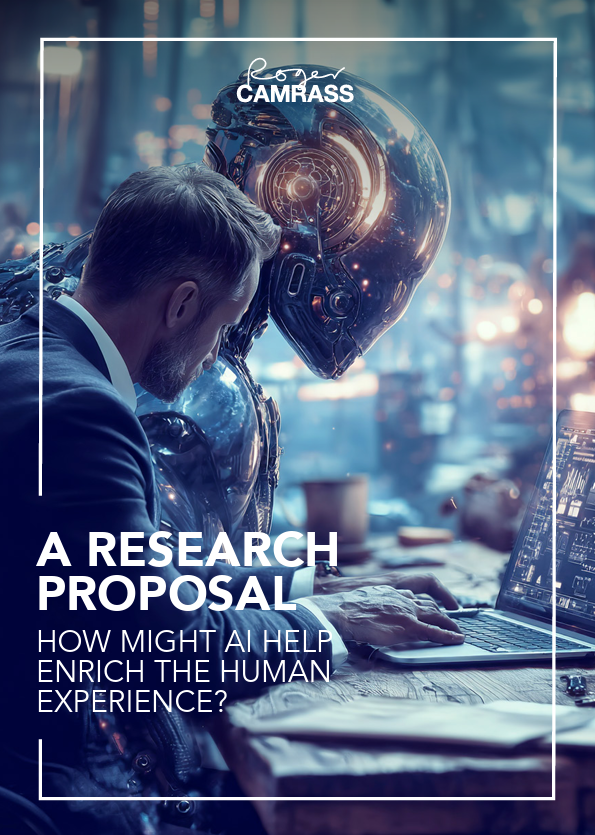
As AI transitions from a specialised tool to an all-pervasive force, understanding its profound implications for our human lives is no longer merely academic but an urgent imperative for social well-being and strategic preparedness.
Geopolitical tensions have dominated the headlines for over two years now. In this context, the cyber threat landscape is also evolving rapidly. The protection and security of critical infrastructure – both physical and digital – is becoming increasingly important.
.png?width=600&height=600&name=Anna%20Kopp%20(1).png)