.png)
.png)
.png)

-1.jpg)
Gunter Van Craen - CDIO at Bekaert - Embracing Digital Transformation


.jpg)
Belgium Dec 4, 2025 Invitation Only Physical english
CIONET is committed to highlighting and celebrating female role models in IT, Tech & Digital, creating a leadership programme that empowers and elevates women within the tech industry. This initiative is dedicated to showcasing the achievements and successes of leading women, fostering an environment where female role models are recognised, and their contributions can ignite progress and inspire the next generation of women in IT.
Read More.png)
International Dec 9, 2025 Public Virtual english
The CIONET Awards 2026: Part 1, the premier celebration of excellence in digital mission and leadership. During this event the spotlight falls on two of the most critical arenas in modern enterprise: Applications & Architecture and Data & AI. Prepare for a dynamic session where each nominee will present their groundbreaking achievements.
Read More
Netherlands Dec 9, 2025 Invitation Only Physical english
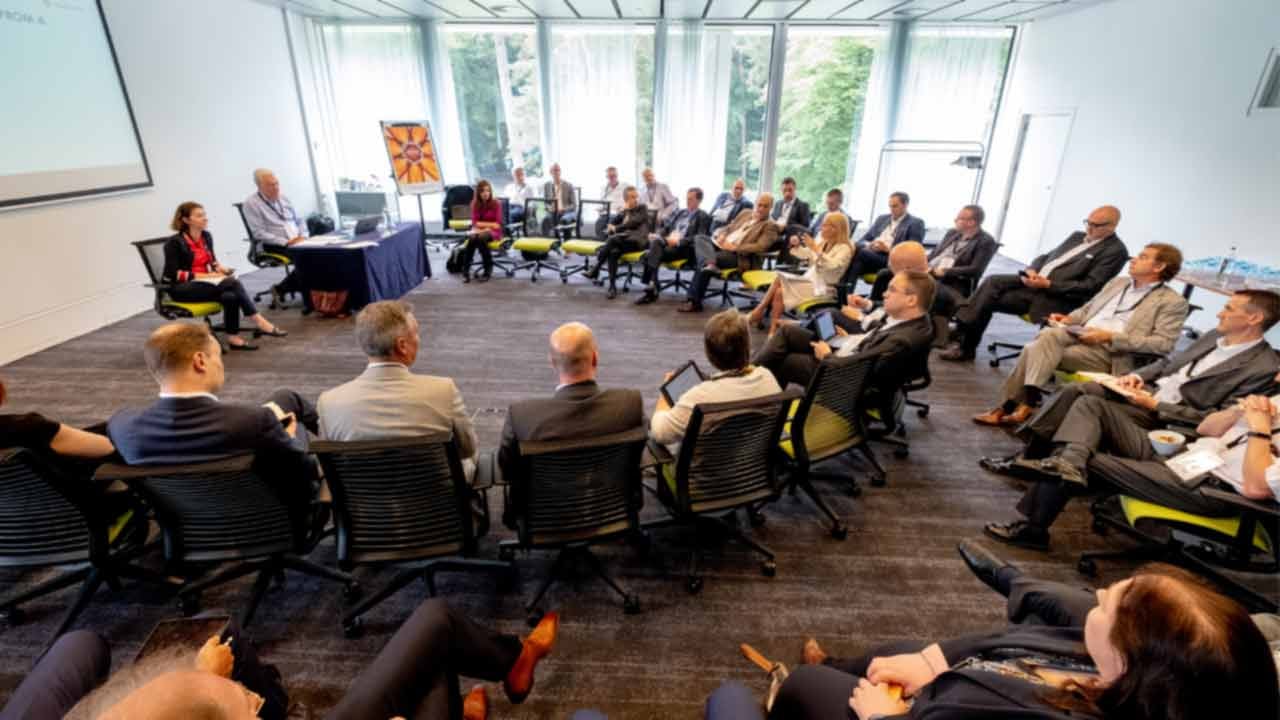
Digital transformation and ongoing economic uncertainty are intensifying the pressure on IT leaders to do more with less. In this environment, gaining precise control over IT costs—while continuing to deliver effective, efficient, and innovative technology operations—is more critical than ever. At this exclusive CIONET Executive Roundtable, hosted in partnership with It’s Value, we will explore how Technology Business Management (TBM) principles can help CIOs and IT leaders make data-driven financial decisions that drive measurable business value. Key Discussion Themes Turning data insights into smarter IT investment decisions Setting priorities for cost optimisation and maximising ROI Quantifying and communicating the business value of IT initiatives Evaluating the principles of FinOps and the implications of public, private, and hybrid cloud environments for cost management Embedding effective change management to drive adoption and alignment Achieving tangible business outcomes from AI initiatives while maintaining fiscal discipline The evening will also feature a fireside chat with Sunil Anand, Global Head of Technology Business Management at National Grid. Sunil will share practical lessons and key milestones, retracing the National Grid cost management journey. This dinner offers a unique opportunity to: Exchange experiences with peers facing similar challenges Gain insights from TBM experts and industry practitioners Reassess your own IT financial strategy in a relaxed, collegial setting Join us for an evening of insight, discussion, and connection—designed to help you strengthen IT’s role as a true business value driver.
Read More.jpg)
Italy Dec 10, 2025 Invitation Only Physical italian
Questa roundtable esclusiva offrirà a CIO, CISO e Leader di ITOps/Engineering un confronto diretto per individuare le migliori strategie di Innovazione che, attraverso l'observability, ottimizzino il Return of Investment.
Read More.jpg)
Belgium Dec 11, 2025 Country Members Physical english
Imagine being able to monitor, simulate, and optimise an entire city, factory, or supply chain in real time. Next-generation digital twins are making this vision a reality, transforming how we manage and understand complex systems. By creating dynamic virtual replicas of physical assets and processes, digital twins allow organisations to predict issues, optimize performance, and make data-driven decisions with unprecedented accuracy.This event will explore how digital twins are being used across industries to revolutionize the way we operate and maintain large-scale, intricate systems—whether it’s the infrastructure of a smart city, the efficiency of a factory floor, or the resilience of global supply chains.Examples of Digital Twins in Action:Smart Cities: Urban planners can use digital twins to simulate traffic flow, monitor energy usage, or predict the impact of weather events on infrastructure. This enables cities to optimize resources and improve the quality of life for their citizens.Factories of the Future: Manufacturing plants are leveraging digital twins to monitor equipment in real time, prevent downtime, and optimize production lines. With predictive analytics, factories can avoid costly breakdowns and improve overall efficiency.Supply Chain Management: Complex supply chains, spanning continents and industries, can be modeled as digital twins to track shipments, simulate disruptions, and optimize logistics. Businesses can reduce inefficiencies and respond faster to market demands.Key Themes:Real-Time Monitoring and Simulation: How digital twins provide real-time insights into complex systems, allowing for dynamic response and optimization.Predictive Power: Leveraging AI and data analytics, digital twins help organisations predict and mitigate issues before they happen, from equipment failures to supply chain bottlenecks.Scalability Across Ecosystems: Digital twins aren’t limited to individual assets—learn how they can be scaled across entire ecosystems like smart cities or global supply chains for maximum impact.Building Trust and Security: With digital twins handling critical infrastructure and sensitive data, what are the security and governance frameworks needed to ensure trust in these virtual systems?Why You Should Attend:Next-generation digital twins are no longer just a concept—they are revolutionizing industries by offering a new way to manage complexity. Whether you’re looking to optimize a city, factory, or supply chain, this event will provide practical insights into how digital twins can transform your organisation’s operations and drive future innovation.
Read More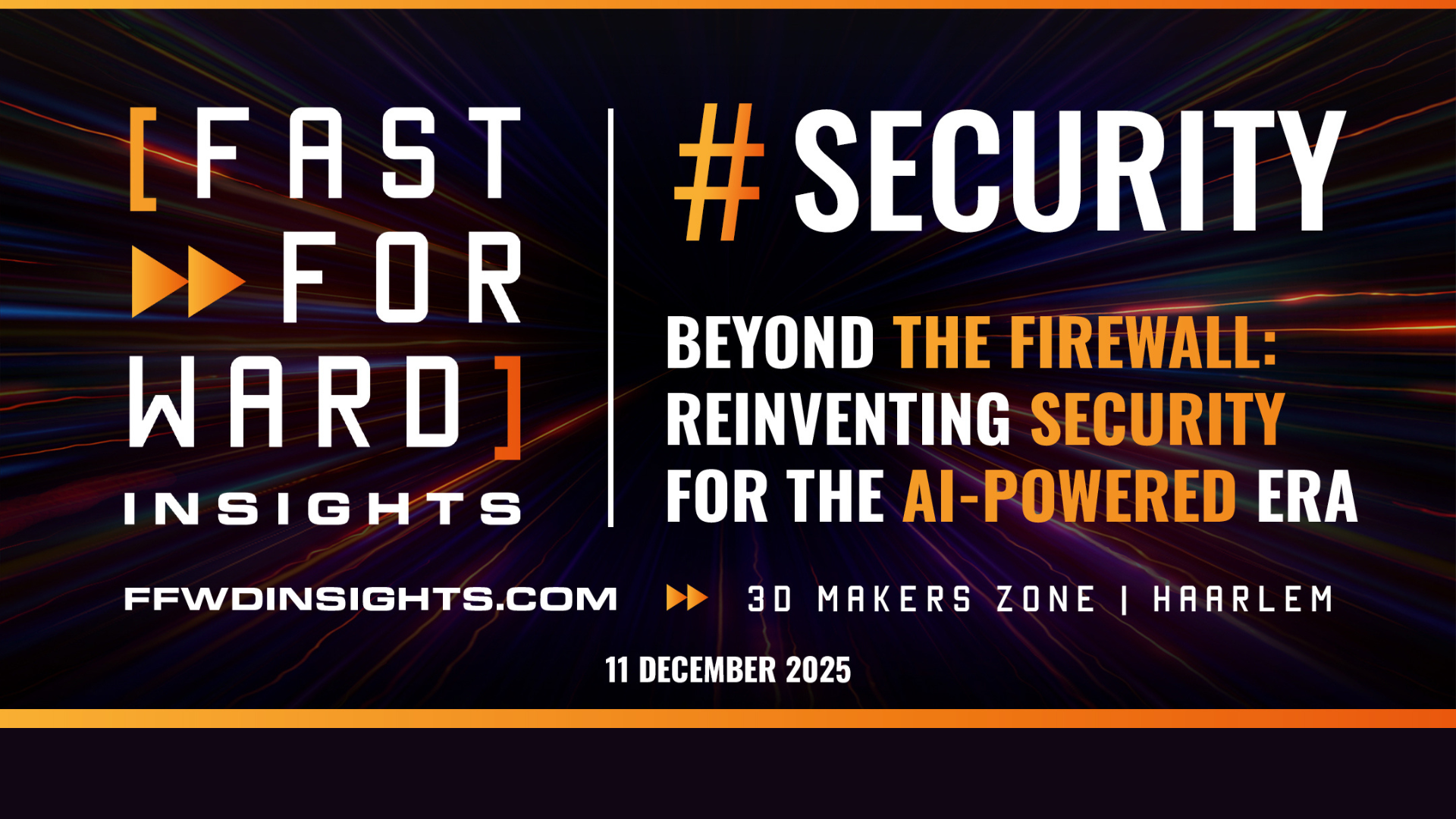
Netherlands Dec 11, 2025 Invitation Only Physical dutch
Navigating tommorrow's threatscape: Cybersecurity insights for digital leaders. Op 28 november in de 3D Makers Zone in Haarlem.
Read More
Deutsche Bank moves modern work to the credit side of the ledger with Microsoft Teams Phone
In the highly regulated field of finance, business communications with customers must meet stringent regional security requirements. Deutsche Bank found the answer to these needs by implementing Microsoft Teams Phone, consolidating all communication channels into one application - Microsoft Teams.
Embracing a modern platform like Microsoft Teams instilled a level of connection across the globe that we’ve never had before. It’s truly brought Deutsche Bank closer together as an organization than we’ve ever been. Simon Peach: Managing Director, End User Computing - Deutsche Bank
More than 150 years of strategic banking experience has given Deutsche Bank a future-first perspective. The company rapidly expanded into several international locations within a decade of its 1871 founding. Deutsche Bank went on to become one of Germany’s leading banks and is rated by S&P Global as one of the 30 largest banks in the world. Staying ahead of and modeling responsible change has earned Deutsche Bank the trust and respect of its customers.
Change on a truly large scale was needed when a constant influx of rapidly evolving regulations, coupled with faster technology advances and a shift to more flexible work, challenged the bank’s communications technology platform. Its legacy telephony system required expensive and frequent updates to keep pace with regulatory change. In concert with that increasingly unsustainable pattern, Deutsche Bank workers craved advanced communications tools. What was needed was complicated but non-negotiable: a unified solution that enabled the bank’s global workforce, collaborating from within 60-plus countries, to communicate across a complex matrix of locations, job functions, and time zones. “Communication is the backbone of everything we do at Deutsche Bank,” explains Marcus Jung, Chief Information Officer, End User Computing at Deutsche Bank. “Keeping our employees in touch with each other and their clients in the most secure and compliant way possible is crucial.”
And providing a human-centric tool set is critical to the experiences of both employee and client. “People need open communication channels that function as if they were sitting right beside each other,” says Jeremy Kirk, Managing Director, Investment Bank at Deutsche Bank. “And being in a highly regulated industry, we strongly focus on record-keeping and retention.” Client-facing workers, such as traders in the German financial services industry, can be subject to having their customer interactions monitored and recorded.
The answer clearly lay in a unified tool set. “Having a standard way of adhering to regulatory compliance is critical for us,” explains Simon Peach, Managing Director, End User Computing at Deutsche Bank. “Whether we capture a conversation through voice recording, eDiscovery, or other means, we need to ensure that we’re using communication technology that meets regulatory approval.”
With growing competition for skilled workers, the bank needed a technology refresh: a communications platform that would help workers soar in job satisfaction and productivity and could adapt to growing, changing regulations.
Deutsche Bank had deployed Microsoft 365 as part of its cloud transformation, including Microsoft Exchange Online, OneDrive, and SharePoint. With a unified technology platform in place, Theo Georgiou, Principal Technology Manager, End User Computing at Deutsche Bank, began the workplace modernization project, starting with the regulatory compliance aspect. That meant bringing the proliferation of mobile devices into line with device-agnostic management. Georgiou’s team rolled out Microsoft Intune, simplifying device management for multiple operating systems (including iOS and Android) and form factors. He formed a close collaboration with the teams responsible for Deutsche Bank’s legal, compliance, GDP, eDiscovery, and surveillance functions. “We focused intently on regulatory compliance,” Georgiou says. “And while we wanted to ensure easy collaboration between groups who need to work together, there are other groups such as Research and Equities that, by United States law, are not allowed to exchange information. We used Microsoft solutions to put information barriers in place as required by local laws.”
Georgiou was also very aware of the needs of Deutsche Bank workers, the demands they face in a world that continues to be more mobile and more time-sensitive, even as regulations multiply. And in an increasingly hybrid work environment, he realized that workers need flexibility to work in different ways without violating local regulations. “We have 60,000 people who are using mobile devices in addition to desktop devices,” Georgiou says. “We need to provide them not only with compliant, secure access to Microsoft productivity applications, but also with accessibility for people who are blind, deaf, or have other accessibility issues. Our success in bringing so many workers into that compliant circle is a big story for us.” His team replaced Deutsche Bank’s previous telephony system with Microsoft Teams Phone, adding a voice recording feature in compliance with local laws.
Automation was critical to making such a big change for so many across the world. The Deutsche Bank team worked with a Microsoft Industry Solutions Delivery team to create an end-to-end automated solution to transfer workers from their previous telephony service to Teams and Teams Phone, delivering a fast, reliable, and stable migration. “We provisioned over 130,000 workers within eight months,” says Georgiou. “The automation we built with our Microsoft colleagues was key to that success. Manually configuring the parameters for the applications our global workforce needed and enabling the environment for them would have been impossible otherwise.”
The team used smart AI logic to send invites to technical and training sessions. The delicate and time-consuming task of ensuring that local restrictions were instituted accurately, and the appropriate capabilities were activated, was fastest and simplest with that automation. The team also used the logic rules they’d set up to select which groups of workers would onboard to the solution depending on their local restrictions and needs. Deutsche Bank enabled 1,500 people every day, not because of any technical limit, but because Georgiou wanted to ensure that his team would have the capacity to personally interact with everyone who needed attention. “The Microsoft team played a significant part in ensuring the technology provided was implemented, and added to where needed, to achieve an extremely positive user experience and business case,” says Peach.
With that deployment now well along, new Deutsche Bank employees have access to their Microsoft 365 applications on their first day at work, and are able to use Microsoft Teams within an hour of their account being enabled. All 130,000 employees, permanent contractors, and vendor staff now use the full Microsoft 365 productivity apps (Microsoft Word, Excel, and PowerPoint), collaborating via Exchange Online, OneDrive, and SharePoint.
Georgiou notes that coaxing users into adoption is often a challenge. But this time, being a change agent in a global company yielded a different experience. “There’s often resistance to change,” he explains. “But after hitting a certain critical mass during our Microsoft Teams rollout, we were overwhelmed by demand.” The convenience Deutsche Bank workers experienced is clearly why. “After deploying Microsoft Teams and Teams Phone, we could consolidate all of our communication channels into a single application,” Georgiou says. “We now have more than 60,000 people at Deutsche Bank who use personal mobile devices that amplify flexibility in how they communicate and collaborate, even when they’re on the move.” He looks forward to increasing accessibility for Deutsche Bank workers. “Now we’re considering next steps: application interoperability and notification bots in the system,” he adds. “We’re trialing Microsoft Copilot and other accessibility features, like live captions.”
Kirk lauds the resulting simplification for client-facing workers: “Our sales teams and other client-facing workers use just one app for all communications,” he says. “With Microsoft Teams and Teams Phone, whether they’re contacting multiple people, internal or external players, their conversations are recorded as needed and compliant with the regulations that we need to observe.”
For Peach, the cascading benefits of the deployment cross multiple boundaries. “When we moved to Microsoft Teams, we created a level of productivity that translates to universal goals, like increasing revenue streams and realizing greater efficiencies,” he concludes. “We’ve reduced costs across several technology areas. Most of all, embracing a modern platform like Microsoft Teams instilled a level of connection across the globe that we’ve never had before. It’s truly brought Deutsche Bank closer together as an organization than we’ve ever been.”

Gunter Van Craen - CDIO at Bekaert - Embracing Digital Transformation
-Dec-01-2025-02-57-28-6056-PM.png)
Raul Jimenez - Transforming Data and AI Governance at Sika
-2.jpg)
Carla Milovanov - Navigating Transformation: Insights from Landal's CIO
-1.png)
Claudio Balbo - Senior Director and Head of IT Architecture at Intesa Sanpaolo - Revolutionizing Core Banking
-1.jpg)
Angélique Bidault-Verliac - CDPO, SNCF Connect & Tech - Data, AI, and Customer-First Transformation
-2.png)
Rajat Dhawan - Group Chief Digital & Technology Officer at Soho House - How Data & AI Enhance Member Experiences
The role of the CIO has evolved from managing systems to shaping outcomes: growth, resilience, and competitive edge are now won or lost in the technology arena. Today ’ s CIOs must balance stability with innovation, control costs while attracting scarce talent, and modernise legacy infrastructure while adopting emerging technologies.
As AI transitions from a specialised tool to an all-pervasive force, understanding its profound implications for our human lives is no longer merely academic but an urgent imperative for social well-being and strategic preparedness.

Geopolitical tensions have dominated the headlines for over two years now. In this context, the cyber threat landscape is also evolving rapidly. The protection and security of critical infrastructure – both physical and digital – is becoming increasingly important.
.png?width=600&height=600&name=Anna%20Kopp%20(1).png)