


Connect with +12,000 CIOs, CTOs, CISOs and other Digital Leaders. Share ideas, swap insights, and build the network that moves your career - and your business - forward.
.png)
Belgium 13-10-2026 Squad Only Virtual English
AI use cases scale through architecture. The challenge is creating the architecture that allows several use cases to run, connect, be monitored, and be governed as adoption grows. Three pressure points usually appear. - Integration becomes critical when AI needs to connect with existing systems, applications, data flows, and business processes. - Control and monitoring are needed once use cases affect decisions, users, or operations. - Reuse becomes important because shared patterns help teams deliver faster and support more use cases with less friction. The working question is simple: what architecture needs to be in place before AI use cases multiply across teams, systems, and processes? If you are designing for AI beyond isolated use cases, let’s compare approaches with others facing similar architecture questions.
Read More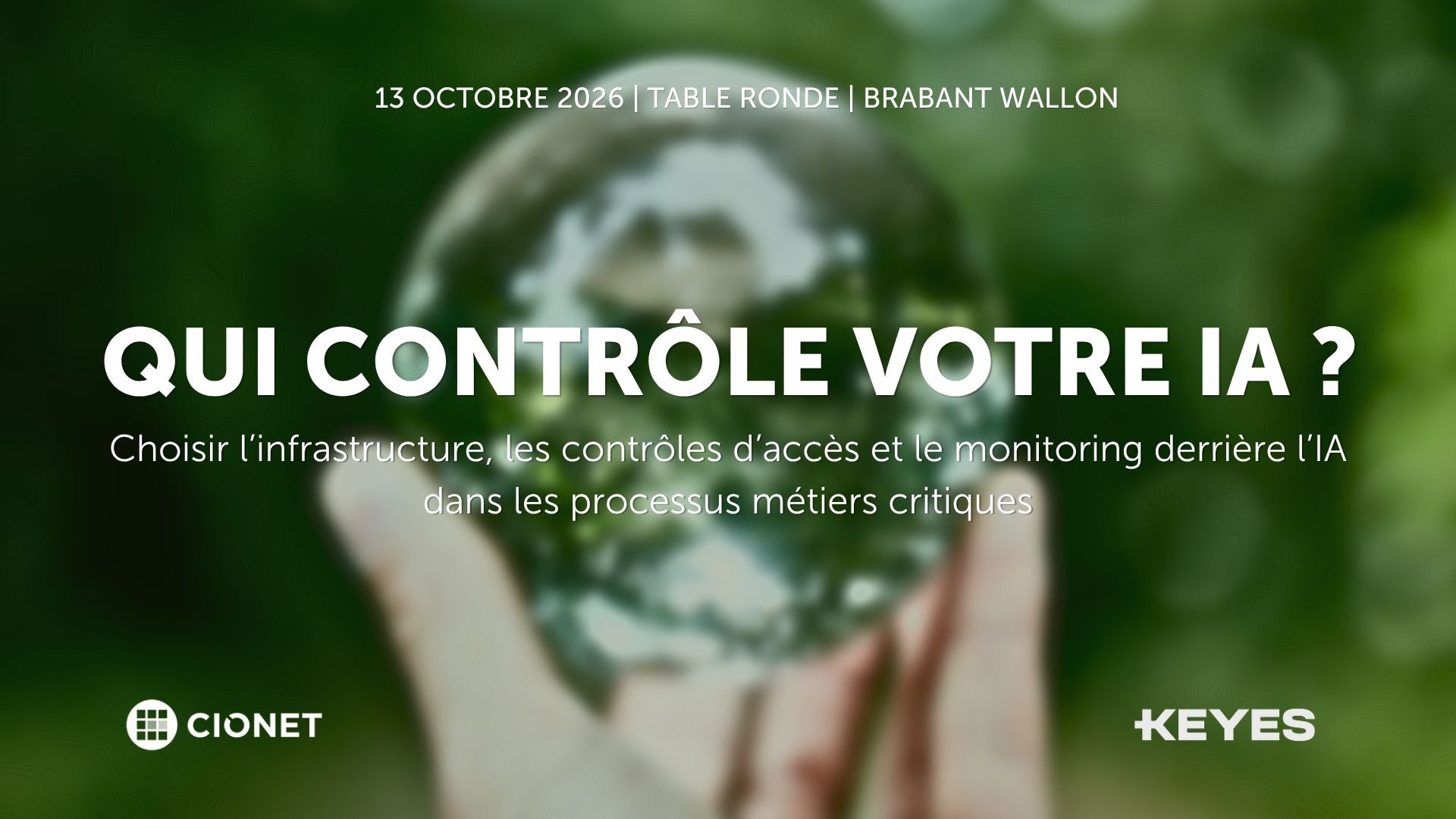
Belgium 13-10-2026 All Members Physical French
L’IA entre dans la souscription, la gestion des sinistres, le service client, l’analyse financière, la maintenance industrielle et les opérations payroll. À mesure que les modèles s’intègrent aux processus critiques, leur environnement de déploiement devient une décision métier, car l’emplacement du modèle, de ses données et de ses capacités de monitoring influence directement la performance, la traçabilité, la sécurité et la confiance réglementaire. Chaque workload d’IA a donc besoin d’un environnement opérationnel adapté à la sensibilité de ses données, à ses exigences de performance et à son impact métier. Certains workloads bénéficient de la capacité d’échelle du cloud public, d’autres exigent une infrastructure privée ou souveraine, et beaucoup fonctionneront sur une combinaison d’environnements. Un modèle opérationnel d’IA est donc nécessaire pour définir clairement qui opère le runtime, qui peut y accéder, où les données sont traitées, comment chaque interaction est monitorée, et comment la visibilité, la gouvernance et le contrôle opérationnel sont maintenus tout au long du cycle de vie de l’IA. Ces décisions d’architecture déterminent la capacité à déployer l’IA à l’échelle de l’entreprise avec confiance. Elles influencent la sécurité, la résilience, la conformité réglementaire et le niveau de confiance nécessaire pour introduire l’IA dans des processus métier de plus en plus critiques. Elles établissent également les fondations opérationnelles de l’IA agentique, où des systèmes autonomes fonctionnent dans des cadres clairement définis de gouvernance, de responsabilité et de monitoring.
Read More
Belgium 15-10-2026 All Members Physical English
In an era where digital borders are as critical as physical ones, cybersecurity is no longer just a tech issue it’s a strategic imperative. CYBERfest 2026 explores the intersection of geopolitics and cyber threats, bringing together global leaders, experts, and innovators to discuss how nations, organisations, and individuals can navigate an increasingly complex and contested digital landscape. Join us for insightful debates, real-world case studies, and actionable strategies to stay resilient in a world where cyber and geopolitics collide.
Read More

.png)





















.png)