

.png)
Belgium 20-10-2026 Squad Only Virtual English
Cloud decisions are becoming more selective. The challenge is deciding where each workload should run based on cost, performance, control, resilience, sovereignty, and business need. Three pressure points usually drive the decision. - Cost visibility becomes harder when usage grows across cloud services, data platforms, and AI workloads. - Performance and latency matter more when systems need fast access to data or support operational processes. - Sovereignty and resilience become critical when data location, continuity, vendor dependency, and exit options enter the discussion. The working question is simple: how do we place workloads where they create the most value while keeping the hybrid landscape manageable? If these trade-offs are on your agenda, let’s compare how others are handling similar choices.
Read More.png)
Belgium 10-11-2026 Squad Only Virtual English
Data platforms are meant to simplify access and support better use of data. The challenge is choosing and governing the platform landscape in a way that creates consistency, reuse, and long-term value. Three pressure points usually appear. - Platform choice becomes difficult when teams have different needs for speed, flexibility, cost, and control. - Business meaning needs protection: customer, revenue, product, risk, and FTE need shared definitions across tools. - Ownership and governance need to be clear, so platforms grow with accountability and discipline. The working question is simple: how do we give teams the data capabilities they need while keeping the platform landscape understandable, governed, and reusable? If these questions are familiar, let’s compare approaches with others facing the same data landscape.
Read More.png)
Belgium 13-11-2026 Squad Only Physical English
Many IT capabilities are essential and difficult to fund through a simple project ROI. The challenge is showing why architecture, governance, resilience, cybersecurity maturity, data foundations, and AI readiness deserve investment before the gap becomes expensive. Three pressure points make the case harder. - Shared value means the benefit often sits across several teams, while the budget sits in one place. - Timing creates friction because the cost is immediate while the value appears over time. - Risk translation is needed so business and finance leaders understand the consequence of delaying the investment. The working question is simple: how do we turn foundational IT capabilities into credible investment cases that link cost, risk, business value, and future flexibility? If you are building these cases internally, let’s compare how others are positioning value, risk, and timing.
Read More
Published on: September 30, 2026 @ 1:17 PM

Published on: August 26, 2026 @ 9:13 AM
Published on: July 29, 2026 @ 10:08 AM

Published on: June 24, 2026 @ 5:00 PM
Published on: May 27, 2026 @ 9:21 AM
Published on: May 07, 2026 @ 4:02 PM
.png)
Published on: April 29, 2026 @ 9:11 AM

Published on: March 26, 2026 @ 3:37 PM
-2.png)
Published on: March 25, 2026 @ 9:58 AM

Published on: March 13, 2026 @ 3:43 PM
-Feb-25-2026-10-01-07-2508-AM.png)
Published on: February 25, 2026 @ 11:01 AM
.png)
Published on: February 25, 2026 @ 9:00 AM

Published on: February 24, 2026 @ 5:00 PM
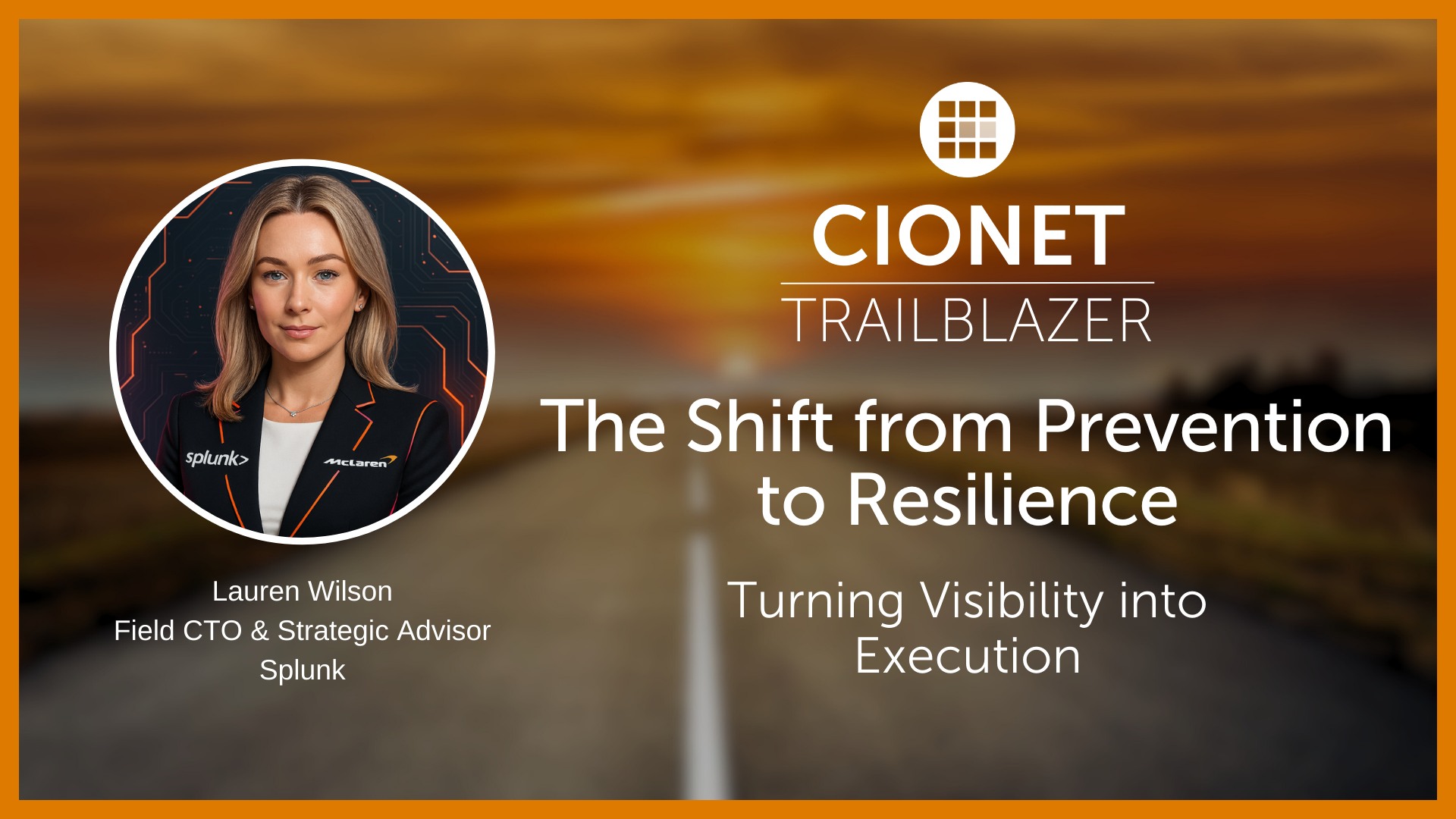
CIONET Trailblazer: CISO: The Shift from Prevention to Resilience: Turning Visibility into Execution
Published on: January 28, 2026 @ 9:48 AM

CIONET Trailblazer: AI Transformation: Bridging the Cultural Divide to Achieve Competitive Advantage
Published on: December 17, 2025 @ 9:16 AM

Published on: October 29, 2025 @ 11:31 AM
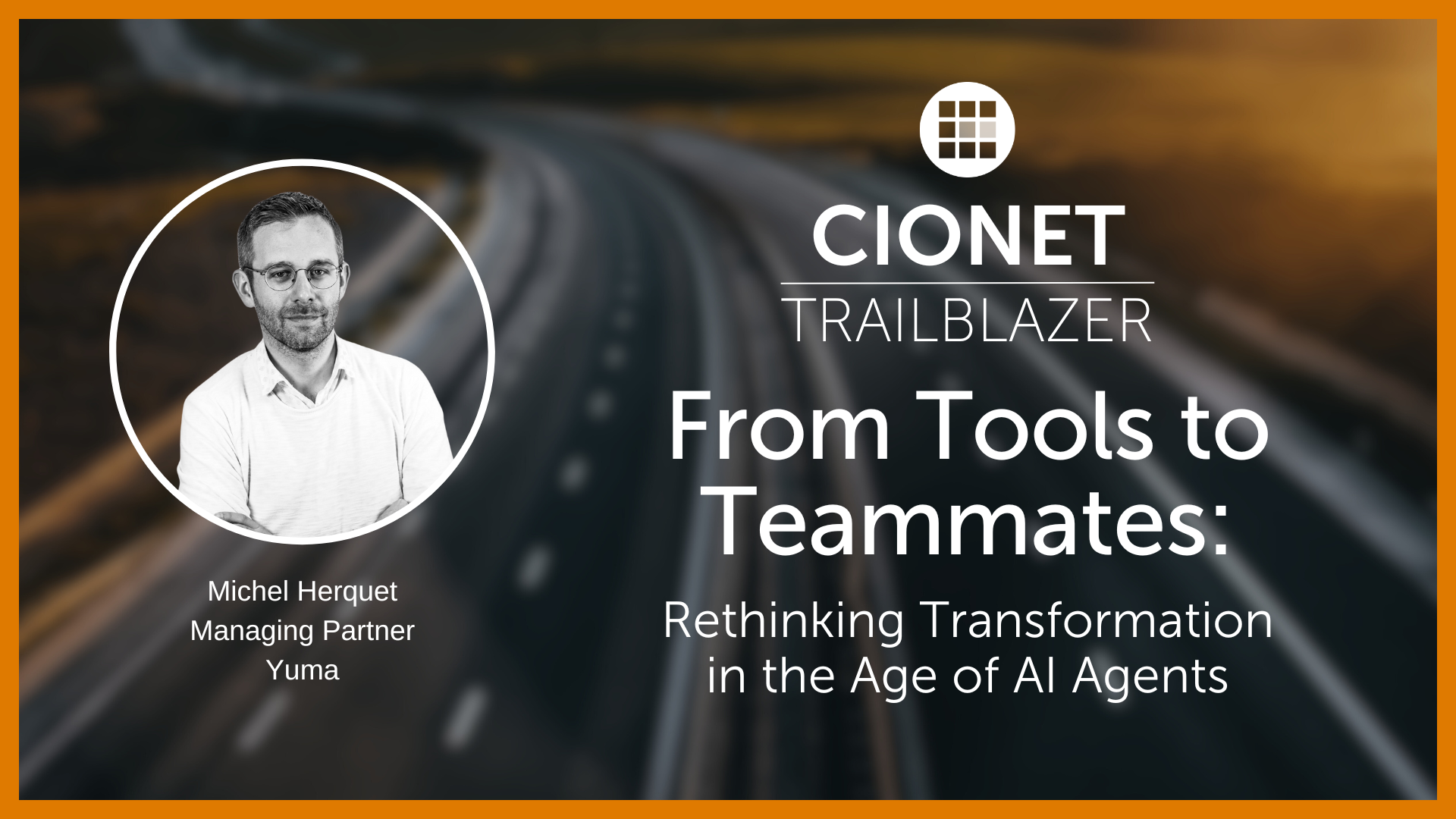
Published on: July 30, 2025 @ 9:19 AM

Published on: June 25, 2025 @ 9:14 AM
.png)
Published on: April 30, 2025 @ 9:04 AM
-1.png)
Published on: March 26, 2025 @ 9:59 AM
-1.png)
Published on: March 04, 2025 @ 5:07 PM
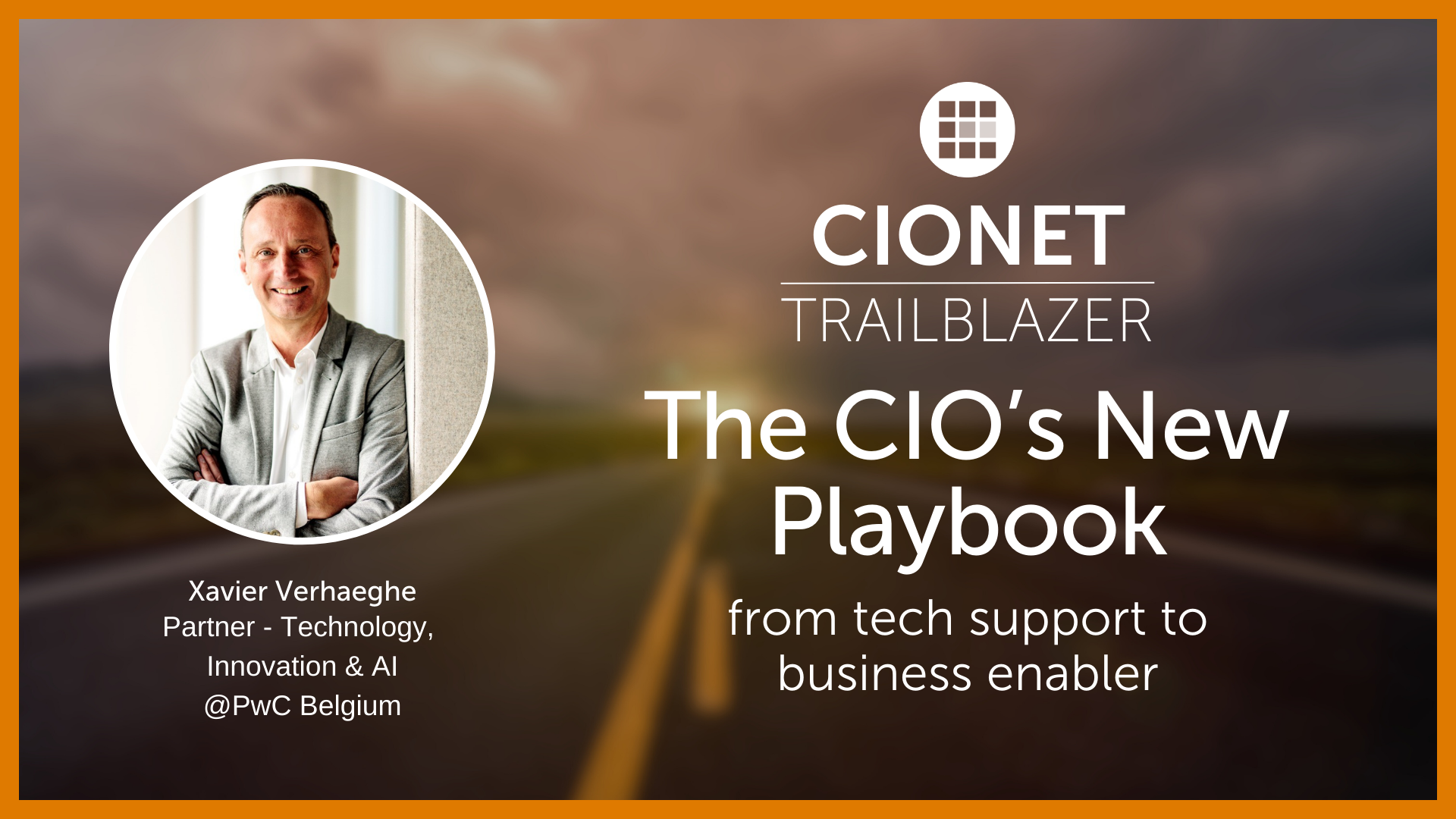
Published on: February 26, 2025 @ 10:51 AM
Published on: February 25, 2025 @ 4:14 PM
-4.png)
Published on: February 25, 2025 @ 10:33 AM
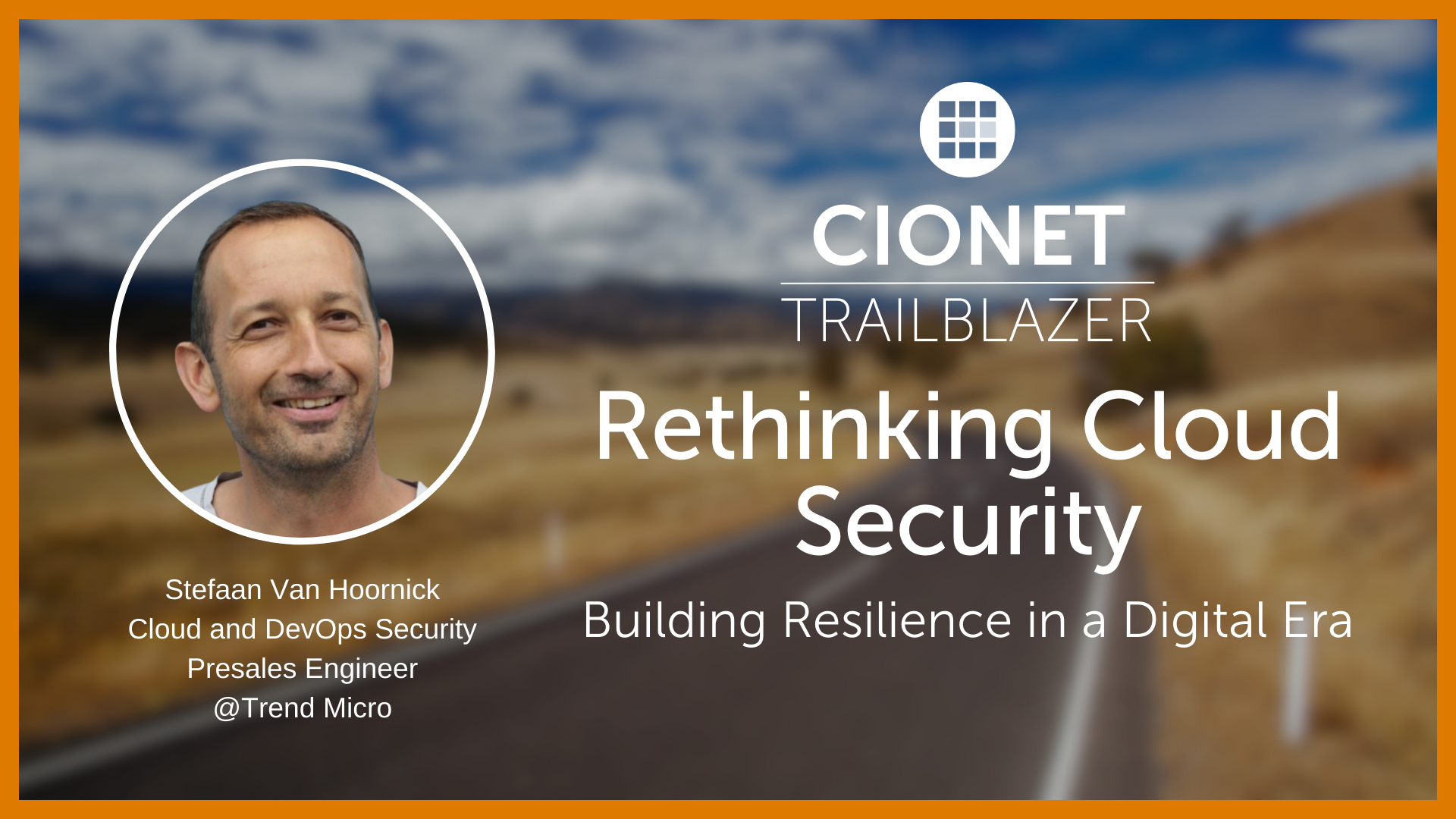
Published on: January 29, 2025 @ 9:58 AM
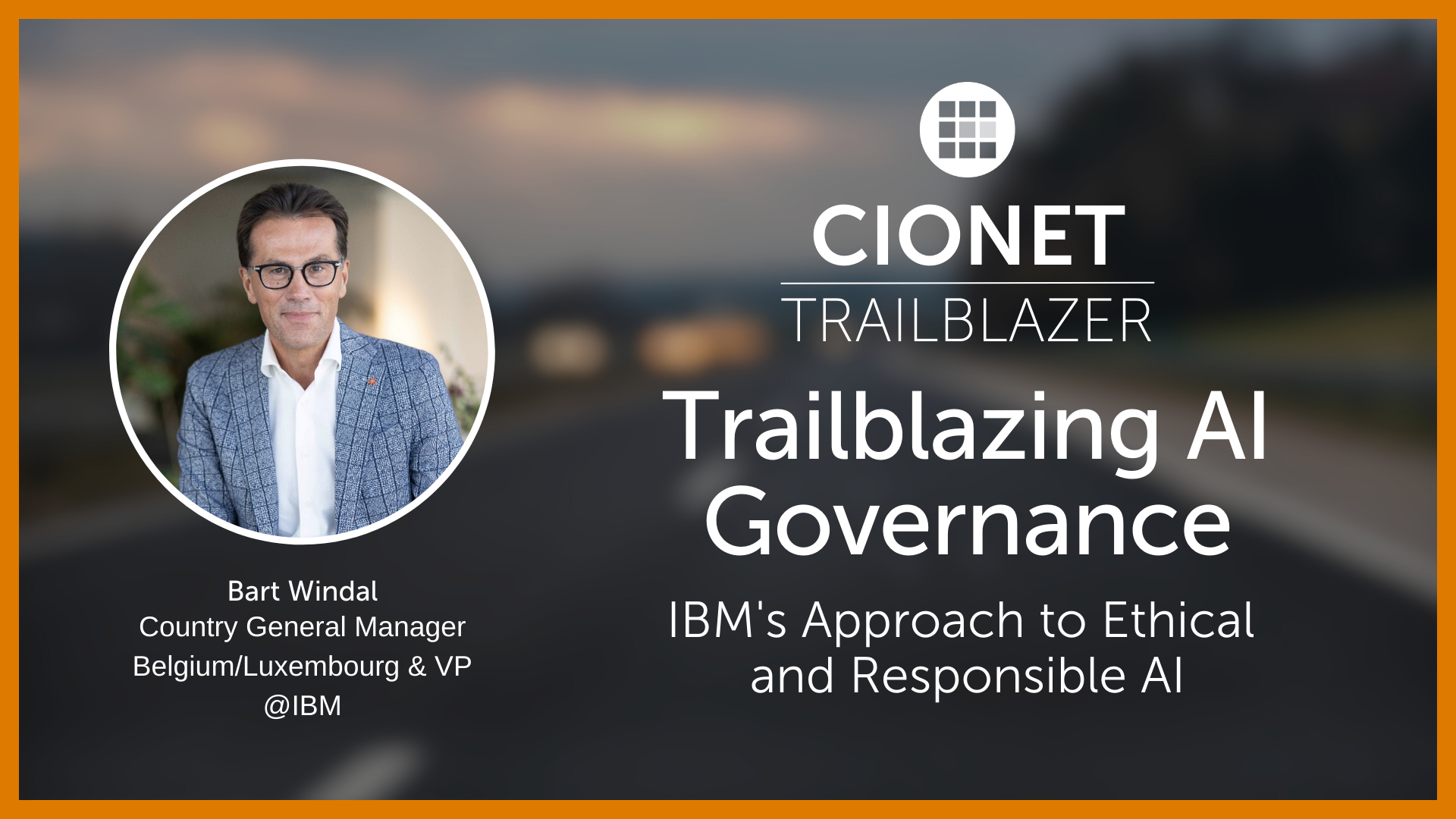
Published on: December 18, 2024 @ 9:07 AM
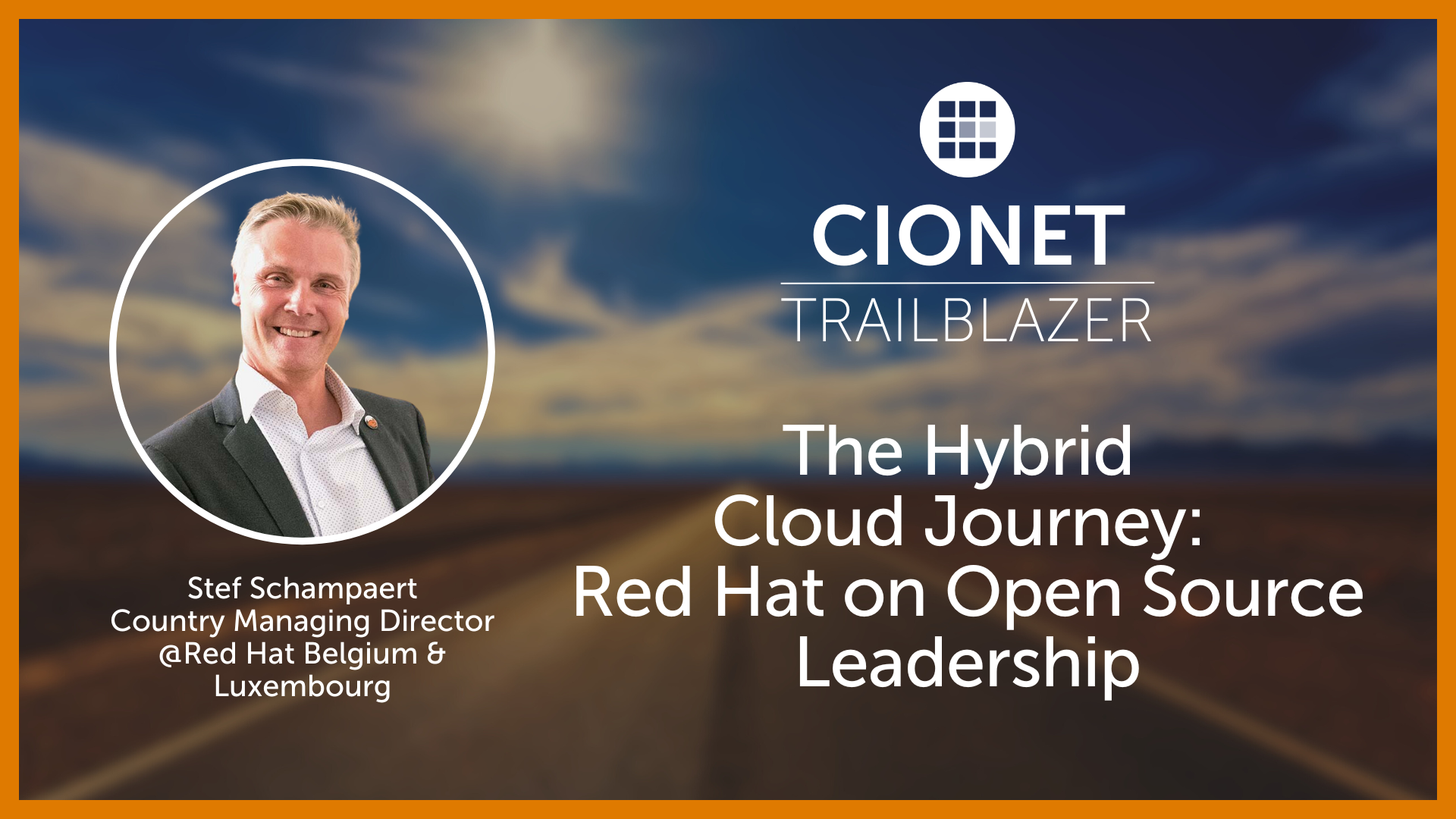
Published on: October 30, 2024 @ 9:34 AM
.png)
Published on: October 29, 2024 @ 11:37 AM
.png)
Published on: September 27, 2024 @ 10:41 AM

Published on: September 25, 2024 @ 8:59 AM

Published on: September 18, 2024 @ 3:44 PM
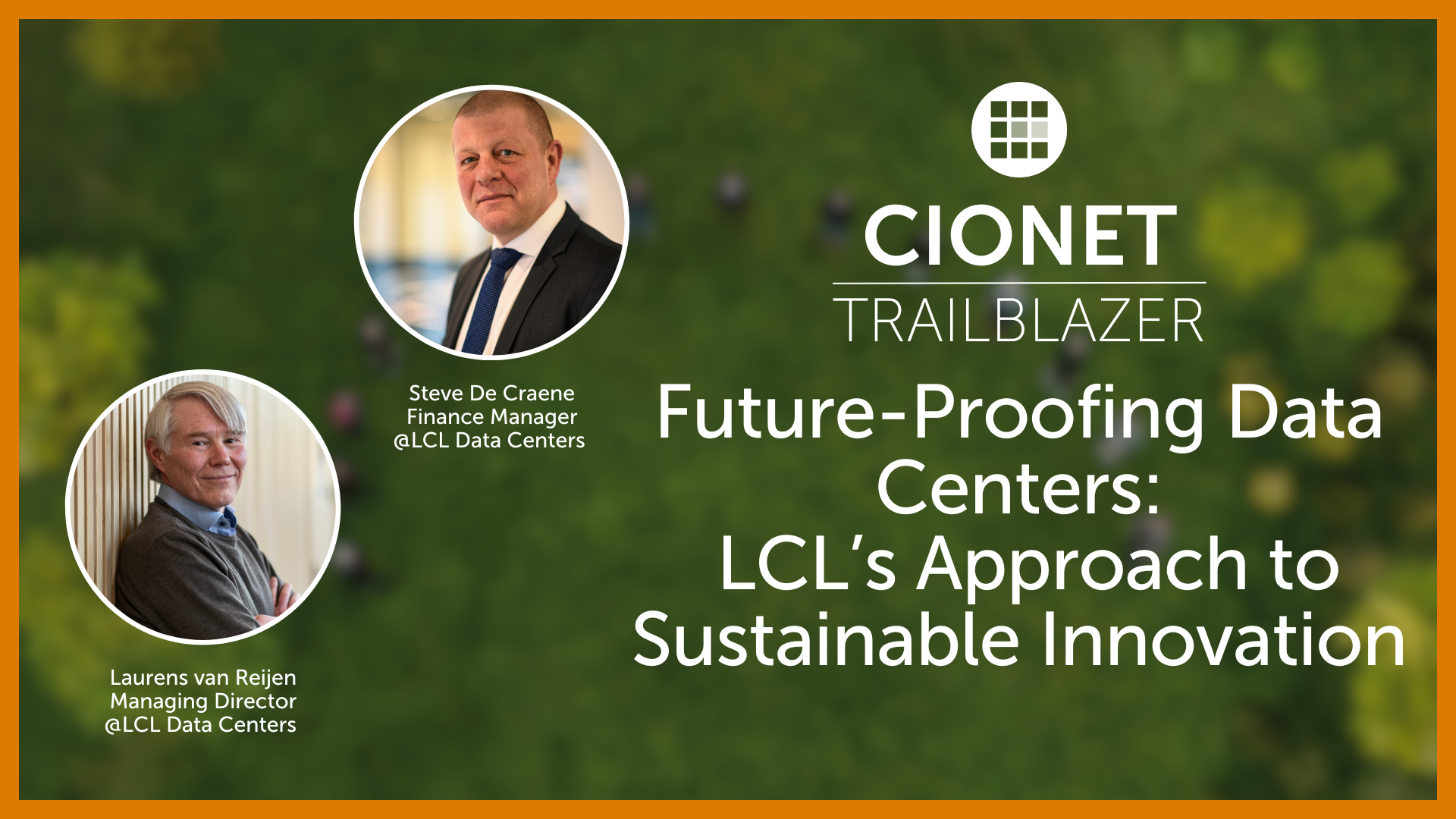
Published on: August 28, 2024 @ 10:10 AM
Proximus differentiates customer experience with a centralized Mendix based app ecosystem
In 2022, Proximus adopted the Mendix low-code platform to centralize their digital services in a modern entrypoint for customers called Proximus+. To ensure their success and future-readiness, Proximus also leveraged Mendix digital transformation best practices to change the way they release solutions going forward.
Proximus is a leading provider of digital services and communication in Belgium, connecting over 3 million customers through internet, television, and mobile phone services.
With a slew of business-critical initiatives on the horizon and competitive pressure from new market entrants, Proximus needed to rethink their customer experience and quickly bring its next iteration to market.
However, a landscape of disparate customer-facing solutions for activities such as account management or video streaming meant a disjointed experience for Proximus’s customers. Additionally, legacy systems, technical debt, and slow development cycles made it a challenge to provide the modern media experiences that their customers expected.
In 2022, Proximus adopted the Mendix low-code platform to centralize their digital services in a modern entrypoint for customers called Proximus+. To ensure their success and future-readiness, Proximus also leveraged Mendix digital transformation best practices to change the way they release solutions going forward.
In recent years Proximus has expanded their digital services for customers with solutions such as Doktr, a telehealth application, and Pick X, a video streaming app. These new offerings were driven by the organization’s ‘Think Possible’ strategy, instituted by CEO Guillame Boutin in 2019.
This strategy has pushed Proximus to “engage with customers in new ways and be a driver in digitizing Belgian society,” said Georgi van Droogenbroeck, product owner for Consumer Strategy and Digital Ecosystems.
These solutions have supported Proximus in maintaining their premium positioning in the market. However, each of the applications existed independently, meaning that a Proximus customer would need to download multiple applications and use separate logins to engage with their services.
“We have a very broad landscape of applications with six customer-facing apps in the market. Putting marketing costs behind each of those applications becomes a lot of stories to tell and costly customer acquisition for each solution,” said Van Droogenbroeck.
“We decided we should create one front door that opens to the landscape of individual solutions and allows you to easily switch and navigate between the capabilities a customer may need.”
Georgi van Droogenbroeck / Product Owner
Proximus had a vision to bring their application ecosystem together in a “Super App” that would unify their many customer-facing services.
With an executive mandate to find the most resource-efficient means of development, the Proximus team soon realized that a low-code platform could satisfy their technical requirements within a timeline and cost that was acceptable for their stakeholders.
In 2021 Proximus conducted an evaluation of low-code market leaders to find a platform that could bring together six React Native-built applications into a single user interface. Van Droogenbroeck touts the Mendix Platform’s architecture and mobile capabilities as the leading technical differentiators in their selection.
“Ultimately, we selected Mendix due to its flexibility.”
“First, the platform offers branching capabilities. Additionally, Mendix native mobile runs on React Native which allows us to develop custom widgets. We have a lot of custom requirements, so the flexibility of reusing React Native and extending our core skillsets that we already had in-house was a huge benefit,” said Van Droogenbroeck.
Leaders at Proximus also saw alignment between the Mendix platform and their business strategy to become:
With a robust, all-in-one development platform and the process-driven expertise of Mendix, the Proximus team began development of their new super app, Proximus+, in March 2022.
The adoption of Mendix coincided with the launch of Proximus’ Peak Program, a strategy to shift the entire organization towards agile work.
“The Peak Program brought the implementation of multi-disciplinary teams working in the agile methodology,” said Van Droogenbroeck.
“Mendix is a great facilitator in this. We have seen that the gaps between business, design, and IT are closing, and everyone is working towards the same vision.”
Georgi van Droogenbroeck / Product Owner
That facilitation can be seen in the visual, abstracted nature of Mendix low-code development. Van Droogenbroeck says that having the ability to “demo the logic and explain what is under the hood in a way that is understandable for stakeholders,” is a welcomed change from trying to present traditional code to a room full of businesspeople.
Ultimately, this allows the team to have a more meaningful dialogue about the progress of the application. Despite Mendix solving for traditional development missteps, there were still team members who were reluctant to change.
“There was a lot of change management needed to convince certain groups that low-code was the right path forward,” said Van Droogenbroek. “It’s like this with any transition of code, and we had the same experience when we introduced React Native.”
While there was no silver bullet to make human beings more change-adept overnight Proximus followed methods found in the Mendix Digital Execution Practice, which focuses on cross-functional collaboration and adopting an agile mindset.
Some tactics Proximus leveraged include:
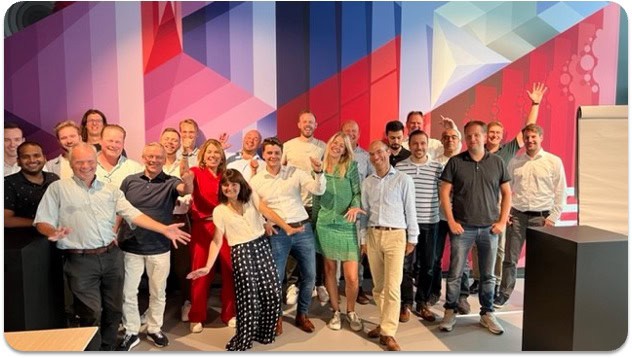 The team developing Proximus+ gathers at the Mendix Rotterdam office for knowledge-sharing and community-building activities.
Van Droogenbroeck highlighted the benefits of adopting a change-ready mindset: “On the other hand, the people who embraced Mendix and agile saw how quickly they could make advancements. They also really embraced the concept of reusability and started to think in a more solution-oriented way.”
Today there are over 40 Proximus employees on the cross-functional teams using Mendix who come from a range of backgrounds.
“It’s more about looking for a well-rounded skillset – we’re looking for people who are communicative and understand the business requirements.”
“When we look at talent profiles to fill out the team, experience using Mendix is of course important. But I also think that, with the right inputs, any developer can quickly learn the technology… Our teams are evolving from pure IT to more cross-functional,” said Van Droogenbroeck.
Development of Proximus+ was completed in March of 2024, bringing six existing React Native applications into a single native mobile UX. Proximus’ design experts like Laura Versteele were critical in the early customer research and positioning that justified the unification of their services in Proximus+.
“When we crafted the value proposition for Proximus+ we thought through all the benefits for our customers. Many people mentioned that having so many different applications would lead to storage issues on their phone,” said Versteele.
“One of our key goals is to help our customers with efficiency.”
Laura Versteele / Chapter Owner, Design
Proximus+ launched as an upgrade to the existing MyProximus app where customers can now engage with digital services such as:
 Accessing their Proximus account to pay bills and manage plan information, data usage, and devices.
“It’s a daily companion in your pocket,” said Van Droogenbroeck, “We’ve aimed to take the most relevant aspects of daily life and bring them together in one application with one login.”
The Proximus team took a thoughtful and structured approach to crafting this new user experience, working in a ‘Double Diamond’ framework.
“Through our qualitative and quantitative research with users there were a few design principles we wanted to respect. First, we feature our telecom offering most prominently on the Proximus+ home screen so that it’s very clear that you’re in a Proximus application,” said Versteele.
“On the other hand, we make it very easy for users to discover the additional value-add services around mobility, home, energy, and neighborhood services.”

Versteele shared that striking a balance in design makes it easier for users to explore new services that are relevant for them, increasing Proximus’ awareness for additional services and partners.
“What we’re doing with Proximus+ – creating this digital ecosystem for partners and services – is unprecedented for our industry in Europe,” said Van Droogenbroeck.
“So far, we’re seeing that this approach has clearly satisfied a need, as we’ve seen a measurable impact on the time to develop and launch new features, while also onboarding external partners to the app ecosystem,” he shared.
The implications of developing Proximus+ with low-code were not just to address the present, but also having the flexibility to evolve in the future.
Of the architectural considerations for Proximus+, Project Manager Ben Sodermans said, “We’ve built an architecture that works very well for adaptability. We have the single app where our users enter, but you have a separate app for the different ecosystem features like mobility or home.
“That’s a big benefit, because we can evolve features in the individual applications or upgrade without touching the others.”
Ben Sodermans / Project Manager
Low-code also expedites delivery by enabling Proximus to craft its own ecosystem of reusable integrations and functionality between applications when needed in a governed way.
“For me, one of the key benefits of low-code is reusability,” said Van Droogenbroeck. “We’ve prioritized establishing common components in our design systems. For example, we recently made bar charts for you telephone bill to show data usage that can also be reused where people want to see their energy consumption.”
“Those are instances where we can easily see cost reduction and benefits to our development velocity.”
“We can better balance instances that require custom designs versus opportunities for reuse, and how that impacts time to market. That is not something you can do with traditional coding,” he said.
The Mendix platform’s ease of integration, ecosystem of reusable components, and governance controls allows Proximus to scale out their own platform capabilities within predetermined guardrails.
The team has already tested their ability to expand into new business and service areas efficiently in the first iteration of Proximus+. “One good example is energy consumption,” said Sodermans.
“Our customers are looking for advice on how to reduce their energy consumption at home and compare prices, so we’ve developed an offering around that and we’ll continue to expand it… We have implemented real-time energy monitoring with suggestions, analysis, and notifications for the user to reduce their consumption and costs.”
Of their strategy moving forward, Tina Hernalsteen, Ecosystem Lead at Proximus, said, “As we mature the Proximus+ offering, we want to shift from a pure application to a platform approach that is also a place to connect our customers and partners. For instance, partners that our customers also opt to engage with can send out notifications via the Proximus+ application.”
“You can rely on us as the single, secure gateway to the services you need as a customer. We see Mendix as having the right ingredients to facilitate this ‘platformization’ strategy as we go forward.”
Tina Hernalsteen / Ecosystem Lead
For Proximus centralizing their customer experience isn’t just beneficial for end-users, but over time they can better leverage user data to identify areas for cross-promotion of services.
Beyond the success of their first major project with Mendix, the Proximus team is already optimistic to realize more benefits of closing the business and IT gap in development, with a foundation laid through the Mendix Digital Execution Practice.
“The biggest change I’ve witnessed now that we’re developing in Mendix is the motivation and cooperation between teams,” said Sodermans. “People are happy working together towards a common goal on projects that are visible and valuable. Mendix also offers us the ability to prototype and test ideas and iterate more quickly towards the right outcome.”
This close collaboration is already sparking new ideas – of which the team has plenty related to their in-store experience, sales agent tools, and loyalty programs.
“It was necessary to reinvent ourselves to remain relevant for our users and be top-of-mind in their daily life. We chose Mendix to tackle this complex challenge for a reason,” said Van Droogenbroeck.
“The reusability, time to market, and cost efficiency are directly impacting how we evolve our customer experience and our business. We’re pleasantly surprised with the results we’ve seen so far.”

CIONET’s Cyber Circle: a new three-event programme exclusively focusing on the most urgent, complex, and high-impact challenges in cybersecurity today. Launched in 2026, this initiative brings together CISOs, CIOs, and senior IT executives with a strong interest in cybersecurity for three curated gatherings each year. As part of CIONET’s trusted executive community, the Cyber Circle provides a confidential, peer-driven environment to exchange insights, share real-world experiences, and address evolving cyber threats. Each session is designed to foster strategic dialogue, strengthen resilience, and elevate cybersecurity as a core driver of business value.
Read More.png)
The Telenet Business Leadership Circle powered by CIONET, offers a platform where IT executives and thought leaders can meet to inspire each other and share best practices. We want to be a facilitator who helps you optimise the performance of your IT function and your business by embracing the endless opportunities that digital change brings.
Read More
Découvrez la dynamique du leadership numérique aux Rencontres de CIONET, le programme francophone exclusif de CIONET pour les leaders numériques en Belgique, rendu possible grâce au soutien et à l'engagement de nos partenaires de programme : Deloitte, Denodo et Red Hat. Rejoignez trois événements inspirants par an à Liège, Namur et en Brabant Wallon, où des CIOs et des experts numériques francophones de premier plan partagent leurs perspectives et expériences sur des thèmes d'affaires et de IT actuels. Laissez-vous inspirer et apprenez des meilleurs du secteur lors de sessions captivantes conçues spécialement pour soutenir et enrichir votre rôle en tant que CIO pair. Ne manquez pas cette opportunité de faire partie d'un réseau exceptionnel d'innovateurs numériques !
Read More.jpg)
CIONET is committed to highlighting and celebrating female role models in IT, Tech & Digital, creating a leadership programme that empowers and elevates women within the tech industry. This initiative is dedicated to showcasing the achievements and successes of leading women, fostering an environment where female role models are recognised, and their contributions can ignite progress and inspire the next generation of women in IT. Our mission is to shine the spotlight a little brighter on female role models in IT, Tech & Digital, and to empower each other through this inner network community.
Read More


-Apr-01-2022-10-58-34-57-AM.png)









-Dec-13-2023-10-53-15-5032-AM.png)



-Jun-12-2023-01-23-11-7540-PM.png)




-Apr-01-2022-10-58-34-68-AM.png)






.png)



%20(003).png)



.png)




.png)











-Sep-01-2022-02-47-55-60-PM.png)
-Nov-22-2023-08-56-42-6802-AM.png)
.png)


.png "be-page-banner (1)")



.png)
.png)
.png)
.png)