

.png)
Belgium 20-10-2026 Squad Only Virtual English
Cloud decisions are becoming more selective. The challenge is deciding where each workload should run based on cost, performance, control, resilience, sovereignty, and business need. Three pressure points usually drive the decision. - Cost visibility becomes harder when usage grows across cloud services, data platforms, and AI workloads. - Performance and latency matter more when systems need fast access to data or support operational processes. - Sovereignty and resilience become critical when data location, continuity, vendor dependency, and exit options enter the discussion. The working question is simple: how do we place workloads where they create the most value while keeping the hybrid landscape manageable? If these trade-offs are on your agenda, let’s compare how others are handling similar choices.
Read More.png)
Belgium 10-11-2026 Squad Only Virtual English
Data platforms are meant to simplify access and support better use of data. The challenge is choosing and governing the platform landscape in a way that creates consistency, reuse, and long-term value. Three pressure points usually appear. - Platform choice becomes difficult when teams have different needs for speed, flexibility, cost, and control. - Business meaning needs protection: customer, revenue, product, risk, and FTE need shared definitions across tools. - Ownership and governance need to be clear, so platforms grow with accountability and discipline. The working question is simple: how do we give teams the data capabilities they need while keeping the platform landscape understandable, governed, and reusable? If these questions are familiar, let’s compare approaches with others facing the same data landscape.
Read More.png)
Belgium 13-11-2026 Squad Only Physical English
Many IT capabilities are essential and difficult to fund through a simple project ROI. The challenge is showing why architecture, governance, resilience, cybersecurity maturity, data foundations, and AI readiness deserve investment before the gap becomes expensive. Three pressure points make the case harder. - Shared value means the benefit often sits across several teams, while the budget sits in one place. - Timing creates friction because the cost is immediate while the value appears over time. - Risk translation is needed so business and finance leaders understand the consequence of delaying the investment. The working question is simple: how do we turn foundational IT capabilities into credible investment cases that link cost, risk, business value, and future flexibility? If you are building these cases internally, let’s compare how others are positioning value, risk, and timing.
Read More
Published on: September 30, 2026 @ 1:17 PM
Published on: August 26, 2026 @ 9:13 AM
Published on: July 29, 2026 @ 10:08 AM
Published on: June 24, 2026 @ 5:00 PM

Published on: May 27, 2026 @ 9:21 AM
Published on: May 07, 2026 @ 4:02 PM
.png)
Published on: April 29, 2026 @ 9:11 AM
Published on: March 26, 2026 @ 3:37 PM
-2.png)
Published on: March 25, 2026 @ 9:58 AM
Published on: March 13, 2026 @ 3:43 PM
-Feb-25-2026-10-01-07-2508-AM.png)
Published on: February 25, 2026 @ 11:01 AM
.png)
Published on: February 25, 2026 @ 9:00 AM

Published on: February 24, 2026 @ 5:00 PM
CIONET Trailblazer: CISO: The Shift from Prevention to Resilience: Turning Visibility into Execution
Published on: January 28, 2026 @ 9:48 AM
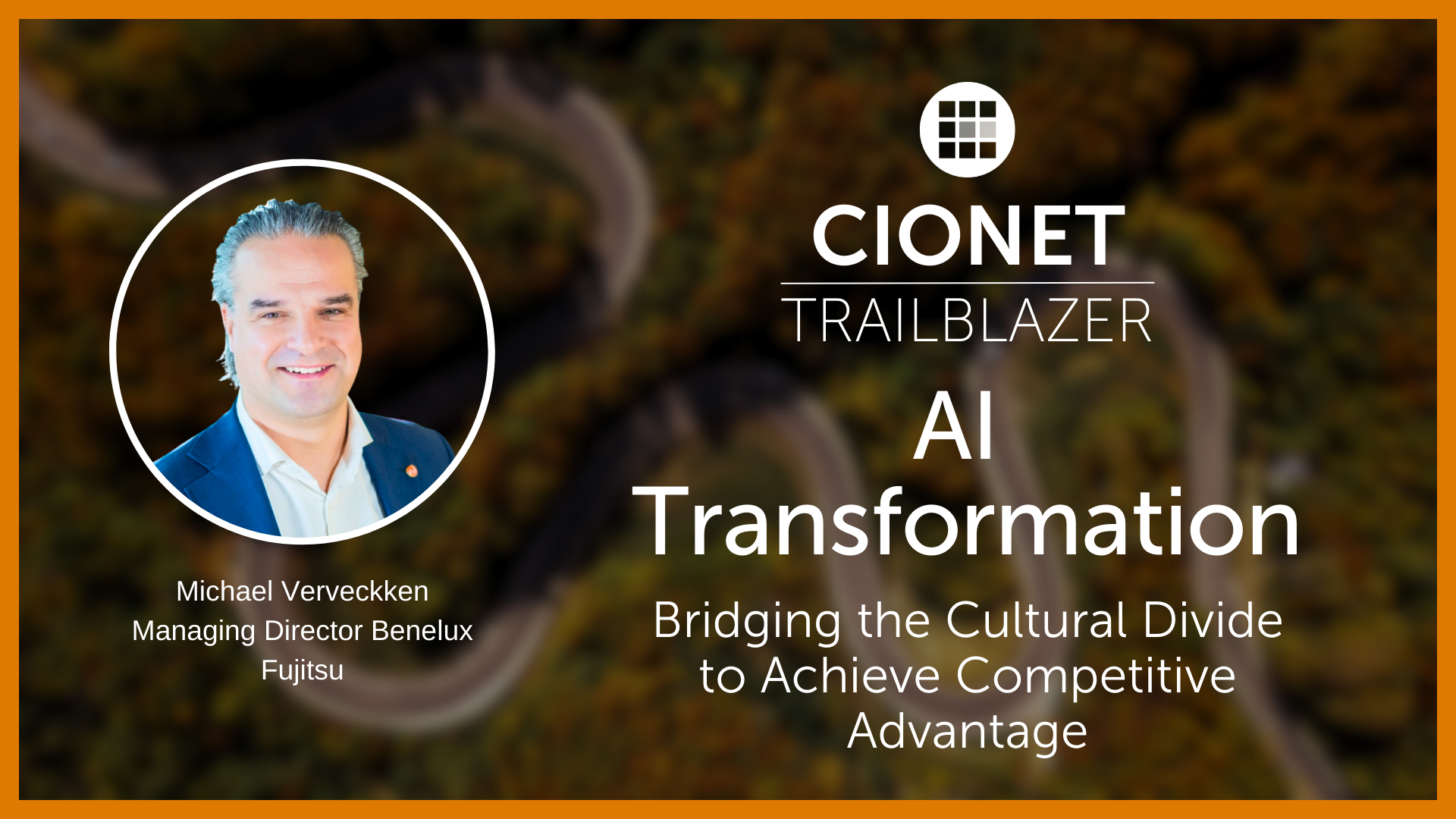
CIONET Trailblazer: AI Transformation: Bridging the Cultural Divide to Achieve Competitive Advantage
Published on: December 17, 2025 @ 9:16 AM

Published on: October 29, 2025 @ 11:31 AM
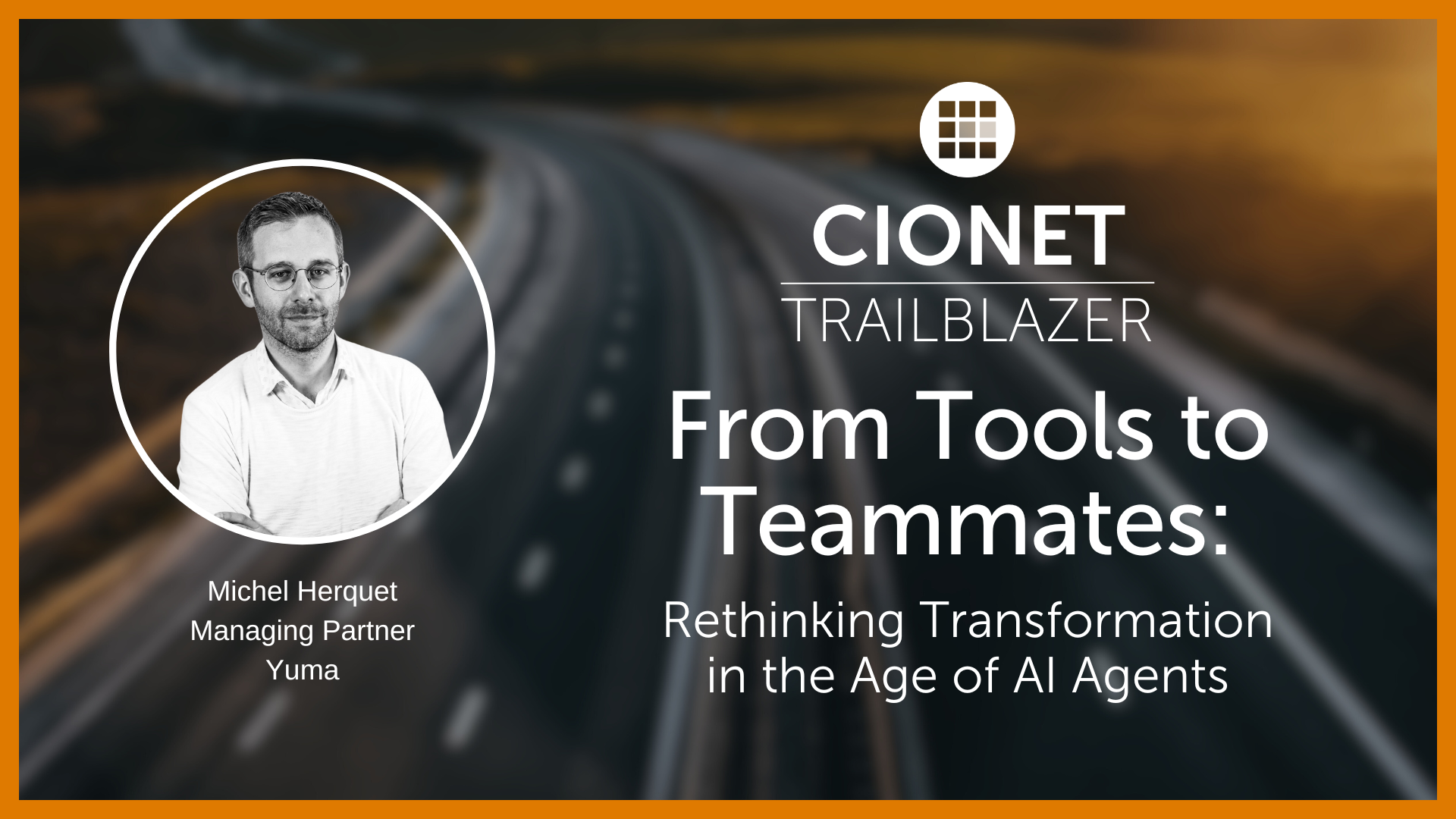
Published on: July 30, 2025 @ 9:19 AM

Published on: June 25, 2025 @ 9:14 AM
.png)
Published on: April 30, 2025 @ 9:04 AM
-1.png)
Published on: March 26, 2025 @ 9:59 AM
-1.png)
Published on: March 04, 2025 @ 5:07 PM
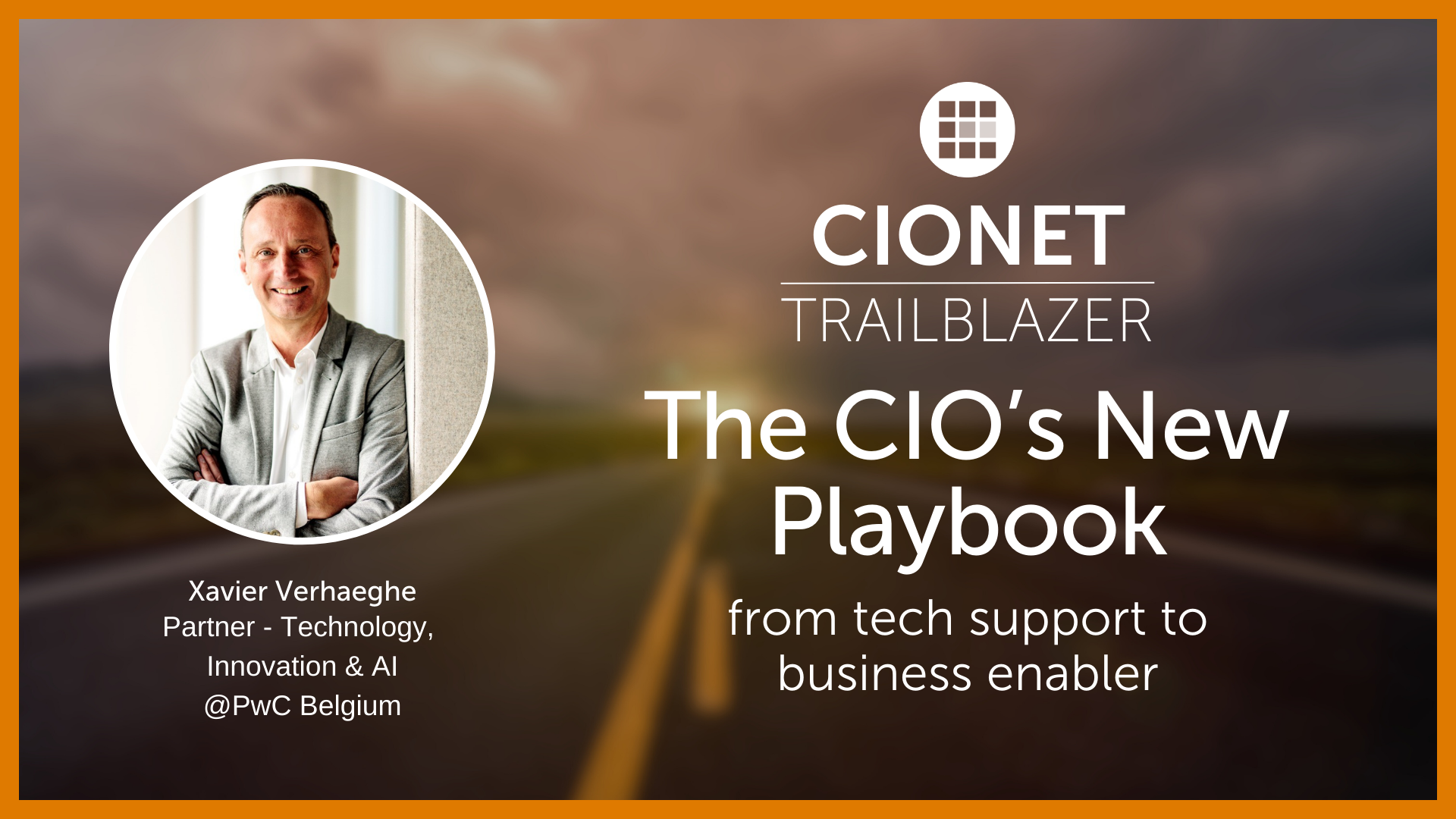
Published on: February 26, 2025 @ 10:51 AM
Published on: February 25, 2025 @ 4:14 PM
-4.png)
Published on: February 25, 2025 @ 10:33 AM

Published on: January 29, 2025 @ 9:58 AM
Published on: December 18, 2024 @ 9:07 AM
Published on: October 30, 2024 @ 9:34 AM
.png)
Published on: October 29, 2024 @ 11:37 AM
.png)
Published on: September 27, 2024 @ 10:41 AM
Published on: September 25, 2024 @ 8:59 AM
Published on: September 18, 2024 @ 3:44 PM

Published on: August 28, 2024 @ 10:10 AM
Moderna and OpenAI partner to accelerate the development of life-saving treatments.
Moderna partners with OpenAI to deploy ChatGPT Enterprise to thousands of employees across the company. Now every function is empowered with AI, creating novel use cases and GPTs that accelerate and expand the impact of every team.
Moderna has been at the intersection of science, technology, and health for more than 10 years. Moderna’s mission is to deliver the greatest possible impact to people through mRNA medicines—with the COVID-19 vaccine being their most well-known breakthrough.
The company has partnered with OpenAI since early 2023. Now, ChatGPT Enterprise is evolving how Moderna operates across each function.
Moderna is using its platform for developing mRNA medicines to bring up to 15 new products to market in the next 5 years—from a vaccine against RSV to individualized cancer treatments. In order to achieve its ambitions, Moderna has adopted a people-centric, technology-forward approach, constantly testing new technology and innovation that can increase human capacity and clinical performance.
Moderna adopted generative AI the same way Moderna adopts other technology: with the mindset of using the power of digital to maximize its positive impact on patients. To allow AI to flourish, they knew they needed to start with the user and invest in laying a strong foundation for change.
Moderna’s objective was to achieve 100% adoption and proficiency of generative AI by all its people with access to digital solutions in six months. “We believe in collective intelligence when it comes to paradigm changes,” said Miller, “it’s everyone together, everyone with a voice and nobody left behind.” For this, Moderna assigned a team of dedicated experts to drive a bespoke transformation program. Their approach combined individual, collective and structural change management initiatives.
Individual change management initiatives included in-depth research and listening programs, as well as trainings hosted in person, online and with dedicated AI learning companions. “Using AI to teach AI was key to our success”, Miller points out. Collective change management initiatives included an AI prompt contest to identify the top 100 AI power users who were then structured as a cohort of internal Generative AI Champions. Moderna’s culture of learning led to local office hours in every business line and geography, and scaled through an internal forum on AI, which now has 2,000 active weekly participants. Lastly, structural change management initiatives included engaging Moderna’s CEO and executive committee members to foster AI culture through leadership meetings and town halls as well as incentive programs and sponsored events with internal and external experts.
This work led to an early win with the launch of an internal AI chatbot tool, mChat, at the beginning of 2023. Built on OpenAI’s API, mChat was a success, adopted by more than 80% of employees across the company, building a solid foundation for the adoption of ChatGPT Enterprise.
With the launch of ChatGPT Enterprise, Moderna had a decision to make: continue developing mChat as an all-purpose AI tool, or give employees access to ChatGPT Enterprise?“
As a science-based company, we research everything,” said Brice Challamel, Head of AI Products and Platforms at Moderna. Challamel’s team did extensive user testing comparing mChat, Copilot, and ChatGPT Enterprise. “We found out that the net promoter score of ChatGPT Enterprise was through the roof. This was by far the company-favorite solution, and the one we decided to double down on,” Challamel said.
Once employees had a way to create their own GPTs easily, the only limit was their imaginations. “We were never here to fill a bucket, but to light a fire,” Challamel said. “We saw the fire spread, with hundreds of use cases creating positive value across teams. We knew we were on to something revolutionary for the company.”
The company’s results are beyond expectations. Within two months of the ChatGPT Enterprise adoption:
Moderna had 750 GPTs across the company
40% of weekly active users created GPTs
Each user has 120 ChatGPT Enterprise conversations per week on average
One of the many solutions Moderna has built and is continuing to develop and validate with ChatGPT Enterprise is a GPT pilot called Dose ID. Dose ID has the potential to review and analyze clinical data and is able to integrate and visualize large datasets. Dose ID is intended for use as a data-analysis assistant to the clinical study team, helping to augment the team’s clinical judgment and decision-making.
“Dose ID has provided supportive rationale for why we have picked a specific dose over other doses. It has allowed us to create customized data visualizations and it has also helped the study team members converse with the GPT to further analyze the data from multiple different angles,” said Meklit Workneh, Director of Clinical Development at Moderna.
Dose ID uses ChatGPT Enterprise’s advanced data analysis feature to automate the analysis and verify the optimal vaccine dose selected by the clinical study team, by applying standard dose selection criteria and principles. Dose ID provides a rationale, references its sources, and generates informative charts illustrating the key findings. This allows for a detailed review, led by humans and with AI input, prioritizing safety and optimizing the vaccine profile prior to further development in late-stage clinical trials.
“The Dose ID GPT has the potential to boost the amount of work we’re able to do as a team. We can comprehensively evaluate these extremely large amounts of data, and do it in a very efficient, safe, and accurate way, while helping to ensure security and privacy,” added Workneh.
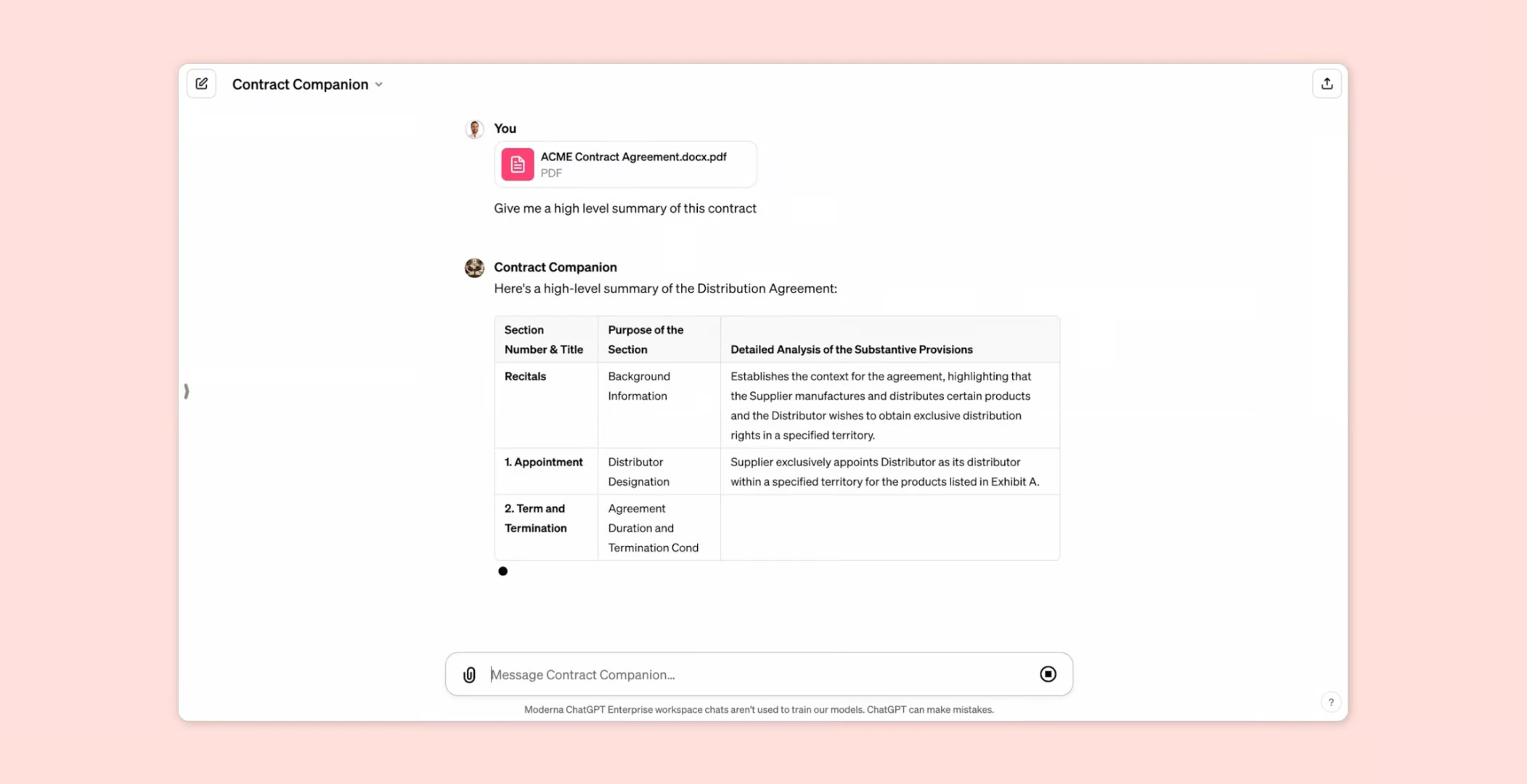
Moderna’s legal team boasts 100% adoption of ChatGPT Enterprise. “It lets us focus our time and attention on those matters that are truly driving an impact for patients,” said Shannon Klinger, Moderna’s Chief Legal Officer.
Now, with the Contract Companion GPT, any function can get a clear, readable summary of a contract. The Policy Bot GPT helps employees get quick answers about internal policies without needing to search through hundreds of documents.
Moderna’s corporate brand team has also found many ways to take advantage of ChatGPT Enterprise. They have a GPT that helps prepare slides for quarterly earnings calls, and another GPT that helps convert biotech terminology into approachable language for investor communications.
“Sometimes we’re so in our own world, and AI helps the brand think beyond that,” explained Kate Cronin, Chief Brand Officer of Moderna. “What would my mother want to know about Moderna, versus a regulator, versus a doctor? How do we tell our story in an effective way across different audiences? That’s where I think there’s a huge opportunity.”
With an ambitious plan to launch multiple products in the next few years, Moderna sees AI as a key component to their success—and their ability to stay lean as a business while setting new benchmarks in innovation.
“If we had to do it the old biopharmaceutical ways, we might need a hundred thousand people today,” said Bancel. “We really believe we can maximize our impact on patients with a few thousand people, using technology and AI to scale the company.”
Moderna has been well positioned to leverage generative AI having spent the last decade building a robust tech stack and data platform. The company fosters a culture of learning and curiosity, attracting employees that excel in adopting new technologies and building AI-first solutions.
By making business processes at Moderna more efficient and accurate, the use of AI ultimately translates to better outcomes for patients. “I’m really thankful for the entire OpenAI team, and the time and engagement they have with our team, so that together we can save more lives,” Bancel said.

CIONET’s Cyber Circle: a new three-event programme exclusively focusing on the most urgent, complex, and high-impact challenges in cybersecurity today. Launched in 2026, this initiative brings together CISOs, CIOs, and senior IT executives with a strong interest in cybersecurity for three curated gatherings each year. As part of CIONET’s trusted executive community, the Cyber Circle provides a confidential, peer-driven environment to exchange insights, share real-world experiences, and address evolving cyber threats. Each session is designed to foster strategic dialogue, strengthen resilience, and elevate cybersecurity as a core driver of business value.
Read More.png)
The Telenet Business Leadership Circle powered by CIONET, offers a platform where IT executives and thought leaders can meet to inspire each other and share best practices. We want to be a facilitator who helps you optimise the performance of your IT function and your business by embracing the endless opportunities that digital change brings.
Read More
Découvrez la dynamique du leadership numérique aux Rencontres de CIONET, le programme francophone exclusif de CIONET pour les leaders numériques en Belgique, rendu possible grâce au soutien et à l'engagement de nos partenaires de programme : Deloitte, Denodo et Red Hat. Rejoignez trois événements inspirants par an à Liège, Namur et en Brabant Wallon, où des CIOs et des experts numériques francophones de premier plan partagent leurs perspectives et expériences sur des thèmes d'affaires et de IT actuels. Laissez-vous inspirer et apprenez des meilleurs du secteur lors de sessions captivantes conçues spécialement pour soutenir et enrichir votre rôle en tant que CIO pair. Ne manquez pas cette opportunité de faire partie d'un réseau exceptionnel d'innovateurs numériques !
Read More.jpg)
CIONET is committed to highlighting and celebrating female role models in IT, Tech & Digital, creating a leadership programme that empowers and elevates women within the tech industry. This initiative is dedicated to showcasing the achievements and successes of leading women, fostering an environment where female role models are recognised, and their contributions can ignite progress and inspire the next generation of women in IT. Our mission is to shine the spotlight a little brighter on female role models in IT, Tech & Digital, and to empower each other through this inner network community.
Read More


-Apr-01-2022-10-58-34-57-AM.png)









-Dec-13-2023-10-53-15-5032-AM.png)



-Jun-12-2023-01-23-11-7540-PM.png)




-Apr-01-2022-10-58-34-68-AM.png)






.png)



%20(003).png)




.png)





.png)











-Sep-01-2022-02-47-55-60-PM.png)
-Nov-22-2023-08-56-42-6802-AM.png)
.png)


.png "be-page-banner (1)")
.png)
.png)
.png)
.png)