

.png)
Belgium 20-10-2026 Squad Only Virtual English
Cloud decisions are becoming more selective. The challenge is deciding where each workload should run based on cost, performance, control, resilience, sovereignty, and business need. Three pressure points usually drive the decision. - Cost visibility becomes harder when usage grows across cloud services, data platforms, and AI workloads. - Performance and latency matter more when systems need fast access to data or support operational processes. - Sovereignty and resilience become critical when data location, continuity, vendor dependency, and exit options enter the discussion. The working question is simple: how do we place workloads where they create the most value while keeping the hybrid landscape manageable? If these trade-offs are on your agenda, let’s compare how others are handling similar choices.
Read More.png)
Belgium 10-11-2026 Squad Only Virtual English
Data platforms are meant to simplify access and support better use of data. The challenge is choosing and governing the platform landscape in a way that creates consistency, reuse, and long-term value. Three pressure points usually appear. - Platform choice becomes difficult when teams have different needs for speed, flexibility, cost, and control. - Business meaning needs protection: customer, revenue, product, risk, and FTE need shared definitions across tools. - Ownership and governance need to be clear, so platforms grow with accountability and discipline. The working question is simple: how do we give teams the data capabilities they need while keeping the platform landscape understandable, governed, and reusable? If these questions are familiar, let’s compare approaches with others facing the same data landscape.
Read More.png)
Belgium 13-11-2026 Squad Only Physical English
Many IT capabilities are essential and difficult to fund through a simple project ROI. The challenge is showing why architecture, governance, resilience, cybersecurity maturity, data foundations, and AI readiness deserve investment before the gap becomes expensive. Three pressure points make the case harder. - Shared value means the benefit often sits across several teams, while the budget sits in one place. - Timing creates friction because the cost is immediate while the value appears over time. - Risk translation is needed so business and finance leaders understand the consequence of delaying the investment. The working question is simple: how do we turn foundational IT capabilities into credible investment cases that link cost, risk, business value, and future flexibility? If you are building these cases internally, let’s compare how others are positioning value, risk, and timing.
Read More
Published on: September 30, 2026 @ 1:17 PM
Published on: August 26, 2026 @ 9:13 AM
Published on: July 29, 2026 @ 10:08 AM

Published on: June 24, 2026 @ 5:00 PM

Published on: May 27, 2026 @ 9:21 AM
Published on: May 07, 2026 @ 4:02 PM
.png)
Published on: April 29, 2026 @ 9:11 AM
Published on: March 26, 2026 @ 3:37 PM
-2.png)
Published on: March 25, 2026 @ 9:58 AM

Published on: March 13, 2026 @ 3:43 PM
-Feb-25-2026-10-01-07-2508-AM.png)
Published on: February 25, 2026 @ 11:01 AM
.png)
Published on: February 25, 2026 @ 9:00 AM

Published on: February 24, 2026 @ 5:00 PM
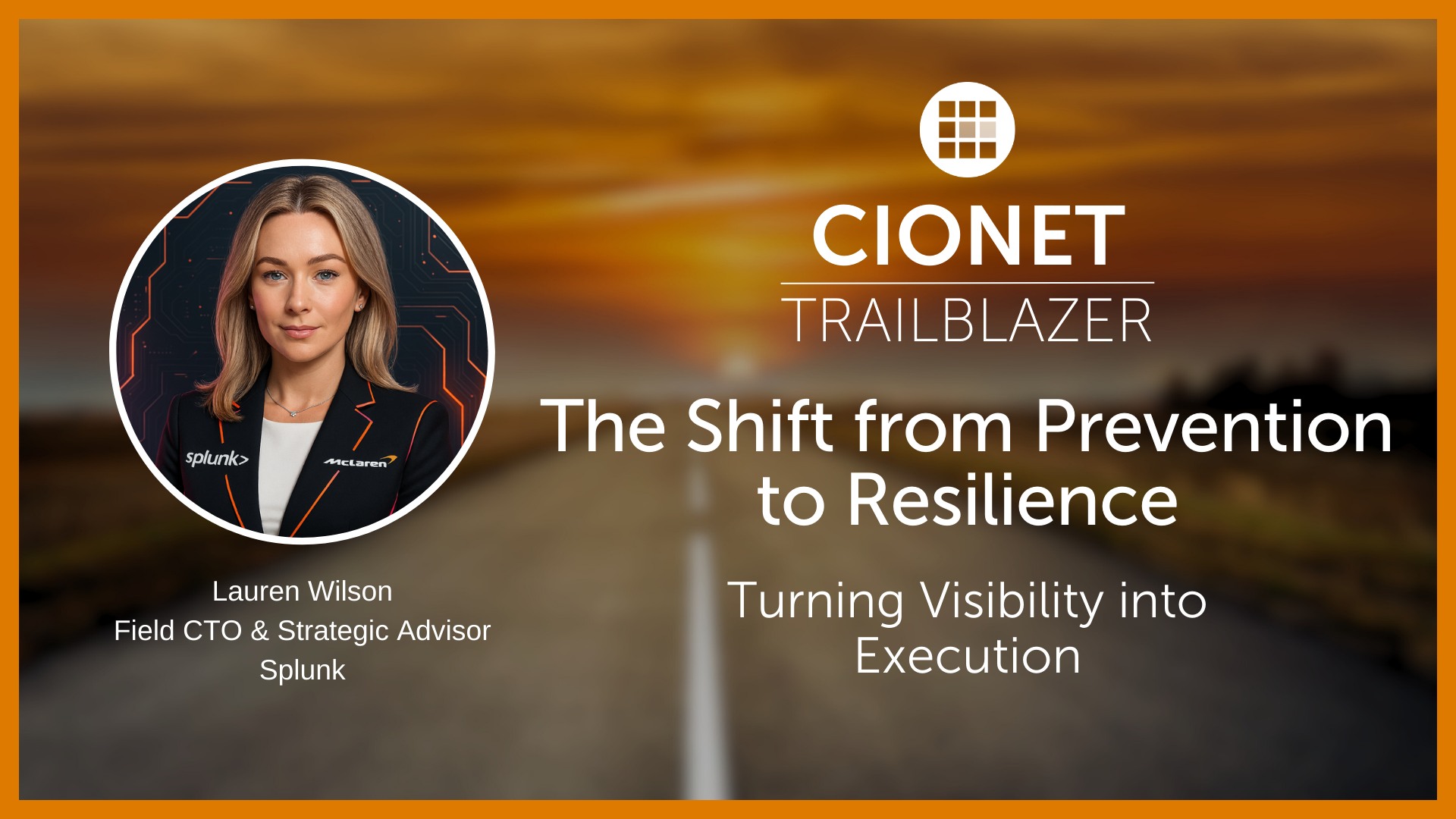
CIONET Trailblazer: CISO: The Shift from Prevention to Resilience: Turning Visibility into Execution
Published on: January 28, 2026 @ 9:48 AM

CIONET Trailblazer: AI Transformation: Bridging the Cultural Divide to Achieve Competitive Advantage
Published on: December 17, 2025 @ 9:16 AM

Published on: October 29, 2025 @ 11:31 AM
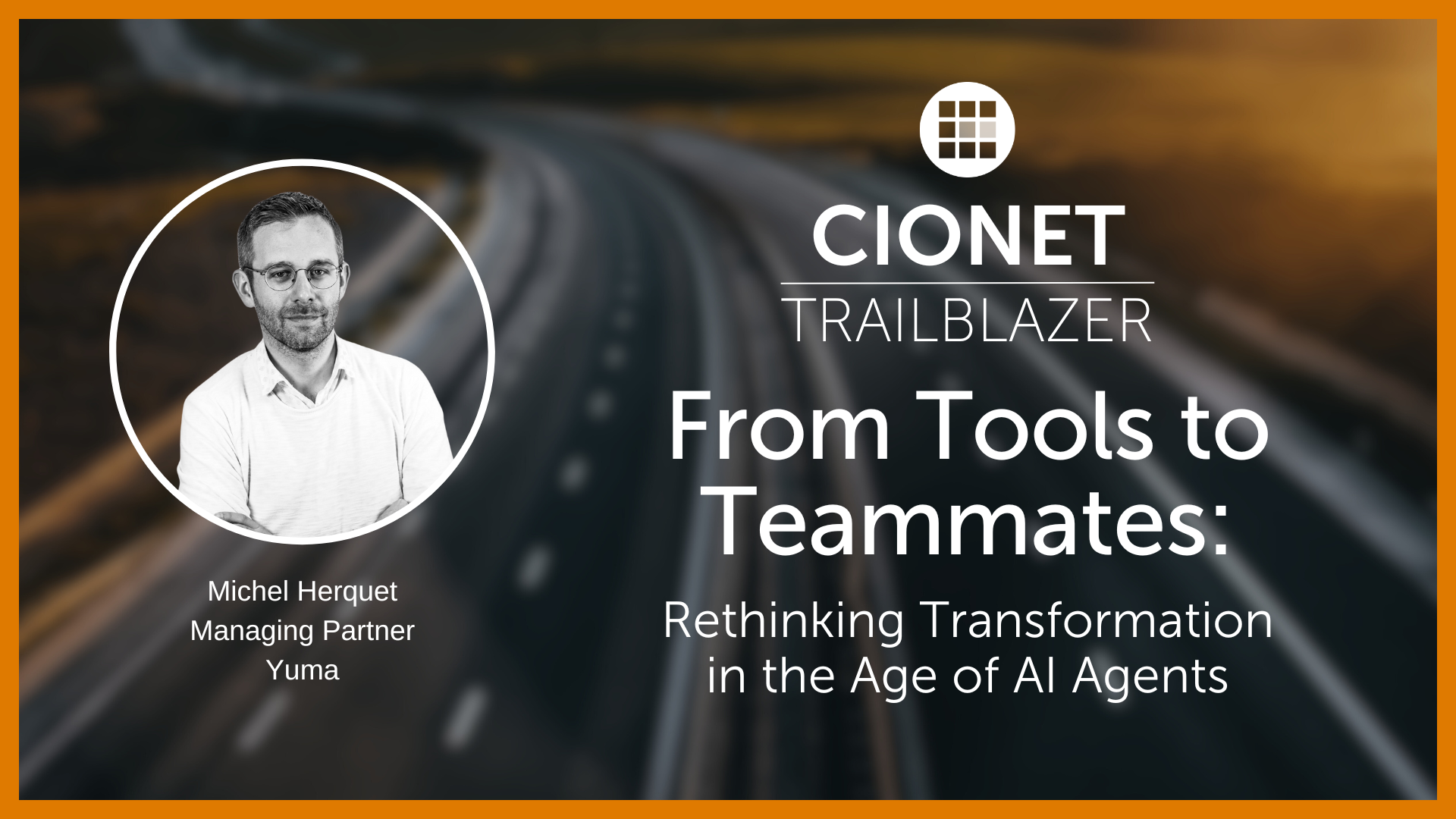
Published on: July 30, 2025 @ 9:19 AM

Published on: June 25, 2025 @ 9:14 AM
.png)
Published on: April 30, 2025 @ 9:04 AM
-1.png)
Published on: March 26, 2025 @ 9:59 AM
-1.png)
Published on: March 04, 2025 @ 5:07 PM
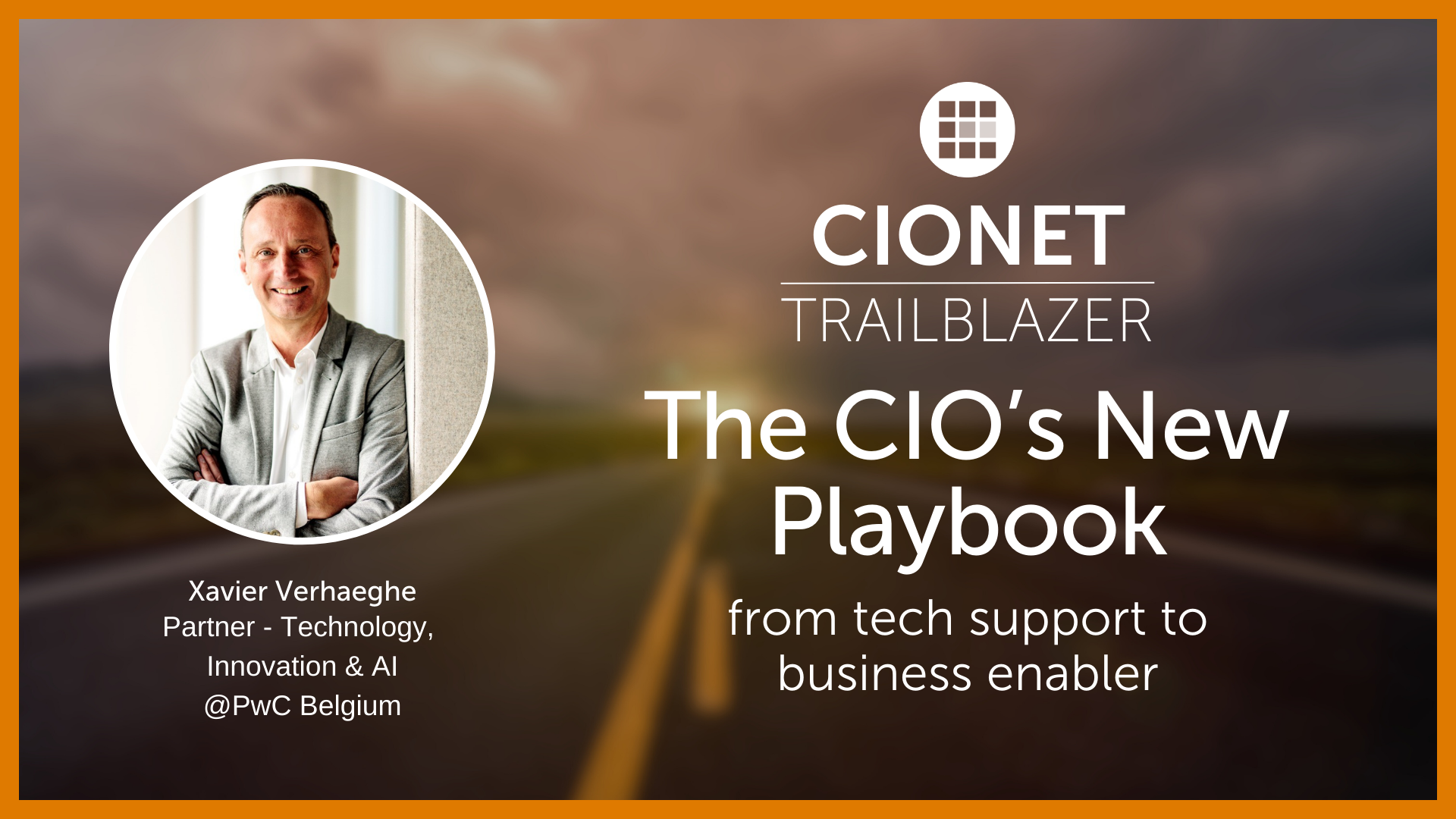
Published on: February 26, 2025 @ 10:51 AM
Published on: February 25, 2025 @ 4:14 PM
-4.png)
Published on: February 25, 2025 @ 10:33 AM
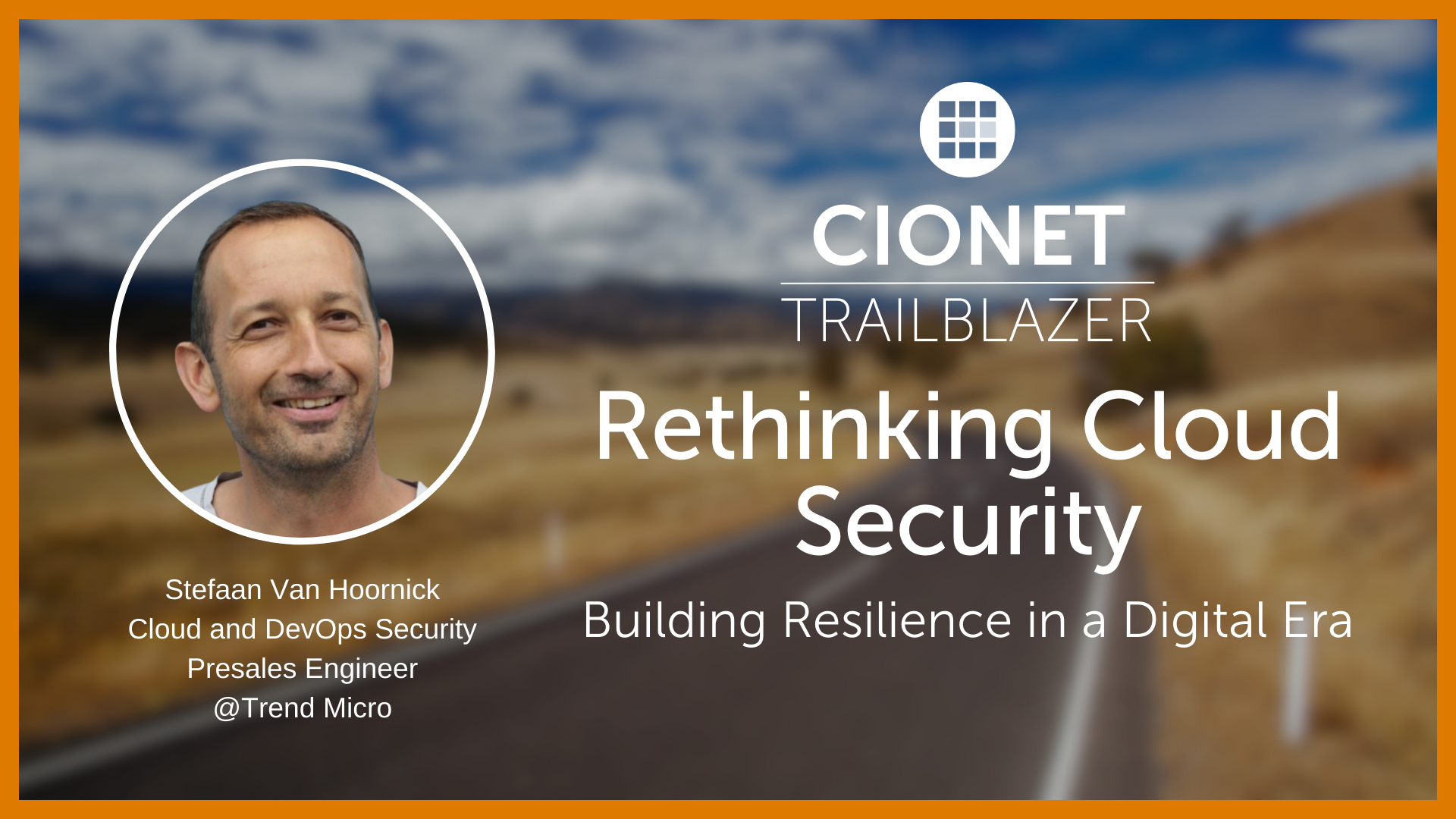
Published on: January 29, 2025 @ 9:58 AM
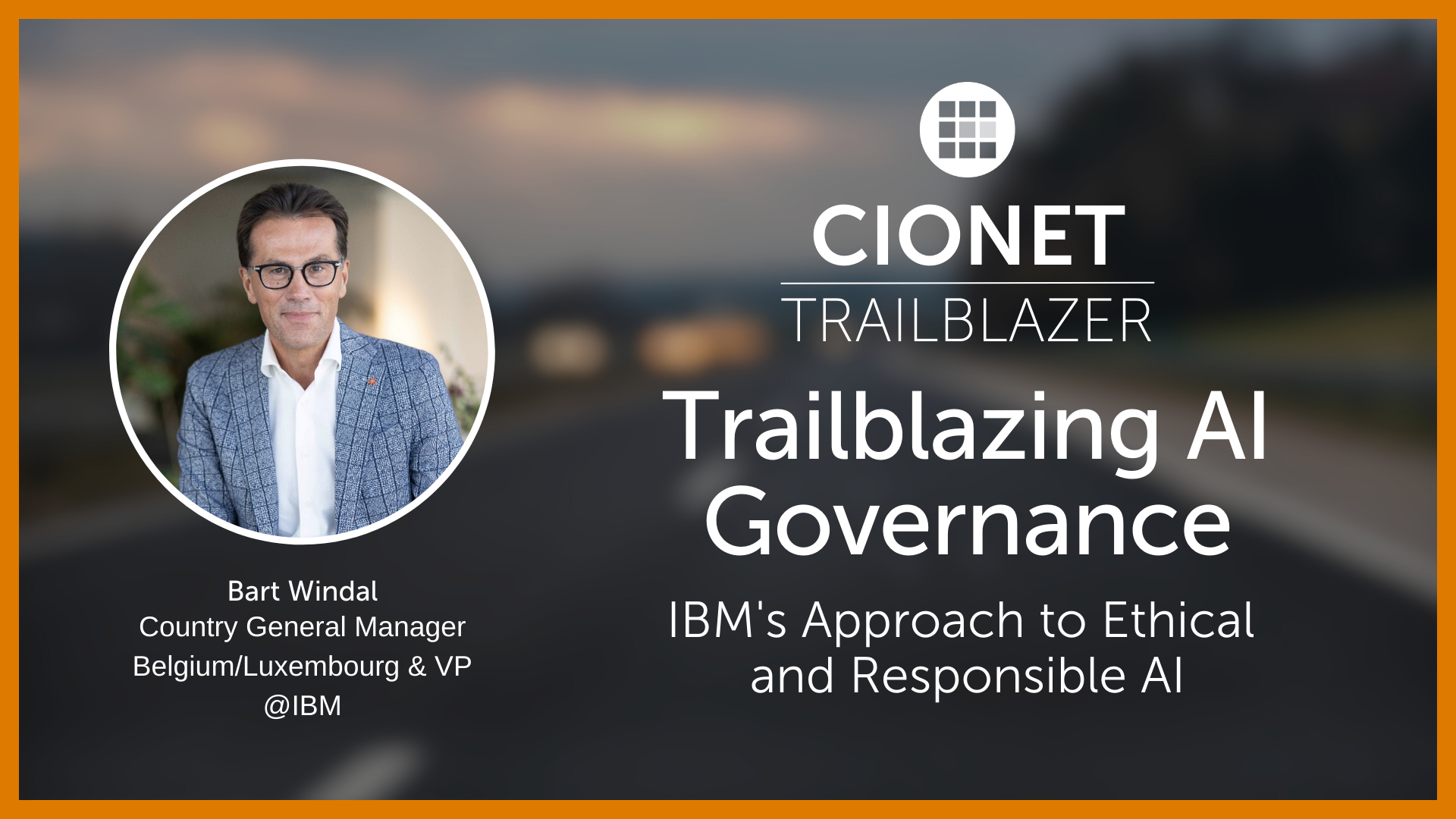
Published on: December 18, 2024 @ 9:07 AM
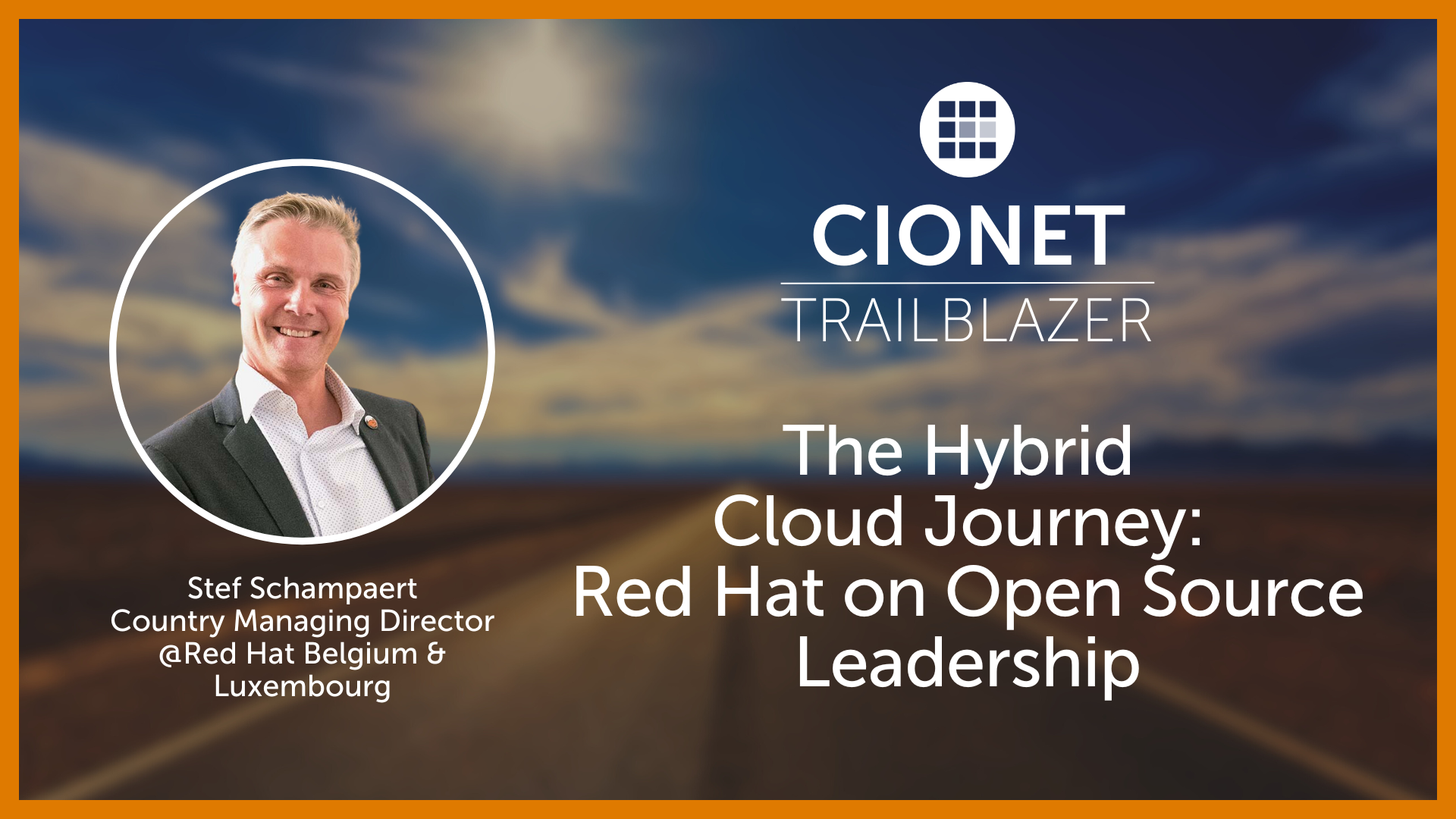
Published on: October 30, 2024 @ 9:34 AM
.png)
Published on: October 29, 2024 @ 11:37 AM
.png)
Published on: September 27, 2024 @ 10:41 AM

Published on: September 25, 2024 @ 8:59 AM

Published on: September 18, 2024 @ 3:44 PM

Published on: August 28, 2024 @ 10:10 AM

How the world’s largest ad company optimizes FinOps
WPP, the world's largest marketing services company, faced skyrocketing cloud costs due to sprawl across multiple platforms. The Challenge: Gaining visibility into cloud spending and optimizing resource usage. The Solution: Implementing IBM Apptio Cloudability for cost transparency and IBM Turbonomic for automated resource management.
If you’re one of the approximately 120 million people who tune in each year for the Super Bowl—or at least for the commercials—you’ve seen WPP’s work. If you’re an employee at a Fortune Global 500 corporation, your company has likely worked with WPP.
With more than 2,000 offices under its ownership, WPP is the world’s largest marketing services company, running a global enterprise that produces high-end work spanning the full marketing spectrum, from advertising campaigns, social media management and influencer marketing to commerce solutions, app development, CRM implementation and more. It’s a massively data-centric business.
In recent years, as WPP shifted its IT to a hybrid, multicloud model to gain critical IT and application agility, costs skyrocketed. “We went from paying a fixed bill every month for a set amount of physical assets, to being charged for resources literally by the minute,” says Paul Cocks, WPP’s Director of Global Technology Services. With thousands of disparate organizations building in the cloud for their own needs, WPP faced major cloud sprawl.
“We really didn’t know how much we were spending,” says Ananta Manandhar, WPP’s Head of FinOps. “We had hundreds of accounts across all major public clouds. A key objective was consolidated visibility.”
On the technology side, Mr. Cocks and his colleague, Cost-Optimization Lead Alan Burnett, recognized the potential for saving millions of dollars by eliminating underutilized computing resources. They wanted to master the art of right-sizing and make the cost dynamics of cloud work in the company’s favor.
During the POV, it would have paid for itself ten times over. ”
WPP created a well-rounded, efficient FinOps practice by applying two technologies: IBM Apptio™ Cloudability (link resides outside of ibm.com) and IBM® Turbonomic®. The Finance team uses IBM Apptio Cloudability to see exactly how much WPP is spending, and where, across all companies and all cloud platforms. The Operations team uses Turbonomic to expedite savings by efficiently optimizing resources by way of AI-driven sizing recommendations and automated resizing actions.
IBM Apptio Cloudability came first. After evaluating it against a third-party offering, WPP implemented the IBM solution and quickly achieved spend visibility across 99% of its cloud landscape, including AWS, Microsoft Azure and Google Cloud Platform (GCP). “It just worked,” says Mr. Manandhar. “It has very good APIs for integrating across the environment. We onboarded hundreds of billing accounts and mapped the usage to stakeholders. It showed us an actual dollar view; an invoice view; a usage view, including anomalies; and an amortized view. And when we compared it with data directly from the cloud suppliers, it was very accurate. That helped rapidly build trust in our recharging ops with our users.”
Next, Mr. Cocks and Mr. Burnett engaged IBM for a Turbonomic proof of value (POV) that revealed enormous savings potential. Mr. Burnett, who’d gained extensive optimization experience in a previous role at another major enterprise, deployed Turbonomic in one of WPP’s Azure tenants and let the solution generate resourcing recommendations. Mr. Burnett selected from the recommendations to execute 1,100 resizing actions, many through Turbonomic automations.
“During the POV, it would have paid for itself ten times over,” says Mr. Cocks.
WPP has now officially deployed Turbonomic in its Azure environment and will phase it into its other clouds. “It’s revealed massive right-sizing potential and a lot of unused resources—too much to scale down manually,” says Mr. Burnett. On his Turbonomic interface, he views thousands of autogenerated sizing recommendations in addition to the cost impact they would have. The Operations team breaks the host of recommendations into manageable chunks and engages with users to identify which actions make good business sense.
Then, the team can resize with great efficiency using the bulk actions functionality in Turbonomic. They’ve basically doubled the pace they achieved in the POV, now taking approximately 1,000 actions every one to two months. “We got rid of 500 unattached disks in one weekend, saving a quarter of a million dollars,” says Mr. Burnett. “You can’t do that without automation. It enables a pace that really helps bring cloud costs under control.”
We got rid of 500 unattached disks in one weekend, saving a quarter of a million dollars. You can’t do that without automation. It enables a pace that really helps bring cloud costs under control. ”
In just the first three months of using IBM Apptio Cloudability, WPP achieved about USD 2 million in savings. Since supercharging FinOps with both IBM Apptio Cloudability and Turbonomic, the company is saving about 30% on its yearly cloud spend.
Now the focus is shifting, according to Mr. Manandhar, “from making it efficient to keeping it efficient, going from campaign mode to regular operations mode.” His team uses the live dashboard feature of IBM Apptio Cloudability to monitor costs and trends and generate monthly reports of ongoing savings potential—setting up targets for Turbonomic as the Operations team applies it first to GCP, then to AWS.
With such clear visibility into costs, usage and waste, WPP is instilling a culture of FinOps in the enterprise. “When you demonstrate that volume of optimization opportunity,” says Mr. Burnett, “it just makes everybody much more aware of how we can drive costs down rather than accept what we’ve got.”
“Because we’re tracking it, people are starting to budget it. They’re actively supporting the overall optimization,” says Mr. Manandhar. “It’s bringing about a cultural difference, creating a much closer partnership between business, finance and the engineering team.”
It’s bringing about a cultural difference, creating a much closer partnership between business, finance and the engineering team. ”
WPP plc owns many prominent agencies in communications, experience, commerce and technology & data. In total, the organization employs approximately 114,000 people in 100 or more countries and works with more than 300 Fortune Global 500 companies. WPP is headquartered in London.
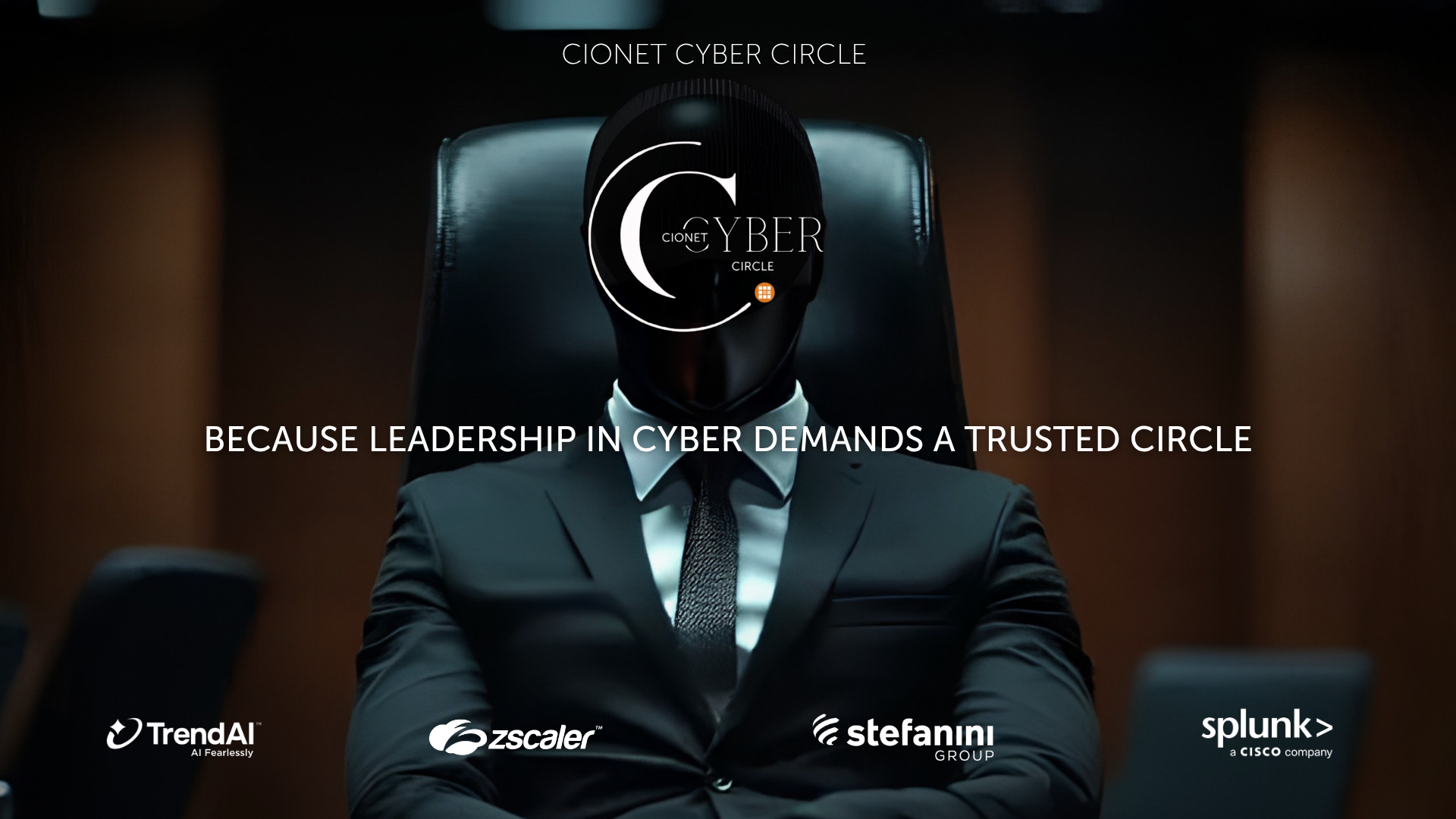
CIONET’s Cyber Circle: a new three-event programme exclusively focusing on the most urgent, complex, and high-impact challenges in cybersecurity today. Launched in 2026, this initiative brings together CISOs, CIOs, and senior IT executives with a strong interest in cybersecurity for three curated gatherings each year. As part of CIONET’s trusted executive community, the Cyber Circle provides a confidential, peer-driven environment to exchange insights, share real-world experiences, and address evolving cyber threats. Each session is designed to foster strategic dialogue, strengthen resilience, and elevate cybersecurity as a core driver of business value.
Read More.png)
The Telenet Business Leadership Circle powered by CIONET, offers a platform where IT executives and thought leaders can meet to inspire each other and share best practices. We want to be a facilitator who helps you optimise the performance of your IT function and your business by embracing the endless opportunities that digital change brings.
Read More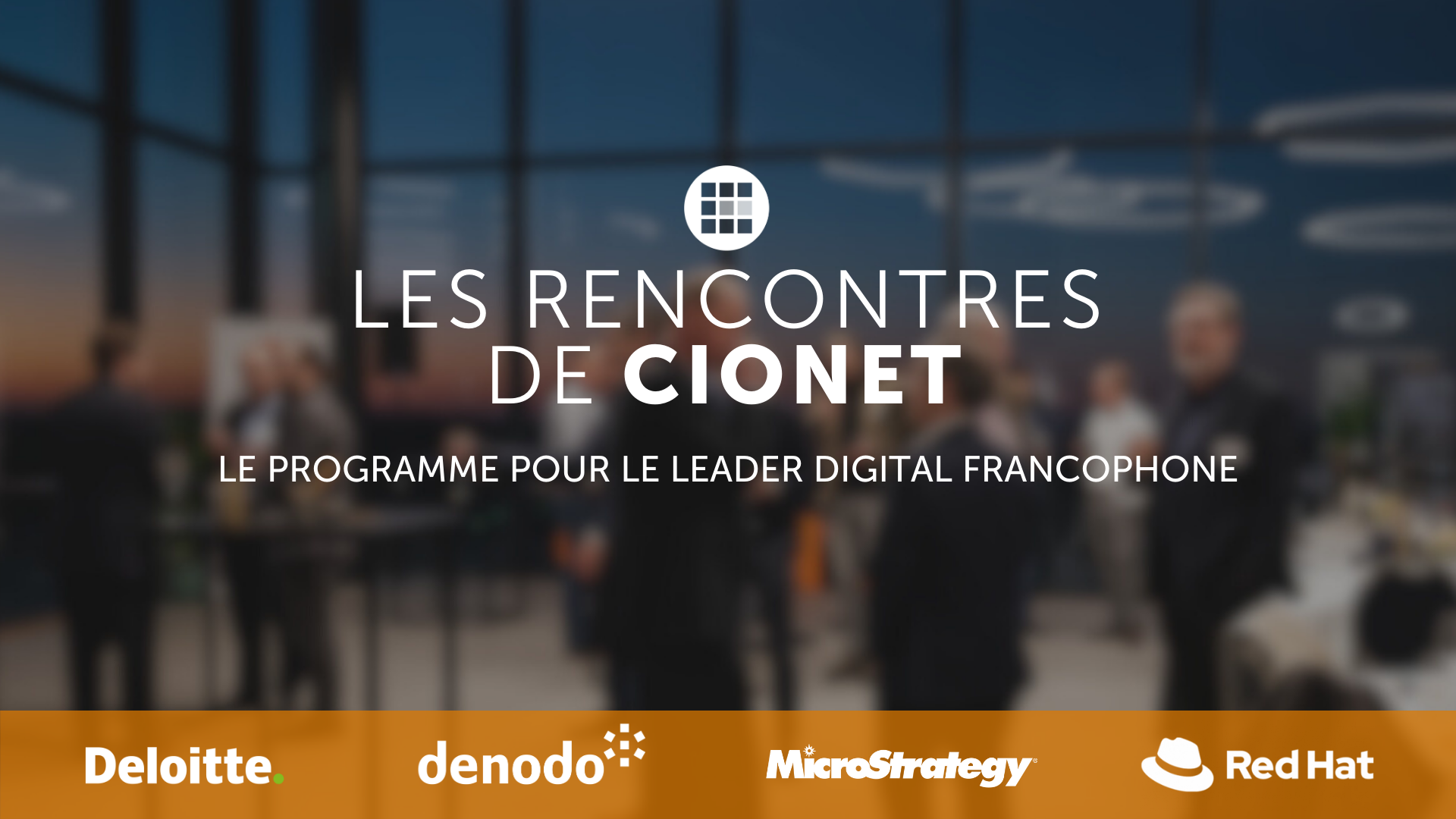
Découvrez la dynamique du leadership numérique aux Rencontres de CIONET, le programme francophone exclusif de CIONET pour les leaders numériques en Belgique, rendu possible grâce au soutien et à l'engagement de nos partenaires de programme : Deloitte, Denodo et Red Hat. Rejoignez trois événements inspirants par an à Liège, Namur et en Brabant Wallon, où des CIOs et des experts numériques francophones de premier plan partagent leurs perspectives et expériences sur des thèmes d'affaires et de IT actuels. Laissez-vous inspirer et apprenez des meilleurs du secteur lors de sessions captivantes conçues spécialement pour soutenir et enrichir votre rôle en tant que CIO pair. Ne manquez pas cette opportunité de faire partie d'un réseau exceptionnel d'innovateurs numériques !
Read More.jpg)
CIONET is committed to highlighting and celebrating female role models in IT, Tech & Digital, creating a leadership programme that empowers and elevates women within the tech industry. This initiative is dedicated to showcasing the achievements and successes of leading women, fostering an environment where female role models are recognised, and their contributions can ignite progress and inspire the next generation of women in IT. Our mission is to shine the spotlight a little brighter on female role models in IT, Tech & Digital, and to empower each other through this inner network community.
Read More


-Apr-01-2022-10-58-34-57-AM.png)









-Dec-13-2023-10-53-15-5032-AM.png)



-Jun-12-2023-01-23-11-7540-PM.png)




-Apr-01-2022-10-58-34-68-AM.png)






.png)





%20(003).png)




.png)






.png)










-Sep-01-2022-02-47-55-60-PM.png)
-Nov-22-2023-08-56-42-6802-AM.png)
.png)


.png "be-page-banner (1)")


.png)
.png)
.png)
.png)