

.png)
Belgium 20-10-2026 Squad Only Virtual English
Cloud decisions are becoming more selective. The challenge is deciding where each workload should run based on cost, performance, control, resilience, sovereignty, and business need. Three pressure points usually drive the decision. - Cost visibility becomes harder when usage grows across cloud services, data platforms, and AI workloads. - Performance and latency matter more when systems need fast access to data or support operational processes. - Sovereignty and resilience become critical when data location, continuity, vendor dependency, and exit options enter the discussion. The working question is simple: how do we place workloads where they create the most value while keeping the hybrid landscape manageable? If these trade-offs are on your agenda, let’s compare how others are handling similar choices.
Read More.png)
Belgium 10-11-2026 Squad Only Virtual English
Data platforms are meant to simplify access and support better use of data. The challenge is choosing and governing the platform landscape in a way that creates consistency, reuse, and long-term value. Three pressure points usually appear. - Platform choice becomes difficult when teams have different needs for speed, flexibility, cost, and control. - Business meaning needs protection: customer, revenue, product, risk, and FTE need shared definitions across tools. - Ownership and governance need to be clear, so platforms grow with accountability and discipline. The working question is simple: how do we give teams the data capabilities they need while keeping the platform landscape understandable, governed, and reusable? If these questions are familiar, let’s compare approaches with others facing the same data landscape.
Read More.png)
Belgium 13-11-2026 Squad Only Physical English
Many IT capabilities are essential and difficult to fund through a simple project ROI. The challenge is showing why architecture, governance, resilience, cybersecurity maturity, data foundations, and AI readiness deserve investment before the gap becomes expensive. Three pressure points make the case harder. - Shared value means the benefit often sits across several teams, while the budget sits in one place. - Timing creates friction because the cost is immediate while the value appears over time. - Risk translation is needed so business and finance leaders understand the consequence of delaying the investment. The working question is simple: how do we turn foundational IT capabilities into credible investment cases that link cost, risk, business value, and future flexibility? If you are building these cases internally, let’s compare how others are positioning value, risk, and timing.
Read More
Published on: September 30, 2026 @ 1:17 PM
Published on: August 26, 2026 @ 9:13 AM
Published on: July 29, 2026 @ 10:08 AM

Published on: June 24, 2026 @ 5:00 PM

Published on: May 27, 2026 @ 9:21 AM
Published on: May 07, 2026 @ 4:02 PM
.png)
Published on: April 29, 2026 @ 9:11 AM

Published on: March 26, 2026 @ 3:37 PM
-2.png)
Published on: March 25, 2026 @ 9:58 AM

Published on: March 13, 2026 @ 3:43 PM
-Feb-25-2026-10-01-07-2508-AM.png)
Published on: February 25, 2026 @ 11:01 AM
.png)
Published on: February 25, 2026 @ 9:00 AM

Published on: February 24, 2026 @ 5:00 PM
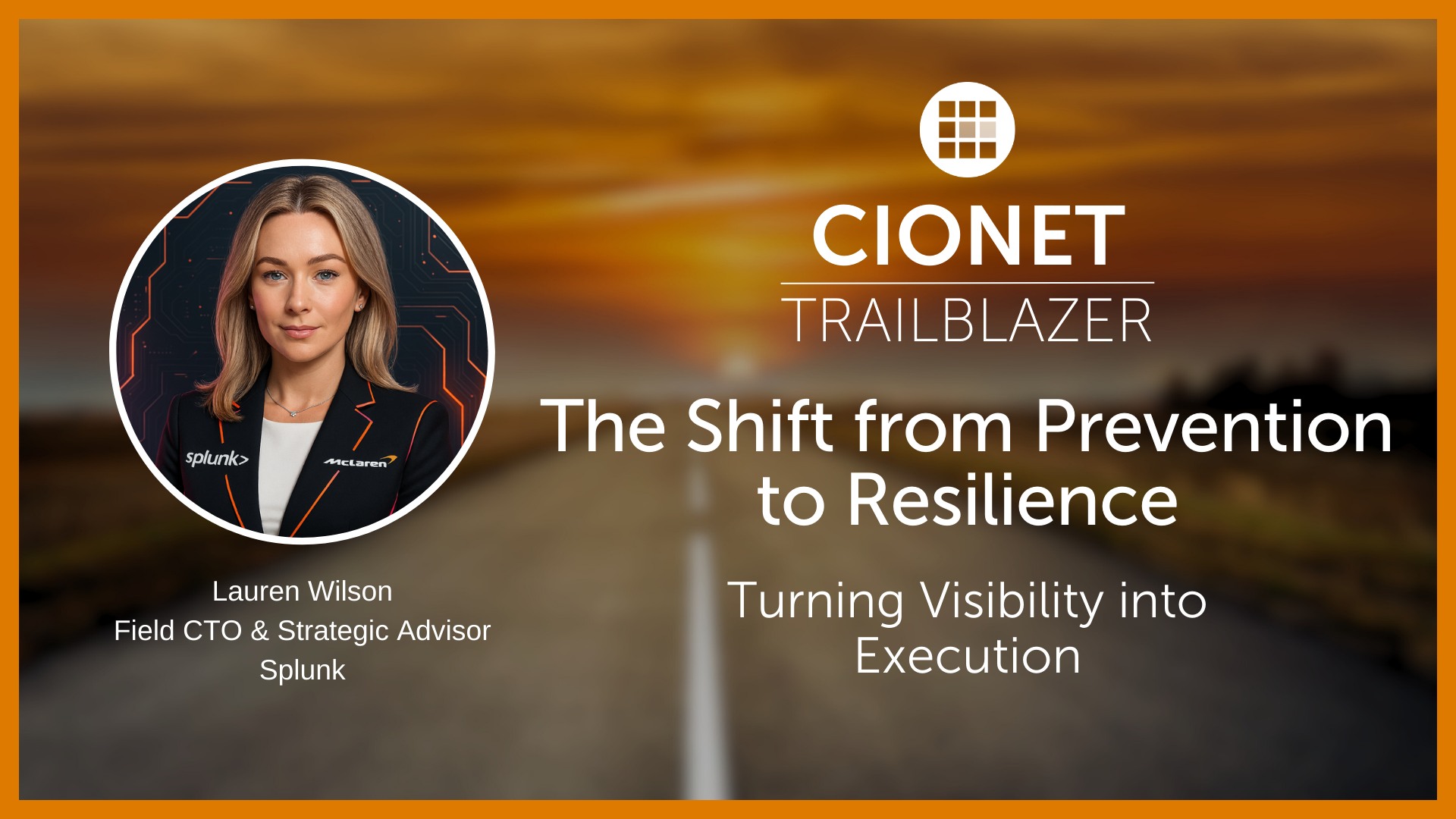
CIONET Trailblazer: CISO: The Shift from Prevention to Resilience: Turning Visibility into Execution
Published on: January 28, 2026 @ 9:48 AM
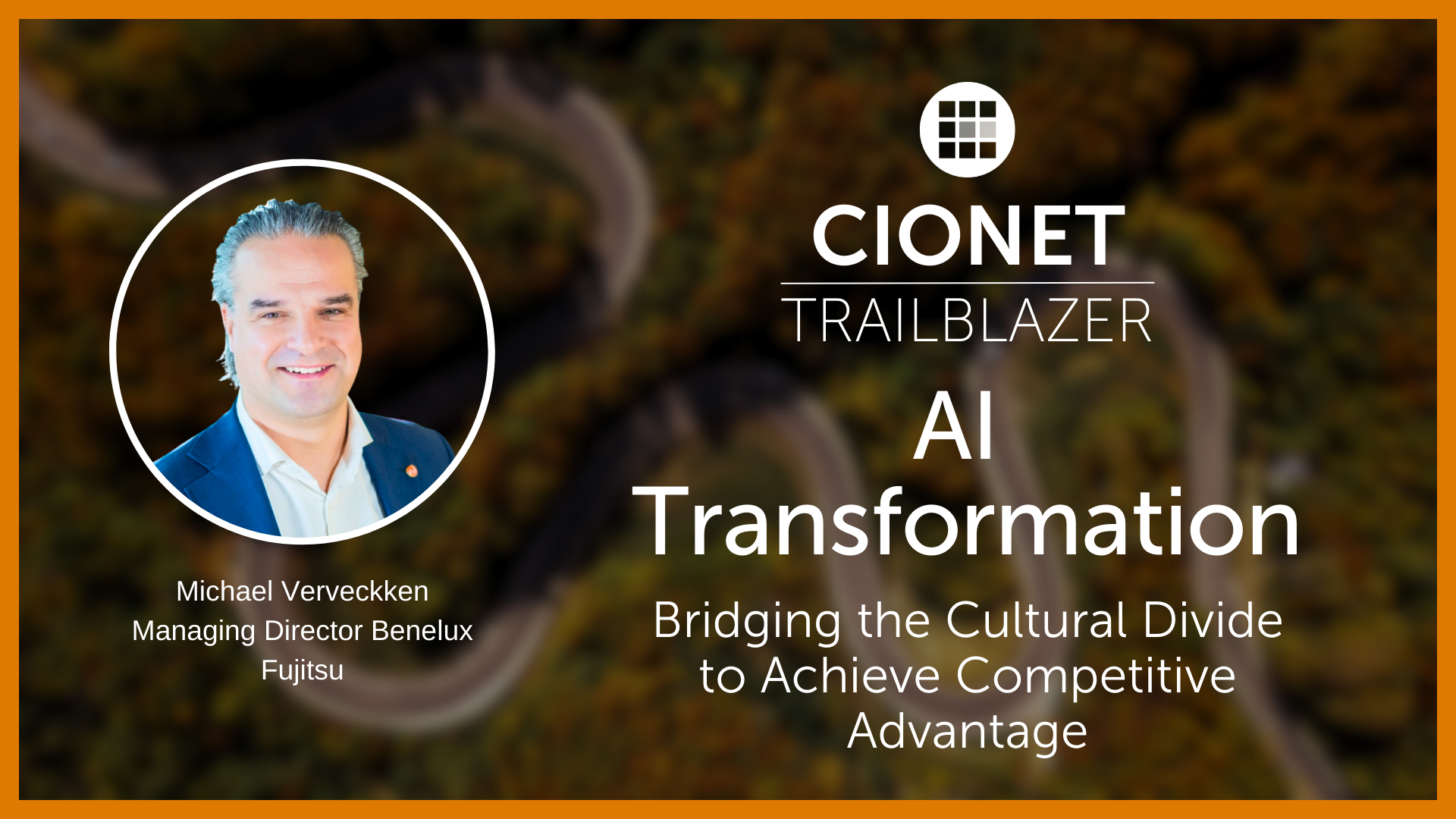
CIONET Trailblazer: AI Transformation: Bridging the Cultural Divide to Achieve Competitive Advantage
Published on: December 17, 2025 @ 9:16 AM
Published on: October 29, 2025 @ 11:31 AM
Published on: July 30, 2025 @ 9:19 AM

Published on: June 25, 2025 @ 9:14 AM
.png)
Published on: April 30, 2025 @ 9:04 AM
-1.png)
Published on: March 26, 2025 @ 9:59 AM
-1.png)
Published on: March 04, 2025 @ 5:07 PM
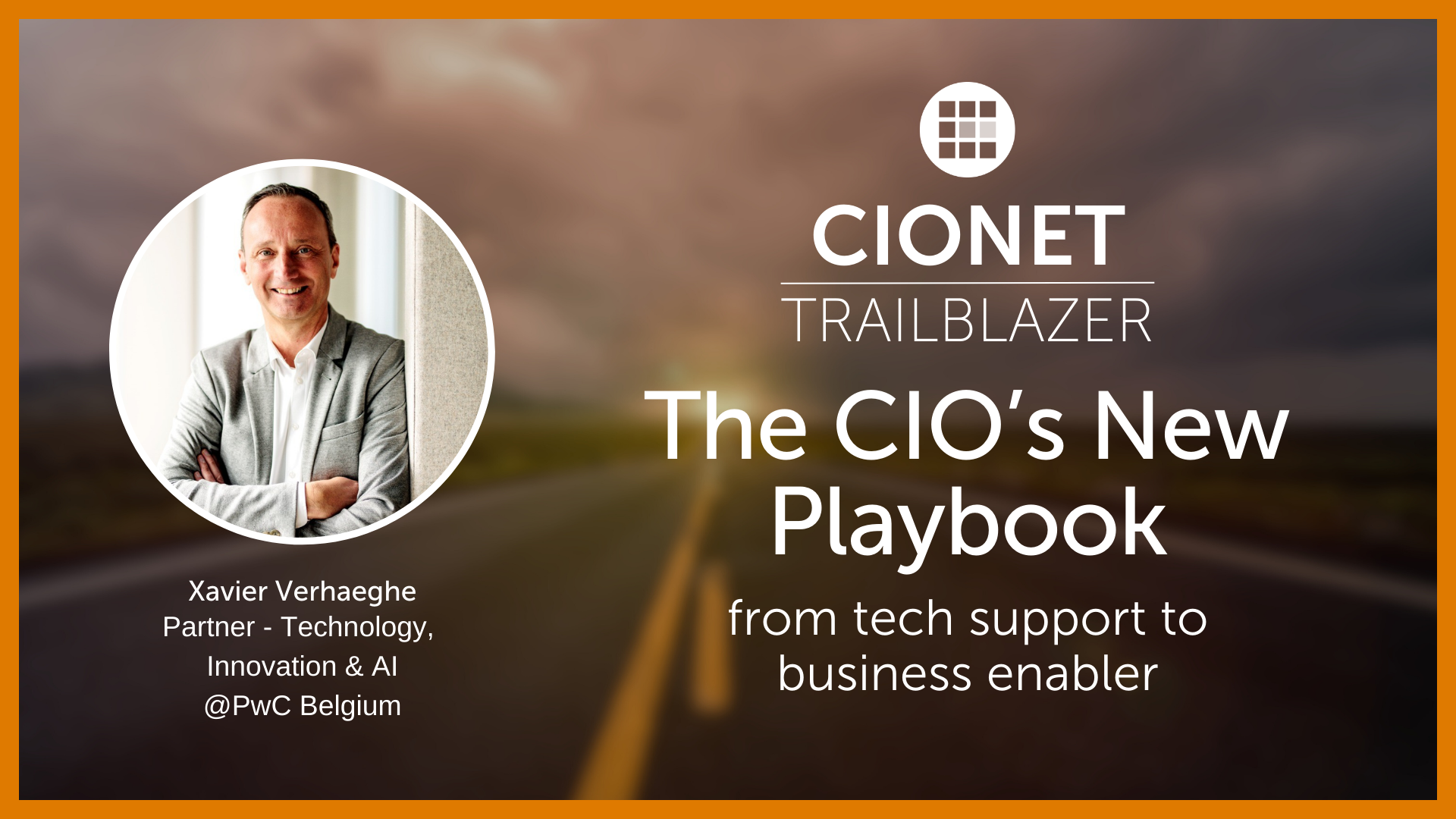
Published on: February 26, 2025 @ 10:51 AM
Published on: February 25, 2025 @ 4:14 PM
-4.png)
Published on: February 25, 2025 @ 10:33 AM
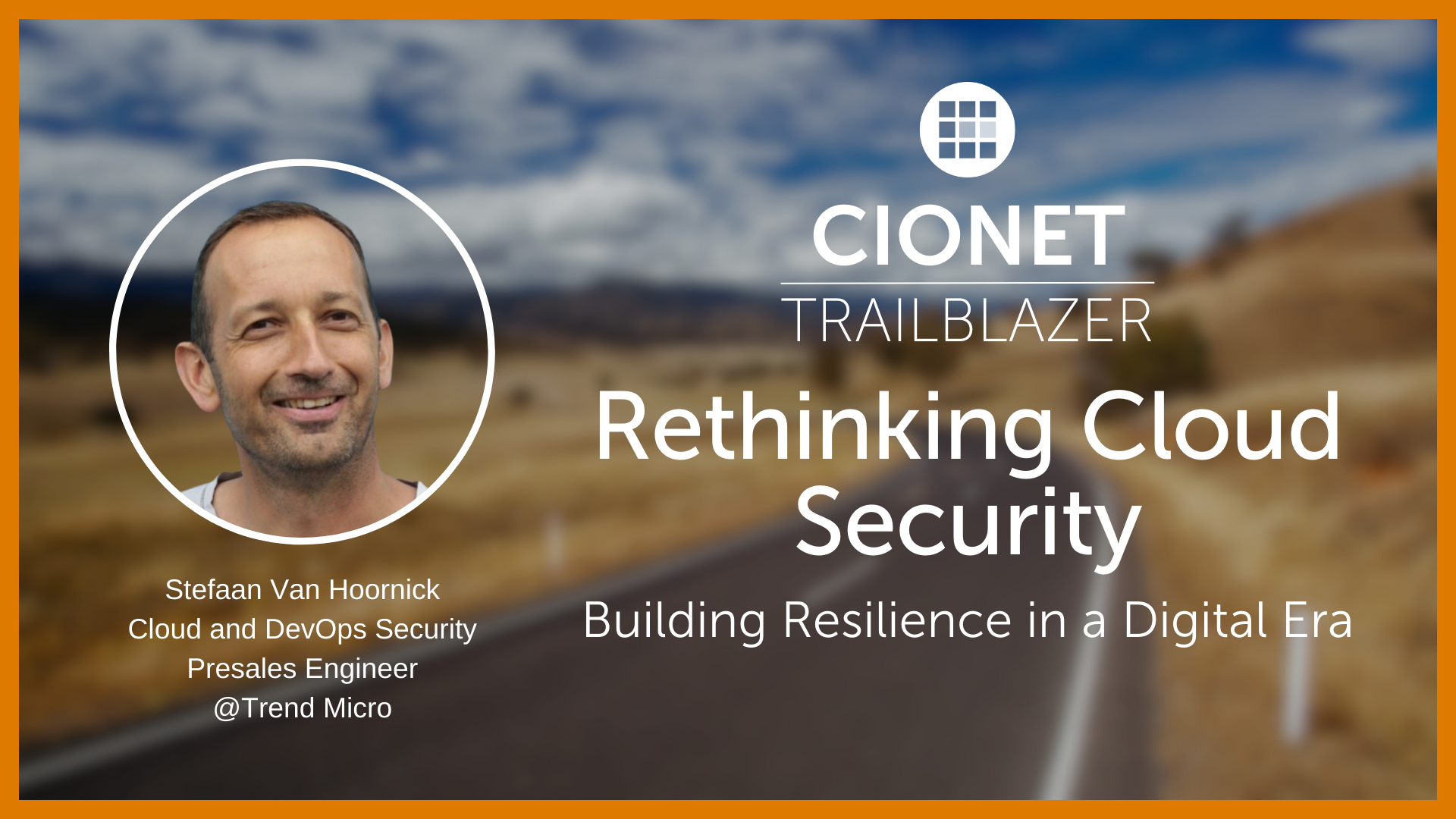
Published on: January 29, 2025 @ 9:58 AM
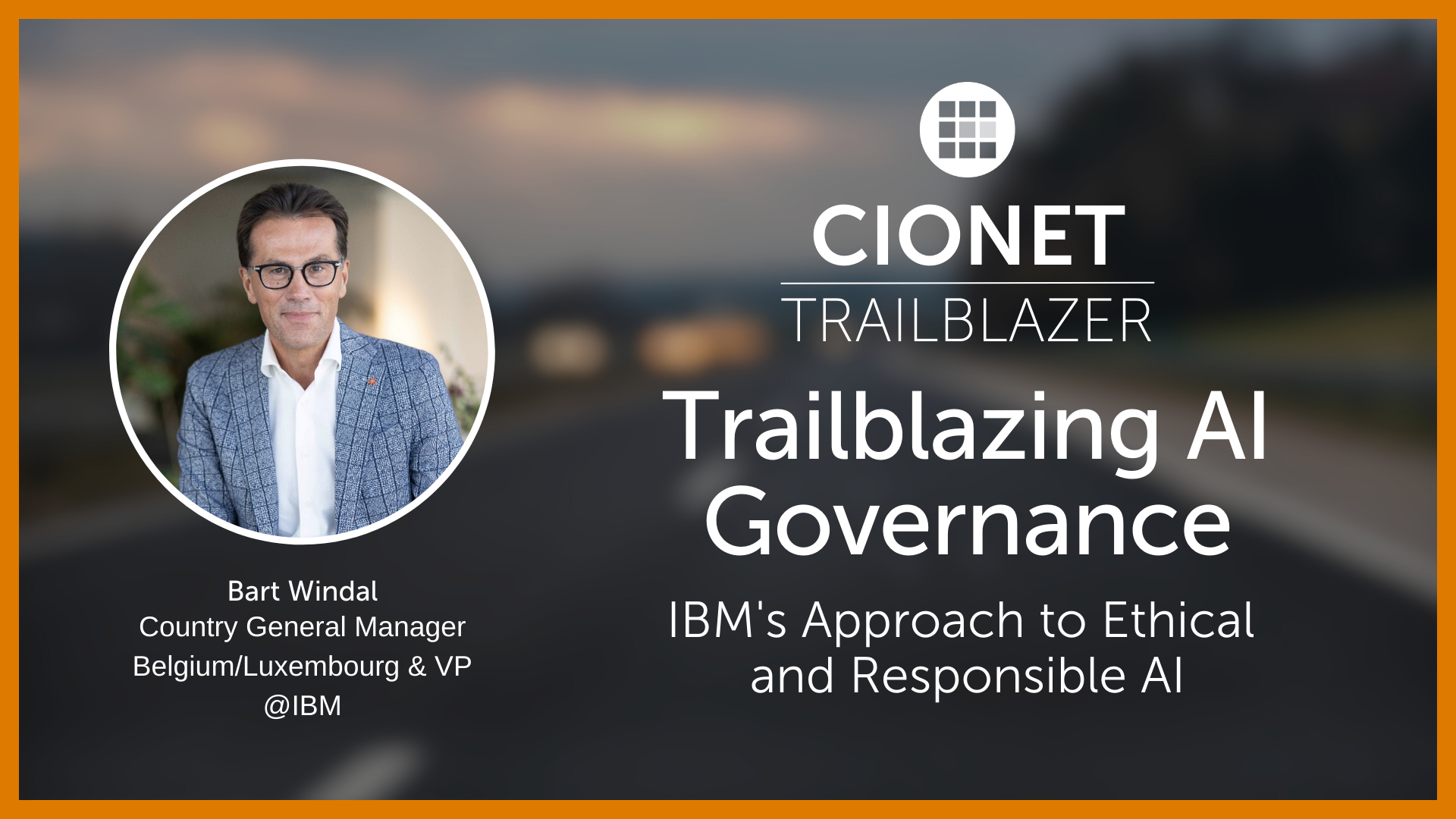
Published on: December 18, 2024 @ 9:07 AM
Published on: October 30, 2024 @ 9:34 AM
.png)
Published on: October 29, 2024 @ 11:37 AM
.png)
Published on: September 27, 2024 @ 10:41 AM

Published on: September 25, 2024 @ 8:59 AM

Published on: September 18, 2024 @ 3:44 PM
Published on: August 28, 2024 @ 10:10 AM

València City Council speeds process and production of new service
Valencia City Council has launched a digital transformation strategy to become a leader in electronic e-government and smart city management. The implementation of Red Hat® OpenShift® enabled the Council to develop tools to orchestrate and automate application deployment and maintenance, adopt DevOps methodologies and reduce CO2 emissions..
València City Council is undergoing a digital transformation to become one of the best-valued
cities in Spain in paperless e-government and smart city management. The health crisis caused
by COVID-19 accelerated this process, ensuring administrative and service activity could
continue without interruption and the Council could continue to serve citizens. Valencia City
Council needed to speed up development processes and the production of new services and
migrate existing applications to new platforms. Red Hat’s experience and its product innovation
and efficiency convinced València City Council that it was the right choice for the project.
Serving citizens electronically
With more than 800,000 residents and 1.5 million people in its metropolitan area, València is
the third most populated city and metropolitan area in Spain, after Madrid and Barcelona.
In 2014, València City Council launched a strategy of digital transformation, with the aim of
becoming a leader in paperless e-government and smart city management. The process was
accelerated and consolidated by the start of the COVID-19 pandemic, allowing the Council to
continue its activity and deliver services without serious problems.
The Council is working to ensure that the digital channel will be citizens’ and companies’ preferred
means of contacting the administration. Among the many initiatives launched in recent years to
improve public service are the Electronic Office, which allows over 95% of processes to be carried
out online and reduces processing times; the Smart City strategy, which works to achieve a city
project developed by and for citizens; and València’s ISO 37120 Certification, which indicates its
commitment to sustainable development in cities. In 2020, two out of three instances presented
to the city council were submitted through the Electronic Office.
Other projects include the Transparency and Open Data portal, which makes information from the
Council available to citizens, and the AppValència app or the València al Minut (Valencia in a Minute)
portal, which offers local and real-time information.
Searching for greater efficiency
València City Council’s Information and Communication Technologies Service (SerTIC) wanted to
expedite the launch of the design, dimensioning, and implementation of new services or the update
of existing ones so they could remain available to the public servants who manage them and the
citizens who use them.
Speed is also important when offering high-demand services in campaigns for aid and grant
requests, such as those launched due to the COVID-19 pandemic, or with European recovery funds
as instruments for aiding economic recovery and regeneration.
“We started to look at how we could be more efficient and launch solutions more quickly. Previously,
SerTIC’s development team had to ask the Systems team for production supply resources, which
often caused delays and friction between the two departments,” said Francisco Javier Martínez
Cervera, Head of the SerTIC Systems Office, València City Council. “With the siloed teams and
processes, updating the applications we deployed could take up to 60 days. These slow, manual
processes consumed a lot of time and resources.”
SerTIC started to analyze the possibility of using a tool to orchestrate and automate deployment
and maintenance processes. “We didn’t have any previous experience with Red Hat; we had
some experience in VMware vSphere containers, but we weren’t convinced that they met our
needs,” said Martínez. “That was how we started to analyze the different market offerings and,
after carrying out a proof of concept, we made the decision to work with Red Hat OpenShift.”
During the proof of concept, Martínez and his team were able to verify the solution’s maturity and
note the numerous positive references on the market. “We soon started working and, after receiving
the necessary training, we already had the first applications up and running in just two months,”
said Martínez.
Developing an effective infrastructure
Saved 4,000 department work hours through optimized automation
The launch of Red Hat OpenShift has allowed València City Council to develop orchestration and
automation tools for app deployment and maintenance. Its various software development teams now
have a centralized environment for automation. SerTIC can also share guides and workflows between
teams, keeping applications or infrastructures separate when necessary.
“By optimizing automation, we’ve increased productivity compared with previous years,” said Martínez.
“We’ve saved more than 4,000 department work hours that were previously tied up in repetitive IT
administration tasks and that can now be used on more strategic and rewarding projects.”
Red Hat OpenShift provides SerTIC with a centralized infrastructure, which supports its back-end
development environments, as well as services geared towards the Council’s different departments.
As a result, the Council can offer personalized services to meet the needs of more varied and specific
citizen groups quickly and effectively
Implemented agile methodologies to accelerate project development
The implementation of Red Hat OpenShift has also facilitated the adoption of DevOps methodology
at València City Council.
“From development to operation, initiatives are now interdisciplinary and collaborative, involving all
teams from infrastructure to user support,” said Vicent Niclòs, DevOps Architect, Information and
Communication Technologies Service, València City Council. “We’ve implemented development
capacities on a self-service basis. All the necessary tools and resources are in one place, and our
developers can be involved in the projects from beginning to end. If something doesn’t work or
perform as it should, they can correct it and relaunch the system without wasting time.”
As a result, the development and implementation of new services and features at the Council have
been accelerated, and problems are resolved much more quickly.
Automated 60% of more than 50 departmental applications to improve management and proximity to citizens
In the initial phase of implementation, SerTIC automated departmental applications used by
specific groups of public employees. “Of more than 50 departmental applications, we’ve already
automated 60%,” said Martínez. “This has improved the management carried out by public
employees and had an immediate impact on citizens. We expect to be able to automate the
remaining 40% in just two months.” In the second phase, SerTIC will automate corporate applications used by many public employees.
One of the most important of these is the Integrated E-government Platform, which expedites
the processing of documents and increases the efficiency of municipal services provided by the
Municipal Electronic Office. With Red Hat OpenShift whole processes can now be carried out
electronically with just an electronic signature certificate or electronic National Identity Document
(DNI), with no noticeable differences from doing so in person.
“In this way, we will be able to automate the necessary changes that are continually being made when
requirements, legislation, or other factors change,” said Martínez
Reduced CO2 emissions by almost five million metric tons and associated costs
The benefits that Red Hat OpenShift has provided to València City Council go beyond improved
flexibility, simplicity, and speed in developing new services or improving existing ones, and greater
team productivity. They also support the Council’s sustainability policies to enable significant
savings in server purchases, energy consumption, and CO2
emissions. The use of Red Hat
OpenShift has enabled server resizing and a drastic reduction in the ratio of applications/servers;
previously, they had 23 applications on 12 servers; now, they have 30 applications on six servers with
the capacity to add 20 more without increasing the server size.
“In 2022, SerTIC reduced the number of servers used by 37.5% compared to 2021, a significant saving
given that we’ve made provision for 2023 to face the needs of remote working, which weren’t as
important previously,” said Martínez. “In just one year, we’ve managed to cut our server energy
consumption by over 10 million watts and our refrigeration costs by another 15 million watts. It’s also
reducing our CO2
emissions by almost five million metric tons.”
Delivering benefits to the public
Red Hat OpenShift will allow València City Council to move ahead with the digitalization of services
used by citizens through the Municipal Electronic Office, the platform through which Valèncians can
access council information, services, and electronic processes, as well as other Council-dependent
offices and management services.
“In the next few months, we’ll be able to bring citizens those high-demand services that the Council
is facilitating, such as aid and grant offers, which happen periodically,” said Martínez. “This will
have an immediate and noticeable impact, especially in periods of high demand. Service quality
will improve as applications will be able to use the auto-scaling provided by Red Hat OpenShift to
operate continuously, even if there is an avalanche of requests, which can happen from time to time.”
In addition to this, València City Council now has a platform that allows its teams to launch new
applications simply and quickly, providing the necessary proof of concept to enable it to always
serve citizens. “We’re very satisfied with Red Hat. It has helped us to grow, learn, and change our
way of working. This means we can improve the services we offer and ultimately deliver to the city.”
said Martínez
About València City Council
València City Council is responsible for the government and administration of the city of València,
the capital of the Valèncian Community. Founded in 138 BC, València has more than 800,000
residents and 1.5 million people in its metropolitan area and is the third most populated city and
metropolitan area in Spain, after Madrid and Barcelona.
València’s economy is now centered around services, with 84% of the working population employed
in this sector; however, the city maintains an important industrial base and significant agricultural
activity. València is also establishing itself as a technological hub through the development of new
talent and technologies.

CIONET’s Cyber Circle: a new three-event programme exclusively focusing on the most urgent, complex, and high-impact challenges in cybersecurity today. Launched in 2026, this initiative brings together CISOs, CIOs, and senior IT executives with a strong interest in cybersecurity for three curated gatherings each year. As part of CIONET’s trusted executive community, the Cyber Circle provides a confidential, peer-driven environment to exchange insights, share real-world experiences, and address evolving cyber threats. Each session is designed to foster strategic dialogue, strengthen resilience, and elevate cybersecurity as a core driver of business value.
Read More.png)
The Telenet Business Leadership Circle powered by CIONET, offers a platform where IT executives and thought leaders can meet to inspire each other and share best practices. We want to be a facilitator who helps you optimise the performance of your IT function and your business by embracing the endless opportunities that digital change brings.
Read More
Découvrez la dynamique du leadership numérique aux Rencontres de CIONET, le programme francophone exclusif de CIONET pour les leaders numériques en Belgique, rendu possible grâce au soutien et à l'engagement de nos partenaires de programme : Deloitte, Denodo et Red Hat. Rejoignez trois événements inspirants par an à Liège, Namur et en Brabant Wallon, où des CIOs et des experts numériques francophones de premier plan partagent leurs perspectives et expériences sur des thèmes d'affaires et de IT actuels. Laissez-vous inspirer et apprenez des meilleurs du secteur lors de sessions captivantes conçues spécialement pour soutenir et enrichir votre rôle en tant que CIO pair. Ne manquez pas cette opportunité de faire partie d'un réseau exceptionnel d'innovateurs numériques !
Read More.jpg)
CIONET is committed to highlighting and celebrating female role models in IT, Tech & Digital, creating a leadership programme that empowers and elevates women within the tech industry. This initiative is dedicated to showcasing the achievements and successes of leading women, fostering an environment where female role models are recognised, and their contributions can ignite progress and inspire the next generation of women in IT. Our mission is to shine the spotlight a little brighter on female role models in IT, Tech & Digital, and to empower each other through this inner network community.
Read More


-Apr-01-2022-10-58-34-57-AM.png)









-Dec-13-2023-10-53-15-5032-AM.png)



-Jun-12-2023-01-23-11-7540-PM.png)



-Apr-01-2022-10-58-34-68-AM.png)






.png)



%20(003).png)



.png)




.png)










-Sep-01-2022-02-47-55-60-PM.png)
-Nov-22-2023-08-56-42-6802-AM.png)
.png)


.png "be-page-banner (1)")



.png)
.png)
.png)
.png)