

.png)
Belgium 20-10-2026 Squad Only Virtual English
Cloud decisions are becoming more selective. The challenge is deciding where each workload should run based on cost, performance, control, resilience, sovereignty, and business need. Three pressure points usually drive the decision. - Cost visibility becomes harder when usage grows across cloud services, data platforms, and AI workloads. - Performance and latency matter more when systems need fast access to data or support operational processes. - Sovereignty and resilience become critical when data location, continuity, vendor dependency, and exit options enter the discussion. The working question is simple: how do we place workloads where they create the most value while keeping the hybrid landscape manageable? If these trade-offs are on your agenda, let’s compare how others are handling similar choices.
Read More.png)
Belgium 10-11-2026 Squad Only Virtual English
Data platforms are meant to simplify access and support better use of data. The challenge is choosing and governing the platform landscape in a way that creates consistency, reuse, and long-term value. Three pressure points usually appear. - Platform choice becomes difficult when teams have different needs for speed, flexibility, cost, and control. - Business meaning needs protection: customer, revenue, product, risk, and FTE need shared definitions across tools. - Ownership and governance need to be clear, so platforms grow with accountability and discipline. The working question is simple: how do we give teams the data capabilities they need while keeping the platform landscape understandable, governed, and reusable? If these questions are familiar, let’s compare approaches with others facing the same data landscape.
Read More.png)
Belgium 13-11-2026 Squad Only Physical English
Many IT capabilities are essential and difficult to fund through a simple project ROI. The challenge is showing why architecture, governance, resilience, cybersecurity maturity, data foundations, and AI readiness deserve investment before the gap becomes expensive. Three pressure points make the case harder. - Shared value means the benefit often sits across several teams, while the budget sits in one place. - Timing creates friction because the cost is immediate while the value appears over time. - Risk translation is needed so business and finance leaders understand the consequence of delaying the investment. The working question is simple: how do we turn foundational IT capabilities into credible investment cases that link cost, risk, business value, and future flexibility? If you are building these cases internally, let’s compare how others are positioning value, risk, and timing.
Read More
Published on: September 30, 2026 @ 1:17 PM

Published on: August 26, 2026 @ 9:13 AM

Published on: July 29, 2026 @ 10:08 AM

Published on: June 24, 2026 @ 5:00 PM

Published on: May 27, 2026 @ 9:21 AM
Published on: May 07, 2026 @ 4:02 PM
.png)
Published on: April 29, 2026 @ 9:11 AM

Published on: March 26, 2026 @ 3:37 PM
-2.png)
Published on: March 25, 2026 @ 9:58 AM

Published on: March 13, 2026 @ 3:43 PM
-Feb-25-2026-10-01-07-2508-AM.png)
Published on: February 25, 2026 @ 11:01 AM
.png)
Published on: February 25, 2026 @ 9:00 AM

Published on: February 24, 2026 @ 5:00 PM
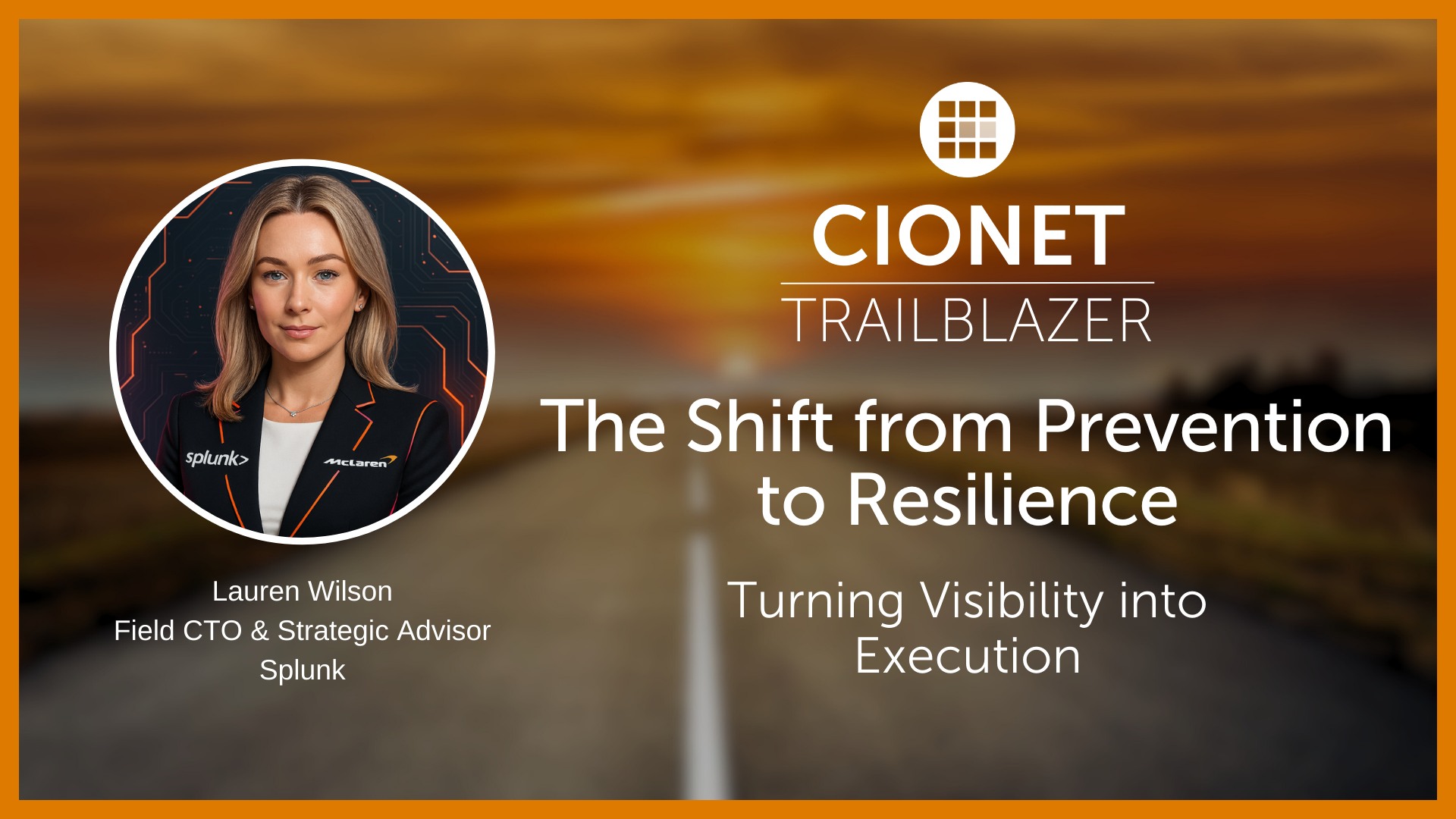
CIONET Trailblazer: CISO: The Shift from Prevention to Resilience: Turning Visibility into Execution
Published on: January 28, 2026 @ 9:48 AM
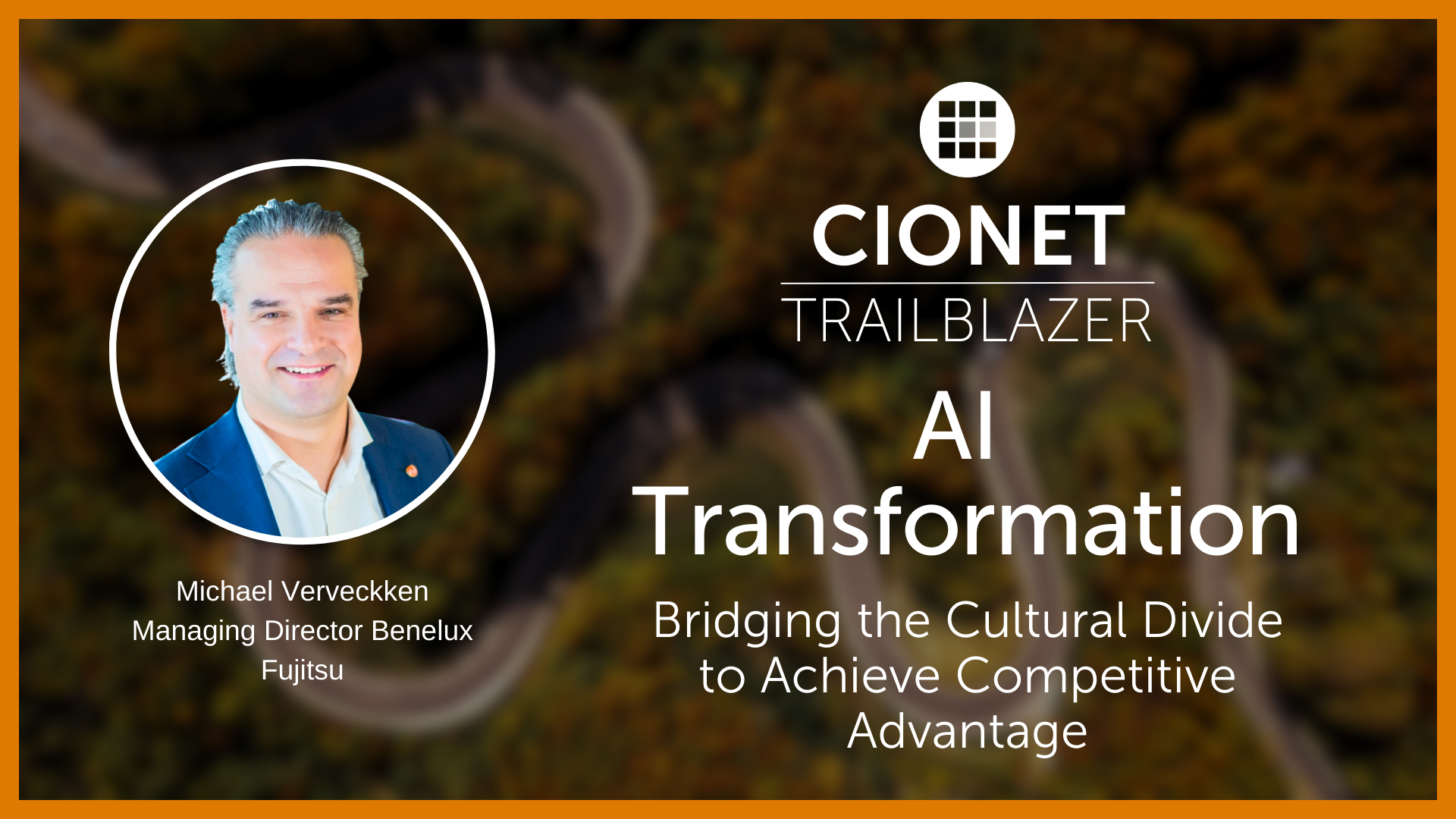
CIONET Trailblazer: AI Transformation: Bridging the Cultural Divide to Achieve Competitive Advantage
Published on: December 17, 2025 @ 9:16 AM
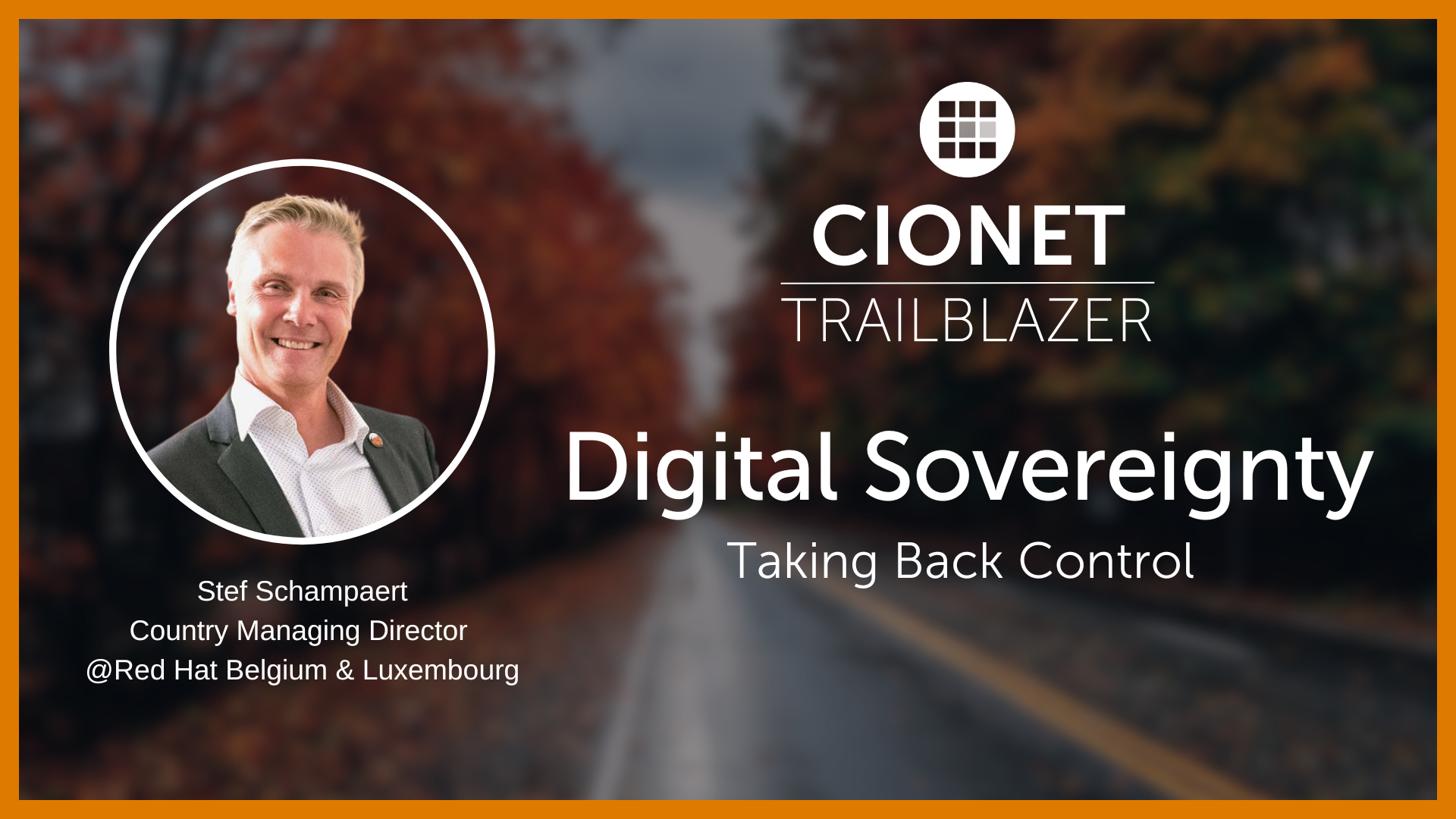
Published on: October 29, 2025 @ 11:31 AM
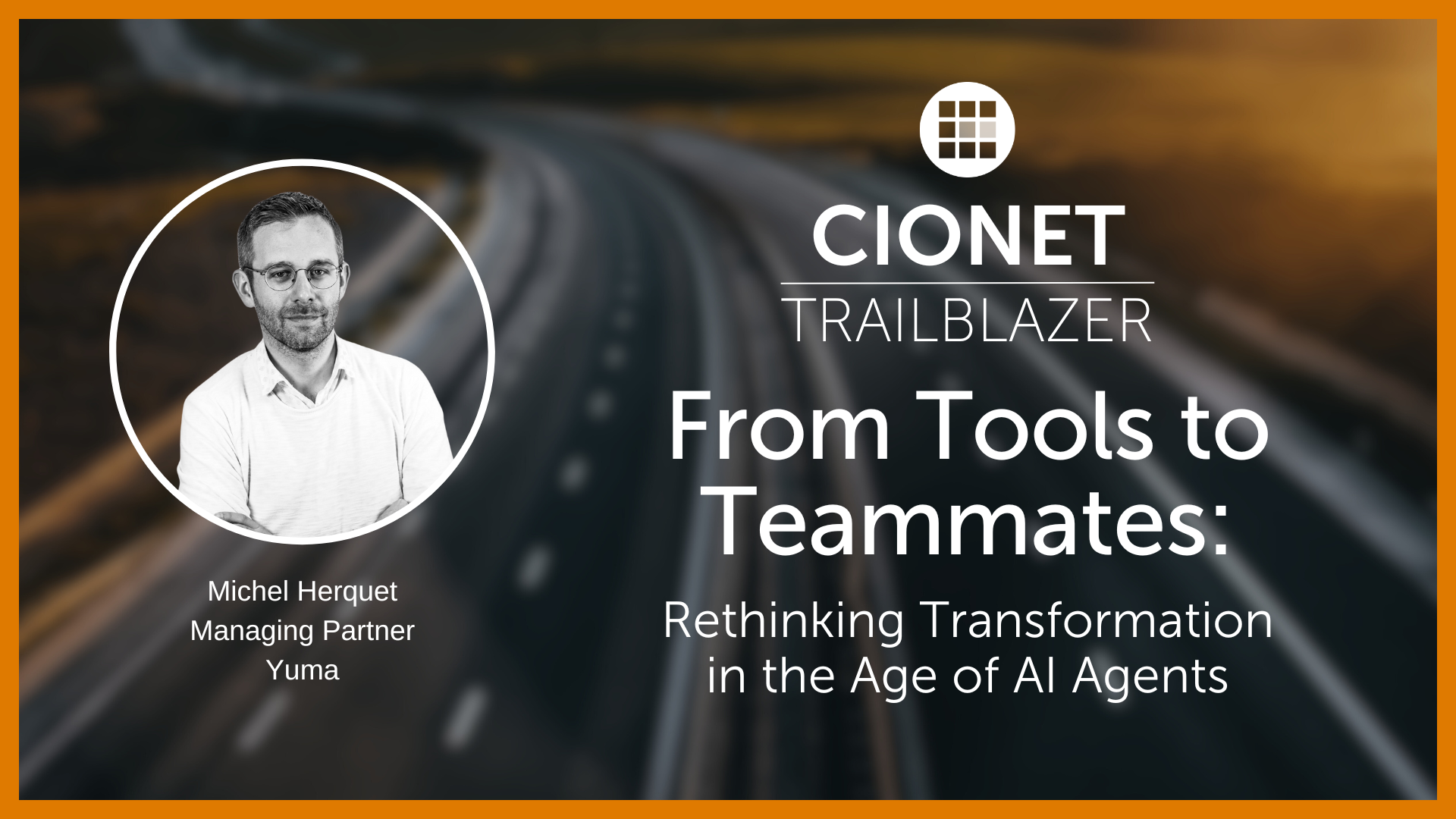
Published on: July 30, 2025 @ 9:19 AM

Published on: June 25, 2025 @ 9:14 AM
.png)
Published on: April 30, 2025 @ 9:04 AM
-1.png)
Published on: March 26, 2025 @ 9:59 AM
-1.png)
Published on: March 04, 2025 @ 5:07 PM
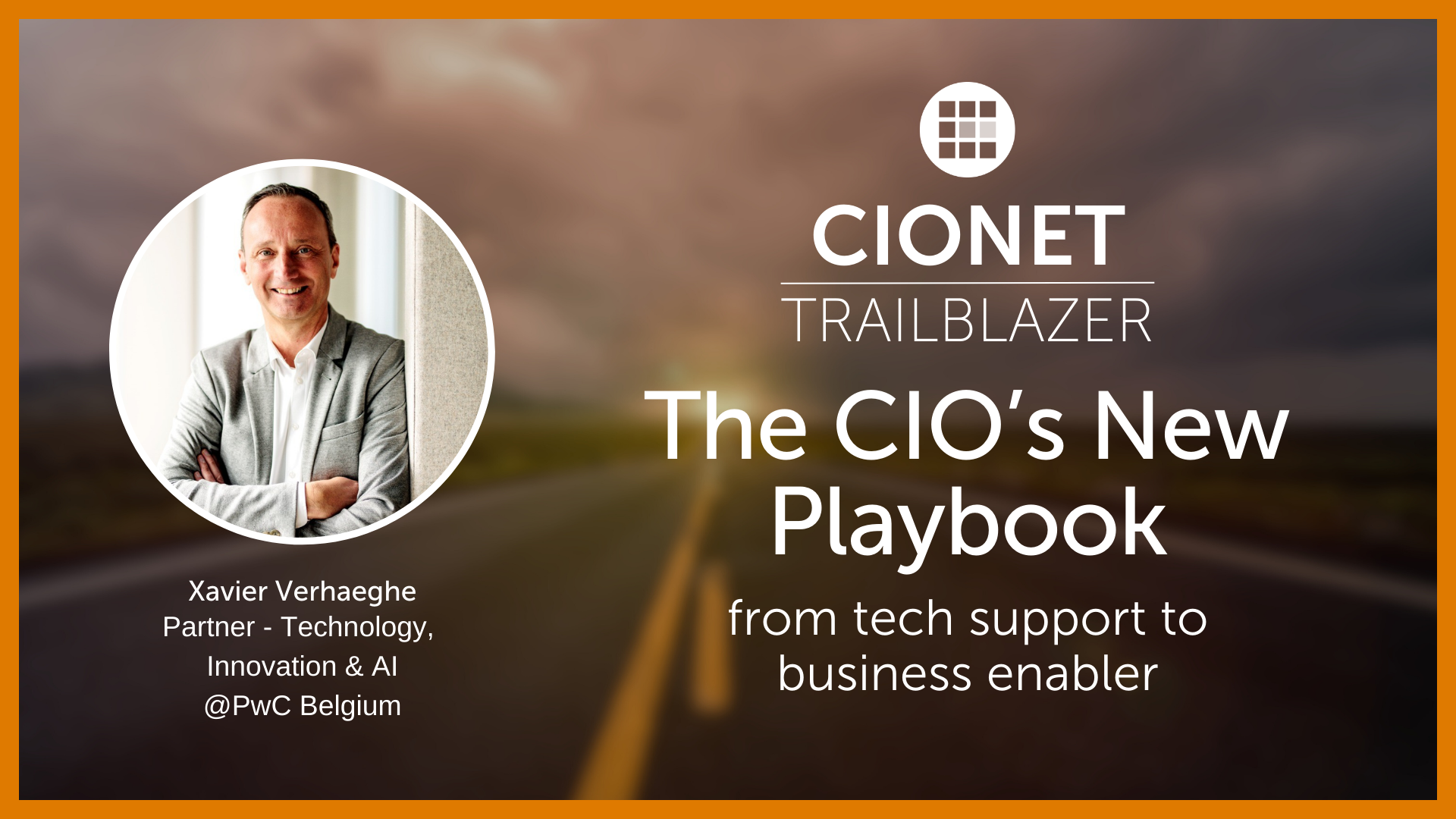
Published on: February 26, 2025 @ 10:51 AM
Published on: February 25, 2025 @ 4:14 PM
-4.png)
Published on: February 25, 2025 @ 10:33 AM
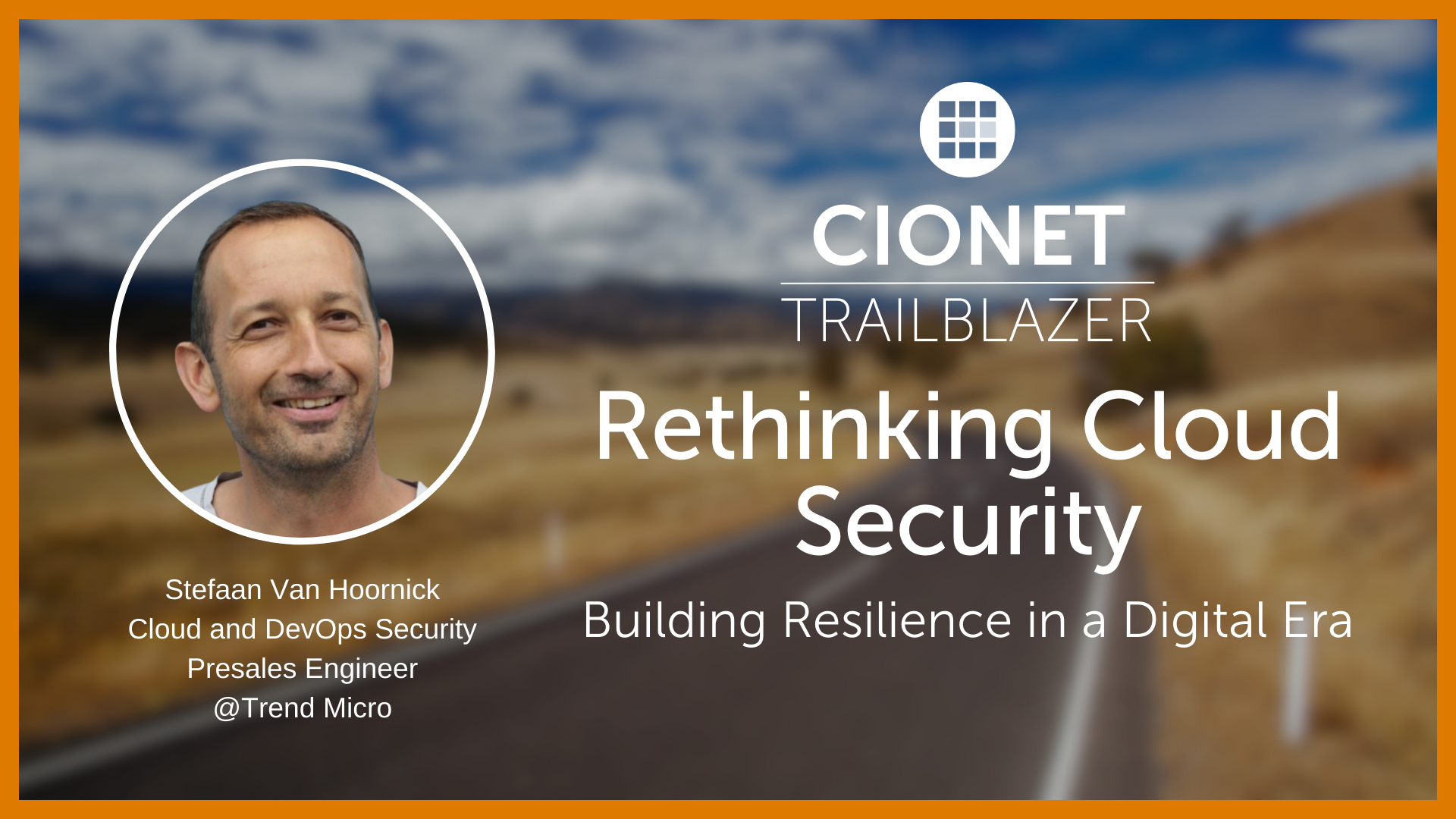
Published on: January 29, 2025 @ 9:58 AM
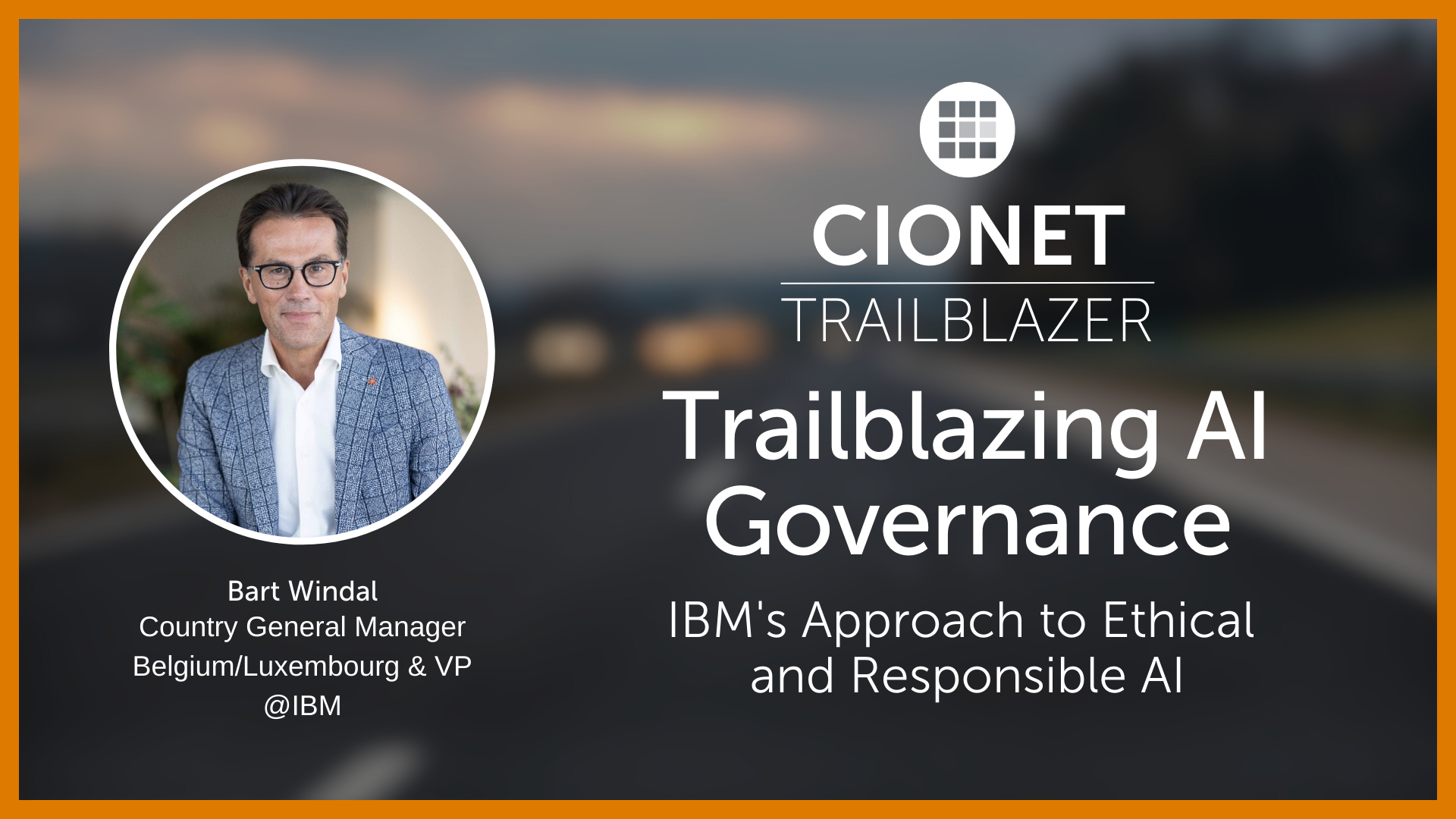
Published on: December 18, 2024 @ 9:07 AM

Published on: October 30, 2024 @ 9:34 AM
.png)
Published on: October 29, 2024 @ 11:37 AM
.png)
Published on: September 27, 2024 @ 10:41 AM

Published on: September 25, 2024 @ 8:59 AM
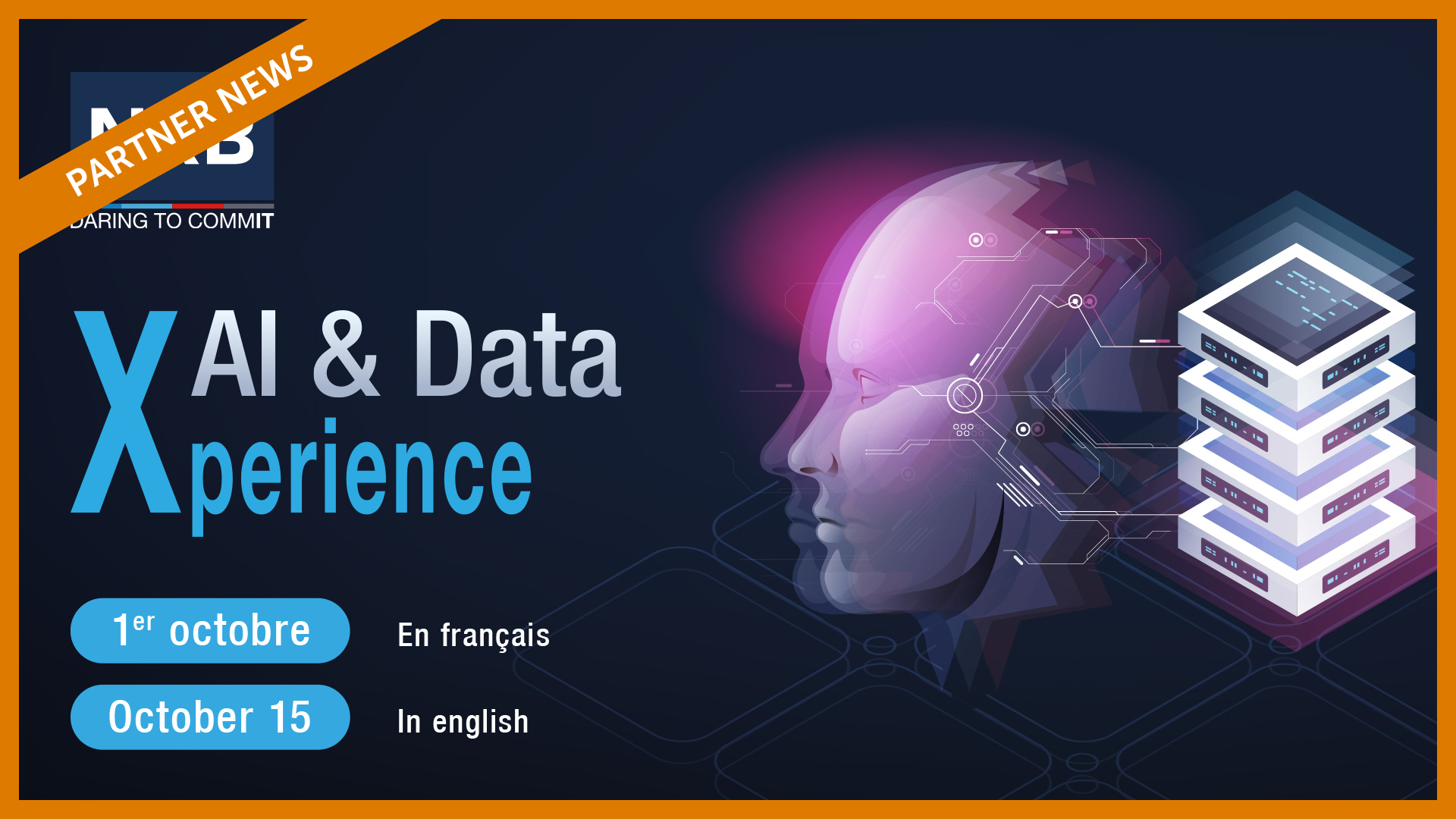
Published on: September 18, 2024 @ 3:44 PM

Published on: August 28, 2024 @ 10:10 AM

Discount Bank innovates faster to compete with start-ups
Due to the increasing number of young startups in Israel's financial market, Discount Bank had to shorten the time it takes to introduce new products and services. Stakeholders received a customized training program from Red Hat® Consulting. Read the details in this interesting customer case study.
With many young startups entering Israel’s financial market, Discount Bank needed to reduce
time-to-market for new products and services. The bank had to adopt a modern architecture to
remain a leader and stay competitive. Having realized that an approach based on microservices
and containers was the best approach, the bank adopted Red Hat OpenShift to ensure security
and scalability. Red Hat Consulting provided a bespoke training program for all stakeholders.
The new infrastructure built on Red Hat technology has reduced time-to-market, ensured
security, and allowed the bank to adopt FinOps innovation.
Competing with innovative young financial companies in parallel to the
traditional banks
The Discount Group is a global financial organization providing comprehensive corporate,
commercial, retail, and private banking services. It comprises banking, capital market and investment,
finance, and trust companies in and beyond Israel. In Israel, Discount Bank provides banking
services to more than one million private and corporate customers through a network of more
than 200 branches, business and investment centers, and direct, online, and mobile channels.
Israel is a country renowned for its innovation. As one of Israel’s leading financial institutions,
the bank needed to compete with the innovative young companies entering the market. “Israel is
a very competitive location,” said Asaf Goldfeld, Head of OpenShift and Linux at Discount Bank.
“The game for all the banks is to bring the best products to market in the shortest time.”
Discount Bank needed to move away from its legacy environment built on virtual machines to do
that. “There are a lot of start-ups in Israel,” said Guy Avrahami, Head of Infrastructure at Discount
Bank. “It’s very easy for them to innovate fast because they don’t have the legacy core applications
or environments we need to consider.”
To remain competitive, the bank needed to adapt its IT strategy. It began building a modern
infrastructure using an API (application programming interface) approach. But acquiring one
start-up opened its eyes to a whole new approach. “Pay Box, a digital wallet, was using an approach
based on containers and microservices,” said Avrahami. “We could see this approach was the future
and so decided to include it in our IT strategy.”
With its IT strategy now based on microservices and containers, the bank began its modernization
journey by designing and building pipelines to support a CI/CD (continuous integration and
continuous delivery) approach. As for the infrastructure, market research revealed Kubernetes
as the way forward. “We learned that Kubernetes is the next generation of platforms for running
containers,” said Avrahami. “But we found a lot of gaps between our governance and security
requirements and what the community version of Kubernetes could deliver. We needed a product.”
Adopting a modern architecture based on trusted technology
It was early days for Kubernetes in the financial market. “It was difficult to know what product
to select as we would be the first bank to adopt containers and microservices,” said Avrahami.
“We needed to close the gap around governance and security. We had previous experience with
Red Hat products and saw that Red Hat OpenShift would allow us to create a security
environment to meet our permission and authentication needs.”
Red Hat OpenShift Service Mesh provides a uniform way to connect, manage, and observe
microservices-based applications and allows institutions to customize microservices security
to meet the complex security requirements with which all financial institutions must comply.
Red Hat Consulting built Discount Bank a tailor-made training program that included bespoke
workshops and access to self-paced training courses through Red Hat Learning Subscription.
These helped the bank prepare for working in its new architecture. “Containers, microservices,
and Red Hat OpenShift were all new to us,” said Avrahami. “Red Hat tailored our training to
educate all our teams so they would all understand, and all speak the same language.”
redhat.com Case study Discount Bank innovates faster to compete with start-ups 3
The program reached all departments—DevOps, development, design, application architecture,
and infrastructure—and helped them learn about the platform. An introduction day for C-level
executives helped them align their terminology with the technical teams.
With extensive training, the Discount Bank team built their new infrastructure-as-code environment
with help from a team of experts from Red Hat Consulting. “From the beginning, the bank was
open-minded, and the innovative architecture we built was challenging,” said Batel Assaf Volchek,
SA for the FSI Sector, Red Hat. “The bank invested a lot to build a flexible architecture secured and
scalable for future needs. Looking back, the first brick and the effort we invested together was one
of our keys for successful deployment.”
Having crafted the new IT strategy and brought it to life by adopting DevOps, building pipelines,
and implementing Red Hat OpenShift, the bank next needed to focus on adapting its organizational
culture to the new world.
Innovating faster with more efficient development, infrastructure,
and security
Reduced time-to-market to just days from one month
Discount Bank has met its goal with the new architecture based on microservices and containers
running on Red Hat OpenShift, significantly reducing time-to-market. “We can give our customers
the best solutions in the shortest time, and this is the big plus of our Red Hat OpenShift solution,”
said Avrahami. “Something that would have taken a month to deploy in our previous environments,
we can now deploy in a few days—or even a few hours.”
Moreover, developers no longer rely on the infrastructure team to create the environments
they need, allowing them to be much more efficient and launch new functionality much faster.
“We have projects launching hundreds of new services,” said Tom Porat, Full Stack Developer at
Discount Bank. “Most of that happens without any involvement from the infrastructure team.”
The bank can now deploy small developments and small changes to an application very quickly.
The development team is working on more projects than it would have previously. “Our developers
are providing more solutions for our customers—taking our service to the next level—with the same
number of people, or even fewer in some parts of the business,” said Porat.
Ensured security across clusters with standardization
The Red Hat OpenShift environment provides consistency across clusters, which is vital for ensuring
the bank’s new services meet its security and scalability requirements. Cluster images are audited
once and then stored in GitHub, ready to be duplicated across clusters.
“Our security team tests and certifies one Red Hat OpenShift cluster image for our infrastructure
team to then roll out many times,” said Goldfeld. “It saves our security team valuable time because
it doesn’t need to test an image for each cluster we provision.”
“The architecture Red Hat meticulously crafted not only facilitates the seamless deployment of an
end-to-end OpenShift Container Platform (OCP) but also ensures centralized management of these
clusters, regardless of the hosted infrastructure. This groundbreaking approach is underpinned by
an advanced GitOps process, providing a single source of truth,” said Almog Elfassy, Cloud Architect,
Red Hat.
redhat.com Case study Discount Bank innovates faster to compete with start-ups 4
From a developer’s perspective, he now has confidence in any environment stored in GitHub
because he knows it has been audited. “We can quickly create a new test environment to test a new
configuration or an upgrade and we know that it is exactly the same as the production environment,”
said Porat.
Allowed the bank to adopt FinOps innovations
Discount Bank can now easily take advantage of innovations from FinOps companies thanks to
Red Hat OpenShift. Small companies are approaching the bank with their novel ideas and asking
for a platform to run their containers.
“We can bring new FinOps applications into our banking in no time,” said Goldfeld. “We can adopt
their innovations in just a few days.”
It is now much easier for the bank to onboard anything new: “Once you have the capacity on the
cluster, you don’t need to request new servers,” said Porat. “You don’t need to get new IP addresses,
DNS, records, security, and everything else. Red Hat OpenShift reduces the friction when you
provision new things.”
Preparing the bank for the future
“We have brought innovation to our infrastructure by adopting Red Hat OpenShift,” said Porat. “We
also have GitHub and everything we need for our CI/CD pipeline. We are now onboarding more
applications and modernizing existing ones, so they work more efficiently.”
“Our IT strategy includes a chapter that says we are moving from virtual machines to containers and
microservices in the next five to ten years,” said Avrahami. “Our IT strategy also says we will move to
the cloud, which will be much easier with containers rather than virtual machines. Red Hat OpenShift
has an important role at Discount Bank, not just today but also for our future.”
“This collaborative effort highlights Red Hat’s commitment to developing innovative solutions
tailored to customers’ unique business objectives. Together, we aim to pave the way for the
successful realization of those objectives,” said Elfassy.
About Discount Bank
Discount Bank was founded in 1935 by the late Mr. Leon Recanati and is a part of the
Discount Group. The bank offers comprehensive banking services to its customers in all areas
of financial activity, through a network of 114 branches spread throughout Israel and through
direct banking services.

CIONET’s Cyber Circle: a new three-event programme exclusively focusing on the most urgent, complex, and high-impact challenges in cybersecurity today. Launched in 2026, this initiative brings together CISOs, CIOs, and senior IT executives with a strong interest in cybersecurity for three curated gatherings each year. As part of CIONET’s trusted executive community, the Cyber Circle provides a confidential, peer-driven environment to exchange insights, share real-world experiences, and address evolving cyber threats. Each session is designed to foster strategic dialogue, strengthen resilience, and elevate cybersecurity as a core driver of business value.
Read More.png)
The Telenet Business Leadership Circle powered by CIONET, offers a platform where IT executives and thought leaders can meet to inspire each other and share best practices. We want to be a facilitator who helps you optimise the performance of your IT function and your business by embracing the endless opportunities that digital change brings.
Read More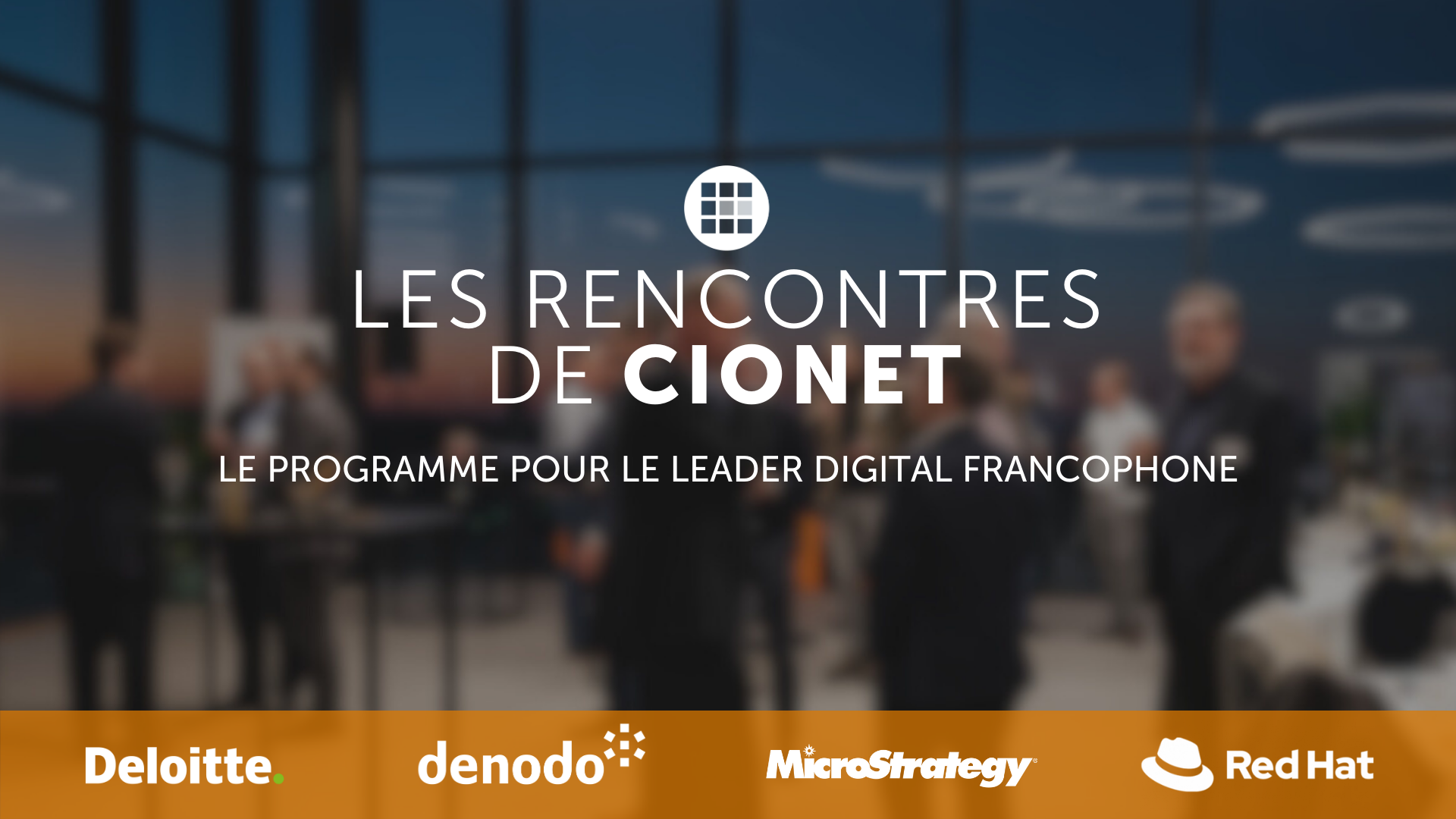
Découvrez la dynamique du leadership numérique aux Rencontres de CIONET, le programme francophone exclusif de CIONET pour les leaders numériques en Belgique, rendu possible grâce au soutien et à l'engagement de nos partenaires de programme : Deloitte, Denodo et Red Hat. Rejoignez trois événements inspirants par an à Liège, Namur et en Brabant Wallon, où des CIOs et des experts numériques francophones de premier plan partagent leurs perspectives et expériences sur des thèmes d'affaires et de IT actuels. Laissez-vous inspirer et apprenez des meilleurs du secteur lors de sessions captivantes conçues spécialement pour soutenir et enrichir votre rôle en tant que CIO pair. Ne manquez pas cette opportunité de faire partie d'un réseau exceptionnel d'innovateurs numériques !
Read More.jpg)
CIONET is committed to highlighting and celebrating female role models in IT, Tech & Digital, creating a leadership programme that empowers and elevates women within the tech industry. This initiative is dedicated to showcasing the achievements and successes of leading women, fostering an environment where female role models are recognised, and their contributions can ignite progress and inspire the next generation of women in IT. Our mission is to shine the spotlight a little brighter on female role models in IT, Tech & Digital, and to empower each other through this inner network community.
Read More


-Apr-01-2022-10-58-34-57-AM.png)









-Dec-13-2023-10-53-15-5032-AM.png)



-Jun-12-2023-01-23-11-7540-PM.png)




-Apr-01-2022-10-58-34-68-AM.png)






.png)



%20(003).png)




.png)





.png)











-Sep-01-2022-02-47-55-60-PM.png)
-Nov-22-2023-08-56-42-6802-AM.png)
.png)


.png "be-page-banner (1)")



.png)
.png)
.png)
.png)