

.png)
Belgium 20-10-2026 Squad Only Virtual English
Cloud decisions are becoming more selective. The challenge is deciding where each workload should run based on cost, performance, control, resilience, sovereignty, and business need. Three pressure points usually drive the decision. - Cost visibility becomes harder when usage grows across cloud services, data platforms, and AI workloads. - Performance and latency matter more when systems need fast access to data or support operational processes. - Sovereignty and resilience become critical when data location, continuity, vendor dependency, and exit options enter the discussion. The working question is simple: how do we place workloads where they create the most value while keeping the hybrid landscape manageable? If these trade-offs are on your agenda, let’s compare how others are handling similar choices.
Read More.png)
Belgium 10-11-2026 Squad Only Virtual English
Data platforms are meant to simplify access and support better use of data. The challenge is choosing and governing the platform landscape in a way that creates consistency, reuse, and long-term value. Three pressure points usually appear. - Platform choice becomes difficult when teams have different needs for speed, flexibility, cost, and control. - Business meaning needs protection: customer, revenue, product, risk, and FTE need shared definitions across tools. - Ownership and governance need to be clear, so platforms grow with accountability and discipline. The working question is simple: how do we give teams the data capabilities they need while keeping the platform landscape understandable, governed, and reusable? If these questions are familiar, let’s compare approaches with others facing the same data landscape.
Read More.png)
Belgium 13-11-2026 Squad Only Physical English
Many IT capabilities are essential and difficult to fund through a simple project ROI. The challenge is showing why architecture, governance, resilience, cybersecurity maturity, data foundations, and AI readiness deserve investment before the gap becomes expensive. Three pressure points make the case harder. - Shared value means the benefit often sits across several teams, while the budget sits in one place. - Timing creates friction because the cost is immediate while the value appears over time. - Risk translation is needed so business and finance leaders understand the consequence of delaying the investment. The working question is simple: how do we turn foundational IT capabilities into credible investment cases that link cost, risk, business value, and future flexibility? If you are building these cases internally, let’s compare how others are positioning value, risk, and timing.
Read More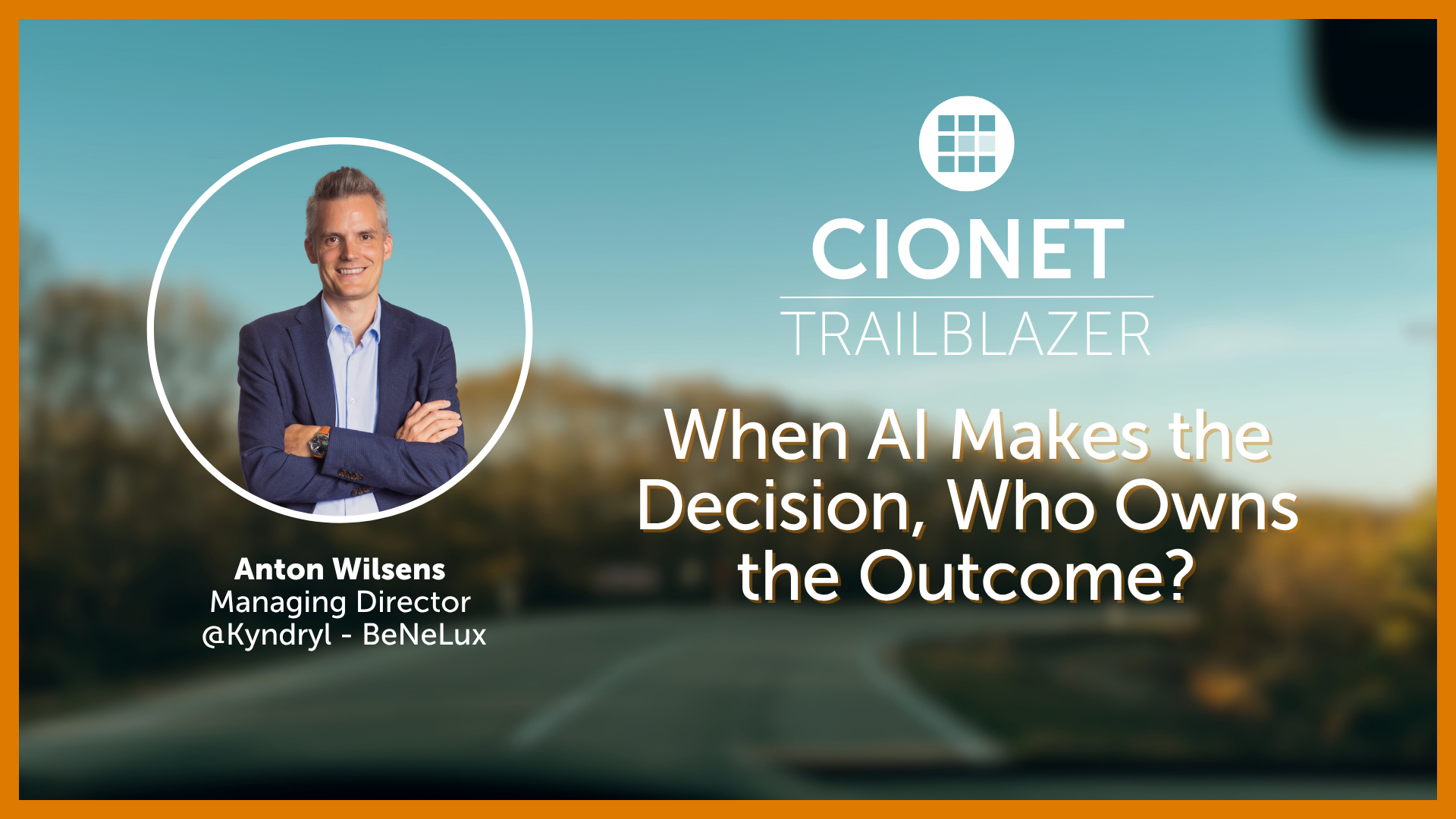
Published on: September 30, 2026 @ 1:17 PM
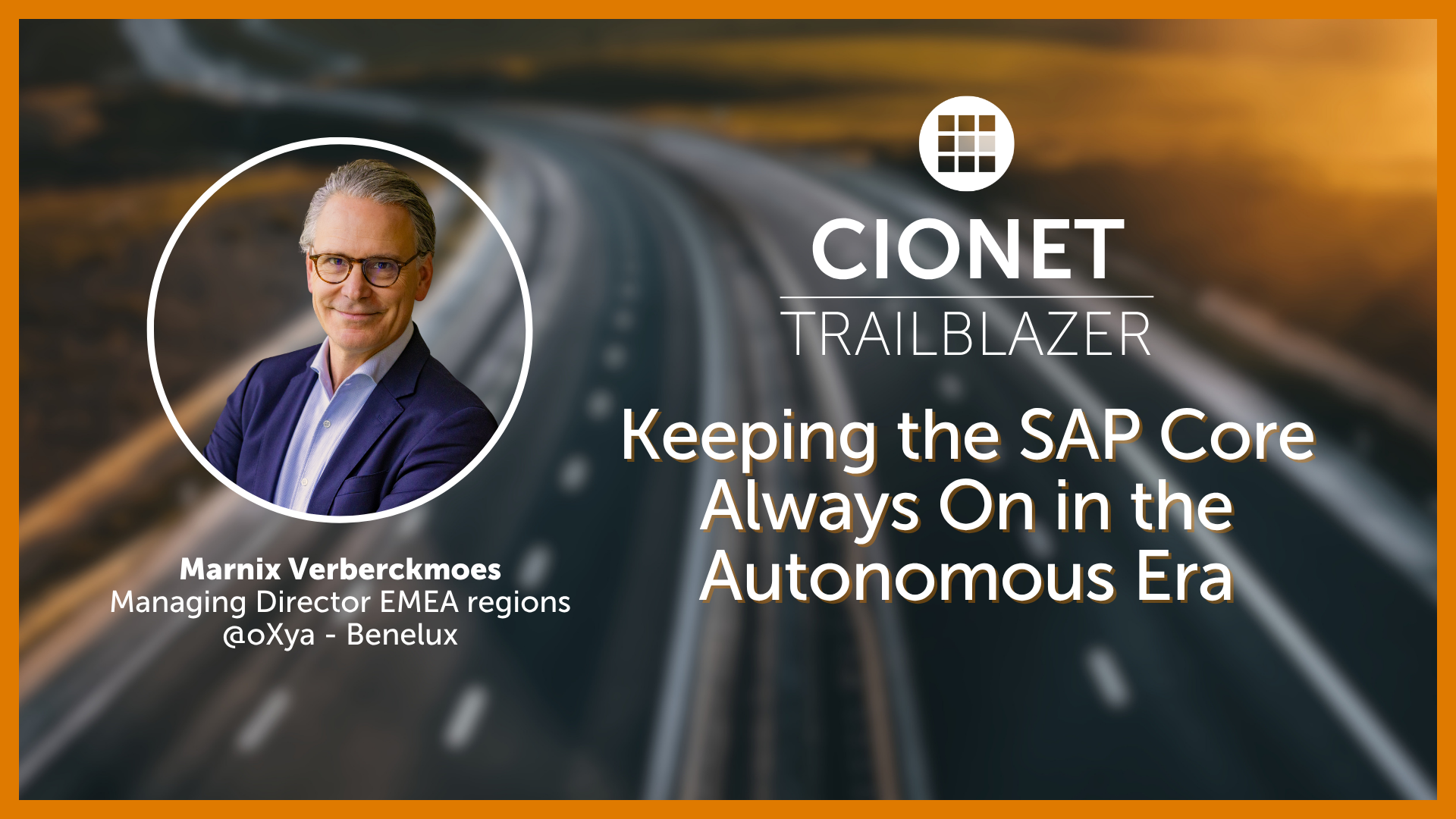
Published on: August 26, 2026 @ 9:13 AM
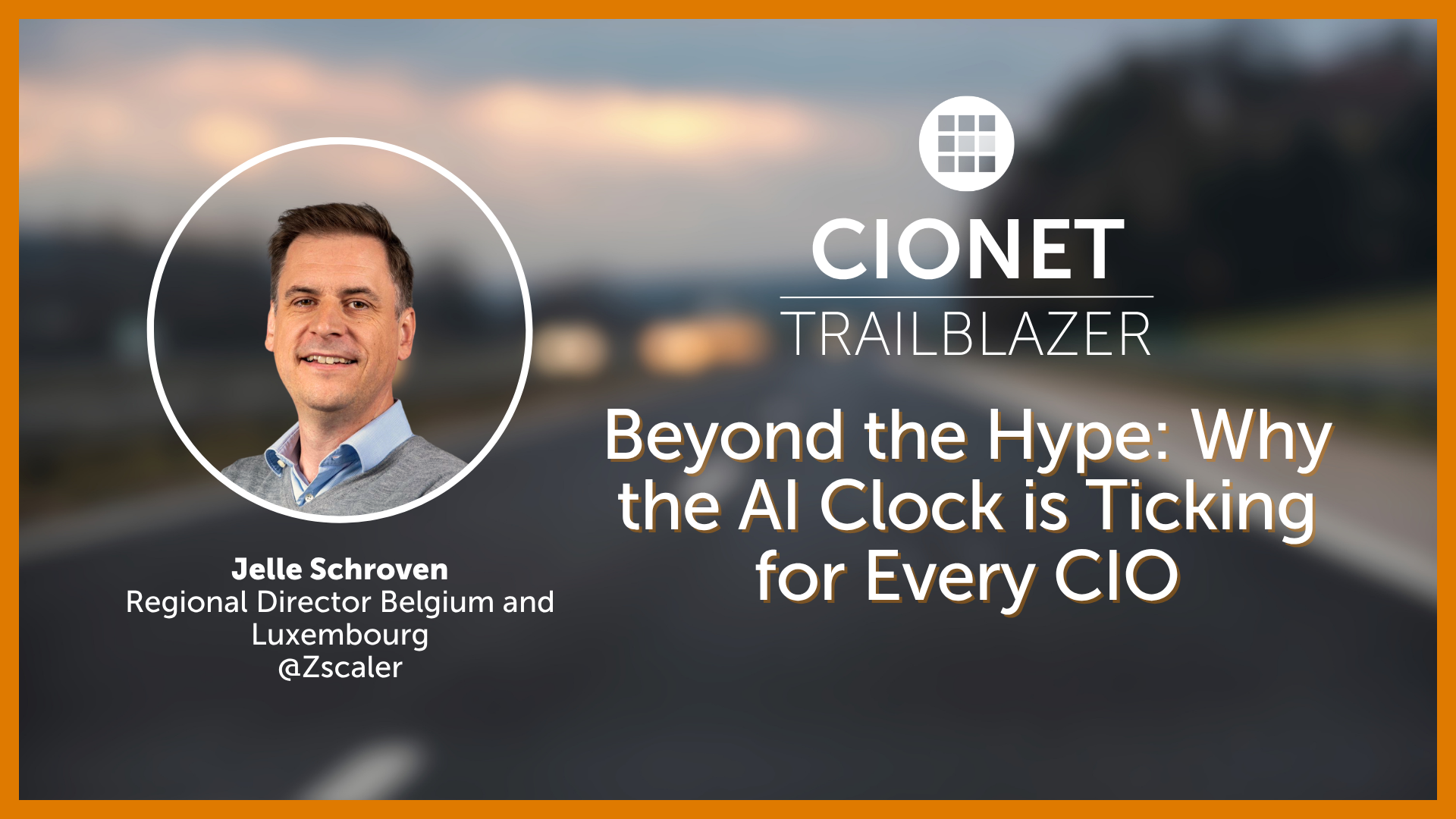
Published on: July 29, 2026 @ 10:08 AM
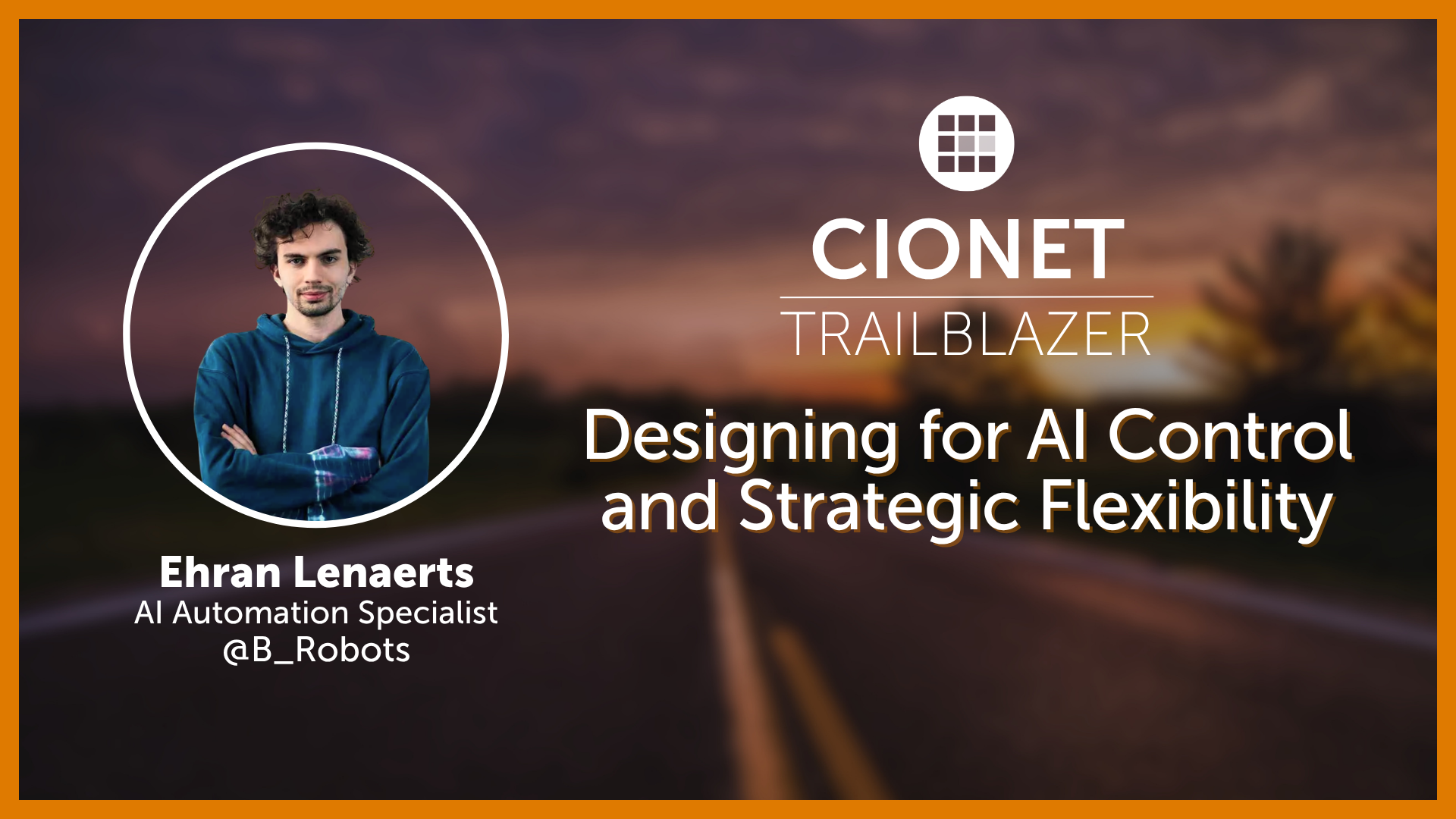
Published on: June 24, 2026 @ 5:00 PM

Published on: May 27, 2026 @ 9:21 AM
Published on: May 07, 2026 @ 4:02 PM
.png)
Published on: April 29, 2026 @ 9:11 AM
Published on: March 26, 2026 @ 3:37 PM
-2.png)
Published on: March 25, 2026 @ 9:58 AM
Published on: March 13, 2026 @ 3:43 PM
-Feb-25-2026-10-01-07-2508-AM.png)
Published on: February 25, 2026 @ 11:01 AM
.png)
Published on: February 25, 2026 @ 9:00 AM
Published on: February 24, 2026 @ 5:00 PM
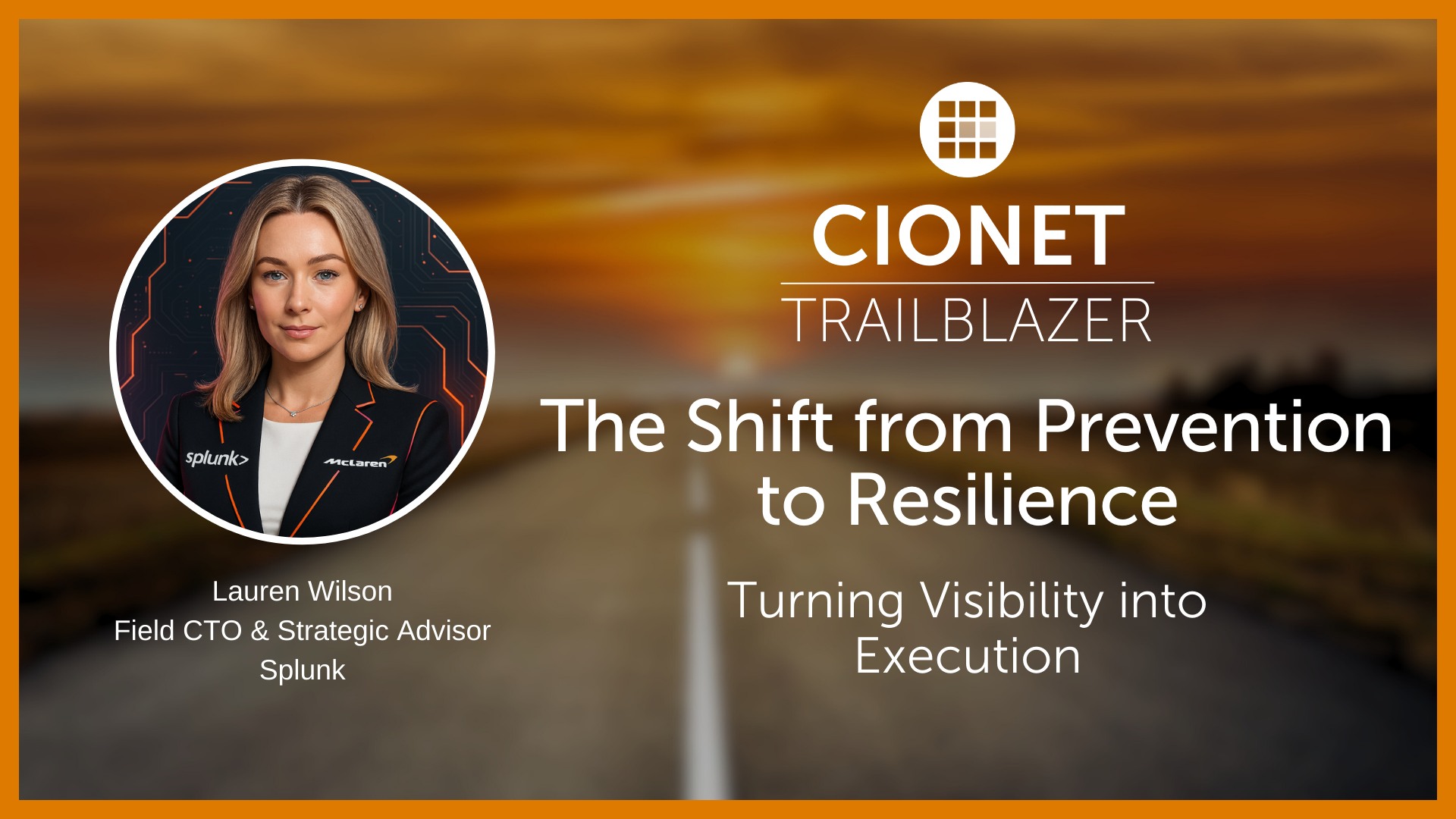
CIONET Trailblazer: CISO: The Shift from Prevention to Resilience: Turning Visibility into Execution
Published on: January 28, 2026 @ 9:48 AM
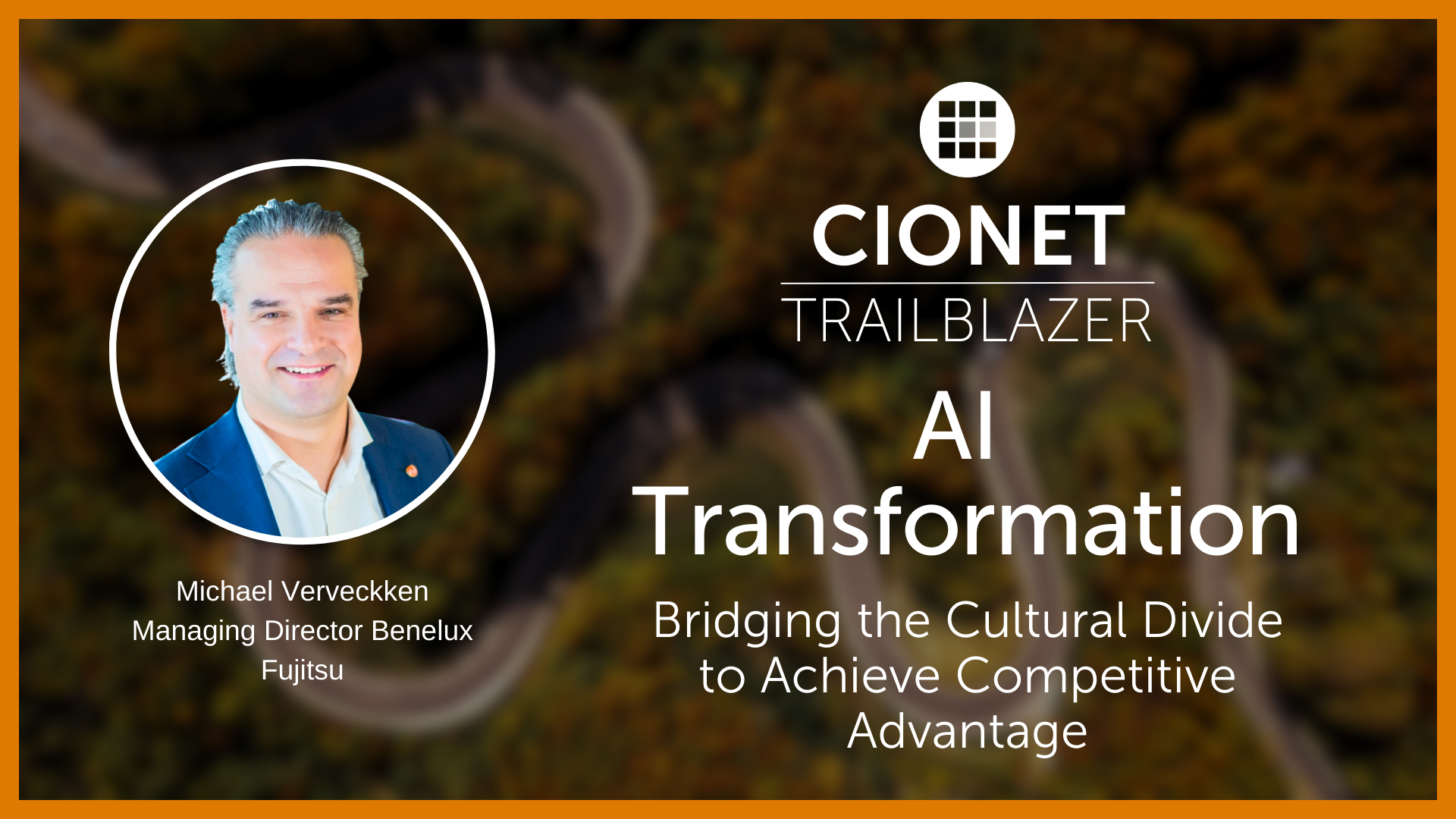
CIONET Trailblazer: AI Transformation: Bridging the Cultural Divide to Achieve Competitive Advantage
Published on: December 17, 2025 @ 9:16 AM
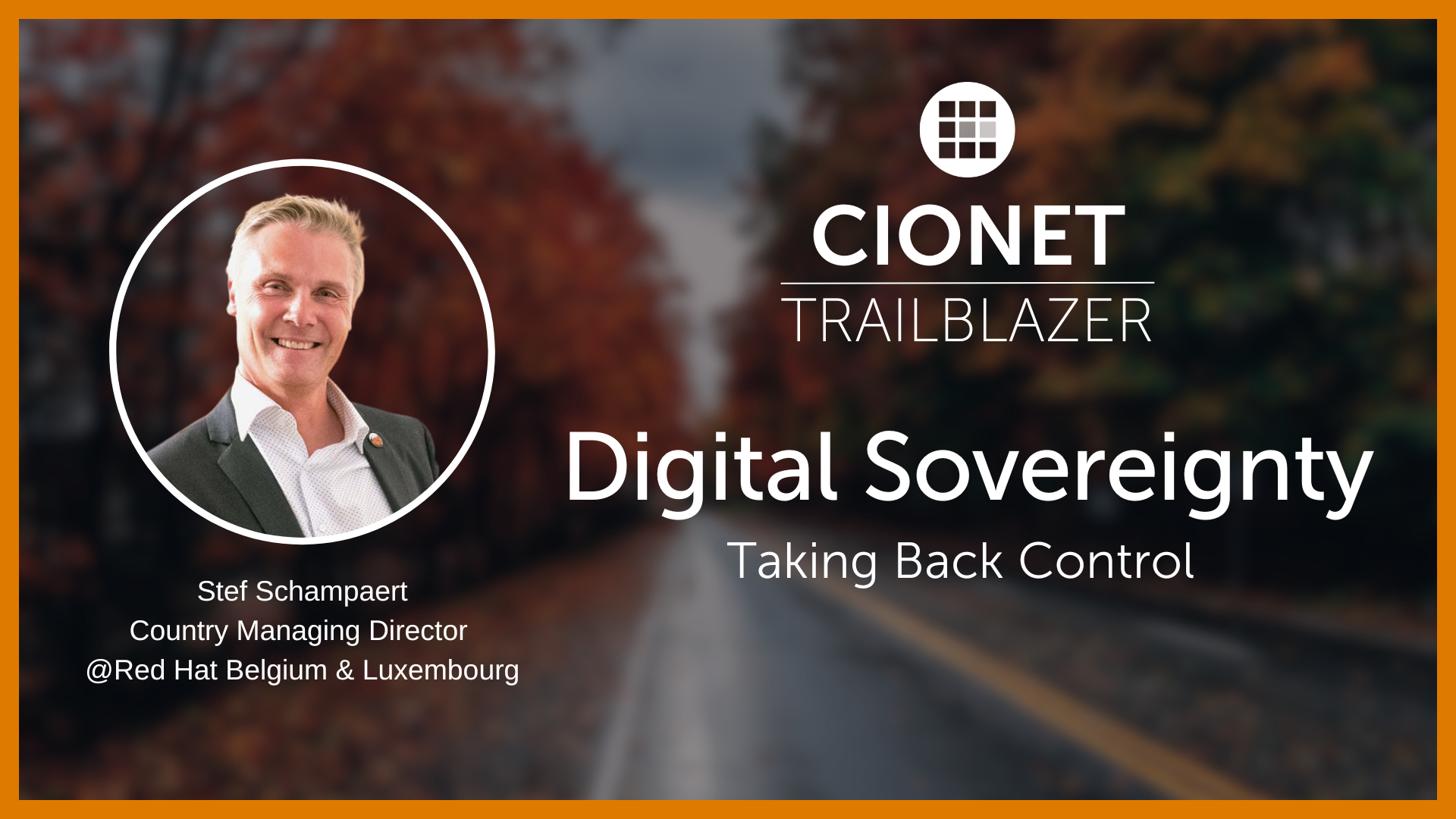
Published on: October 29, 2025 @ 11:31 AM
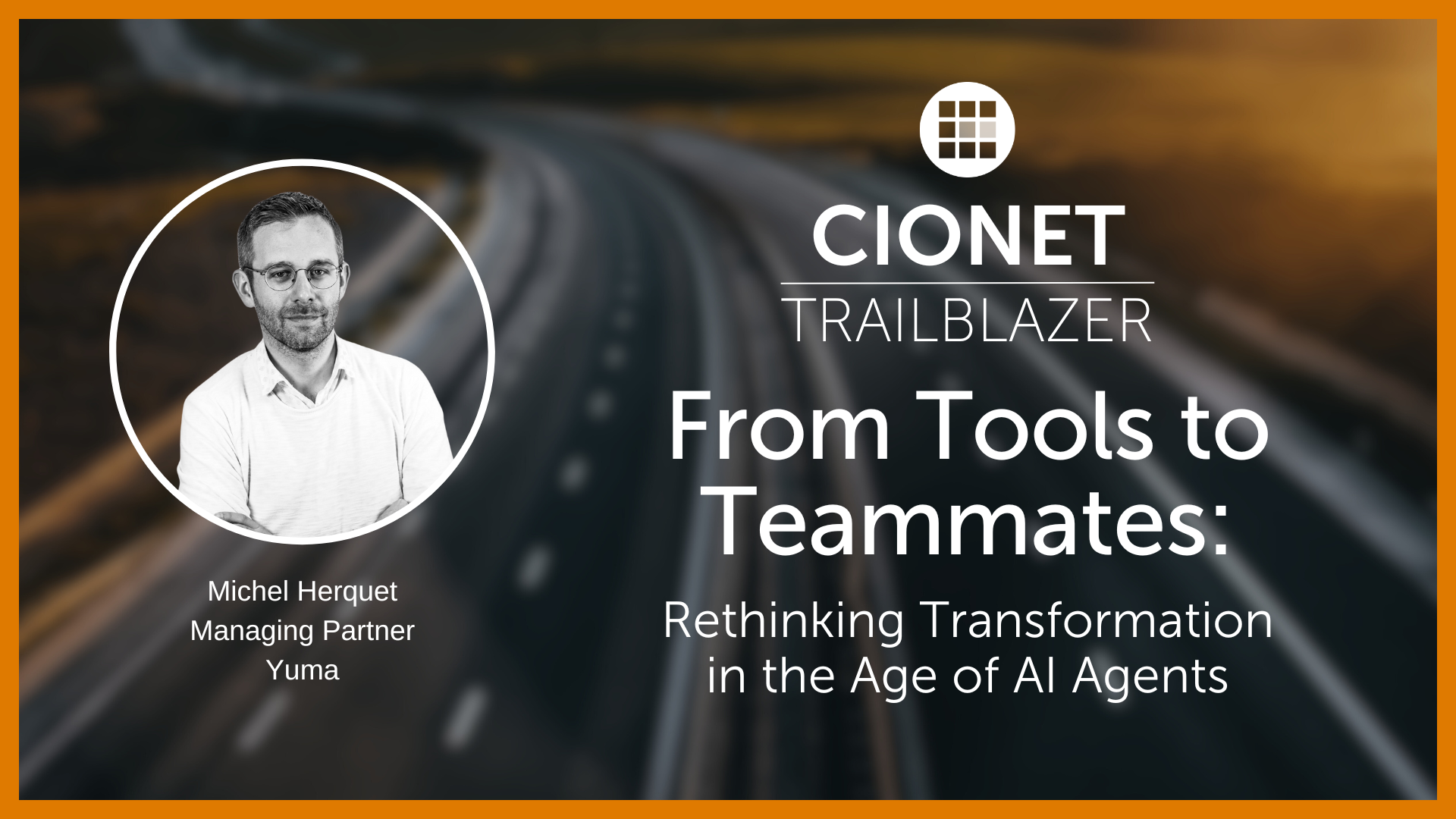
Published on: July 30, 2025 @ 9:19 AM
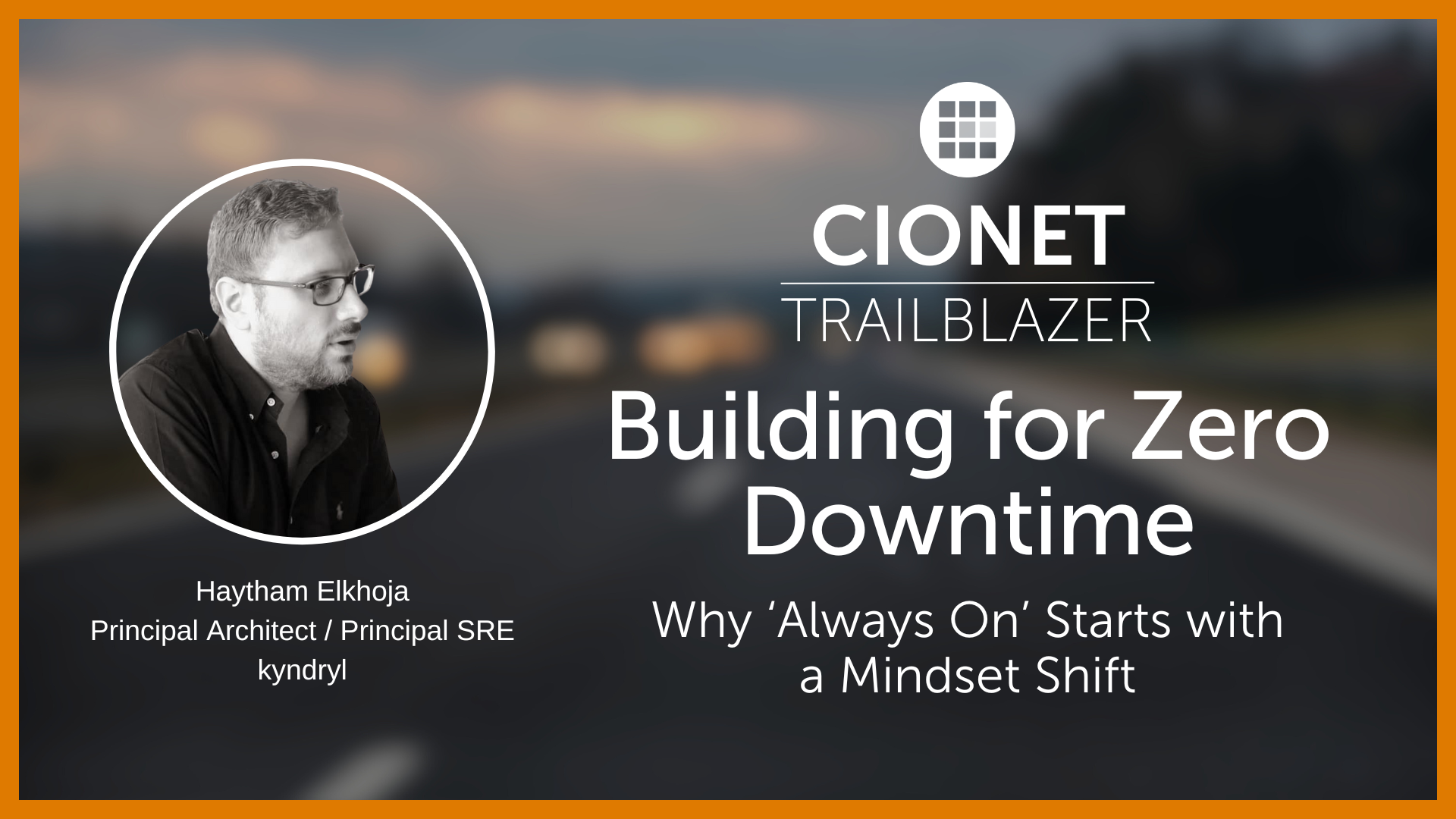
Published on: June 25, 2025 @ 9:14 AM
.png)
Published on: April 30, 2025 @ 9:04 AM
-1.png)
Published on: March 26, 2025 @ 9:59 AM
-1.png)
Published on: March 04, 2025 @ 5:07 PM
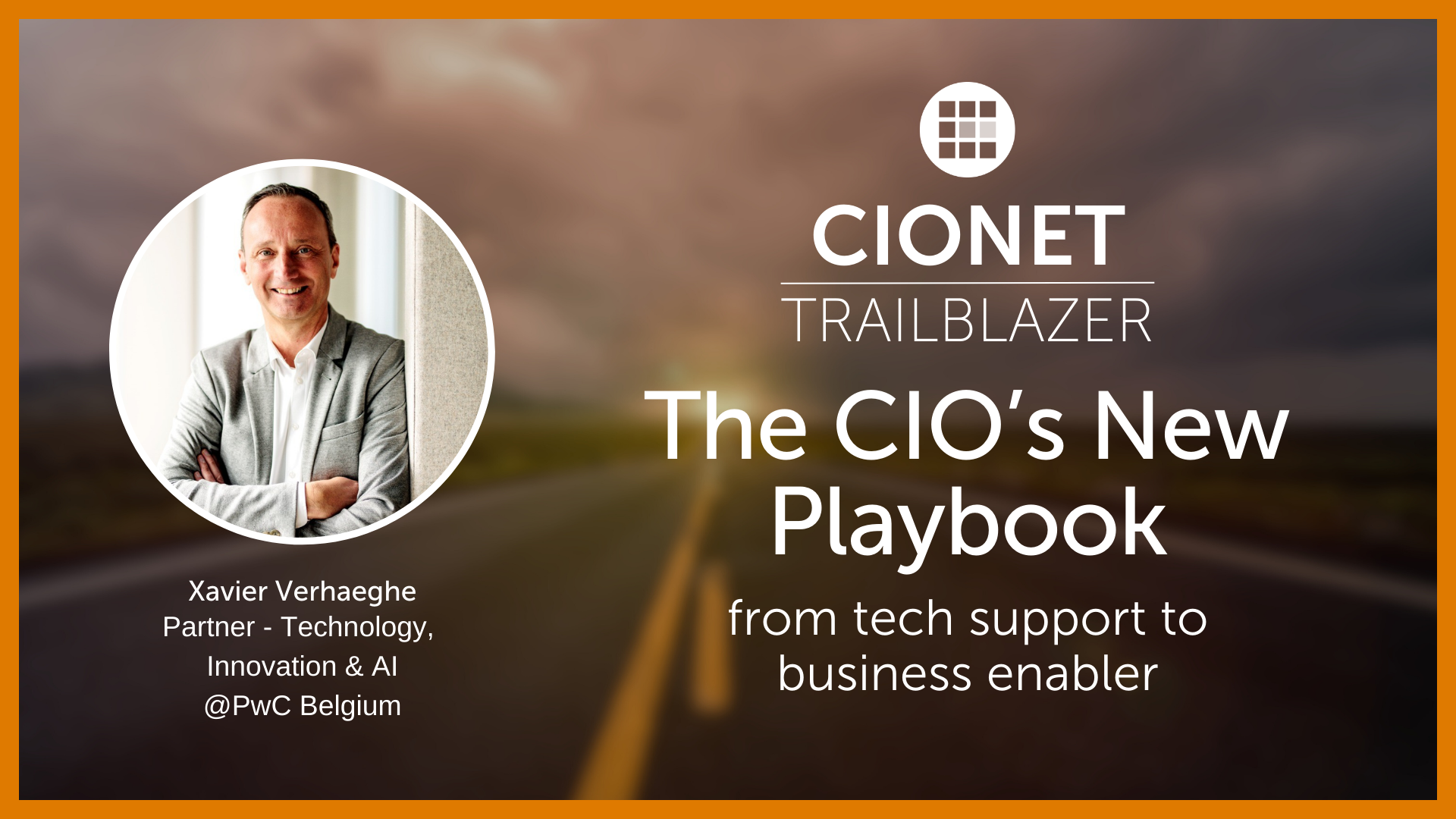
Published on: February 26, 2025 @ 10:51 AM
Published on: February 25, 2025 @ 4:14 PM
-4.png)
Published on: February 25, 2025 @ 10:33 AM
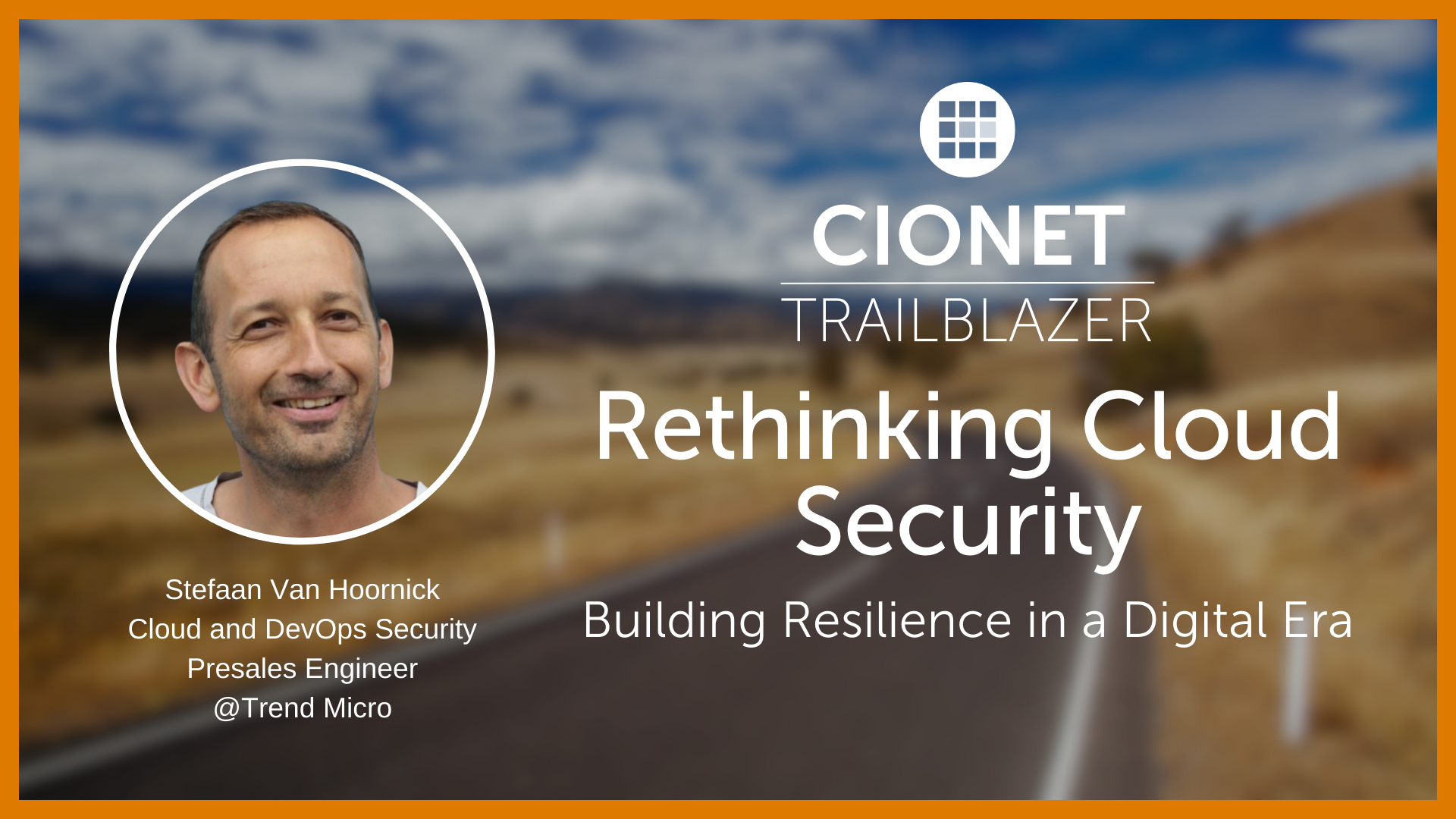
Published on: January 29, 2025 @ 9:58 AM
Published on: December 18, 2024 @ 9:07 AM
Published on: October 30, 2024 @ 9:34 AM
.png)
Published on: October 29, 2024 @ 11:37 AM
.png)
Published on: September 27, 2024 @ 10:41 AM
Published on: September 25, 2024 @ 8:59 AM
Published on: September 18, 2024 @ 3:44 PM
Published on: August 28, 2024 @ 10:10 AM

University of Gothenburg adopts application platform for data science
Sweden's University of Gothenburg ditched slow VMs for Red Hat OpenShift, modernizing their website and research. The platform's self-service and containerization capabilities streamline development, while OpenShift Virtualization lets them seamlessly integrate legacy apps. This frees IT for higher-value tasks and accelerates research projects.
Founded in 1891, the University of Gothenburg is the third-oldest of the current Swedish universities. Lying in the heart of Sweden’s second-largest city, its strong research and appealing study programs attract scientists and students from around the world. Around 54,000 students and 6,600 staff study and work across its 8 faculties and 38 departments. The university also has a large number of research centers of expertise, which span several academic disciplines. These focus on meeting societal challenges, with their new knowledge and new perspectives contributing to a better future.
The university chose Red Hat Enterprise Linux® as its standard distribution over a decade ago. When deciding to build a new web platform in 2020, it recognized that an application platform would make it faster and easier for developers to test, deploy, and launch new services. However, building an application platform on the university’s legacy VMs would be slow; it could take up to 3 months to deliver the new environment.
“An application platform would give research teams access to the IT environments they need much faster, and our IT unit would be able to manage resources centrally,” said Carl-Johan Schenström, IT Infrastructure Specialist at the University of Gothenburg. “What is more, with the application platform’s built-in networking, we would not need to rely on our networking team to set up ports manually so our research teams’ projects can communicate with other systems.”
Red Hat OpenShift is critical to our future success. It frees up our IT unit, allows projects to progress faster, and we can onboard new developers fast. Johan Kindstrand - Senior Consultant, Atea, University of Gothenburg
We are excited about containerizing our .NET applications and expanding our Red Hat OpenShift use cases to include AI, ML, and HPC projects. Carl-Johan Schenström - IT Infrastructure Specialist, University of Gothenburg
The university began building the website on OKD, the open source community version of OpenShift. Technology partner Atea Sverige (Atea) suggested adopting Red Hat OpenShift. “We are only 2 people, so the enterprise-level support that comes with Red Hat OpenShift is essential; everyone else is supporting our legacy systems,” said Johan Kindstrand, Senior Consultant, Atea, University of Gothenburg. “And Red Hat OpenShift will make it easier for us to find new talent when we need it.”
The university purchased a Red Hat OpenShift Platform Plus academic license. “The licensing cost is very attractive, and we are very interested in using Red Hat Advanced Cluster Management for Kubernetes, Advanced Cluster Security for Kubernetes, and Red Hat Quay,” said Kindstrand. “Red Hat Advanced Cluster Management will allow us to manage our Red Hat OpenShift clusters centrally as their numbers grow. Red Hat Advanced Cluster Management will quickly become essential.”
Atea and the university’s IT unit deployed Red Hat OpenShift on VMs using user-provisioned infrastructure (UPI) and migrated the university website from OKD. “The Red Hat Knowledge Base was really helpful. There are lots of great resources in there,” said Schenström.
The university plans to deploy more clusters for development and testing in addition to production. “Many departments are looking into using Red Hat OpenShift,” said Schenström. Those projects include building a trusted environment for research projects and a marine biology “research vessel,” which stores the data it collects in Red Hat OpenShift. Internal projects will be deployed on VMs and research projects on bare metal.
A Red Hat Solution Architect keeps the partners informed about upcoming features. “Our developers really like learning about new features,” said Schenström. “They loved the OpenShift Dev Spaces demo, for instance.” Other important features include the Open Data Hub, an open source project providing tools for running large and distributed artificial intelligence (AI) workloads on Red Hat OpenShift. The tools support monitoring and data storage and also include distributed AI and machine learning (ML) workflows and the Jupyter Notebook development environment.
Self-service tools built into Red Hat OpenShift means developers no longer need to wait for the IT unit to manually provision and configure VMs according to each project’s needs. Developers and researchers are a lot less dependent on IT and can get moving with their projects sooner on the application platform, and the IT unit has more time available to support projects in other ways
“We can create a namespace in Red Hat OpenShift in a few minutes. They can then install their collecting application, and they are good to go,” said Schenström, highlighting how the marine biology department can now create research vessels. “Previously, we would set up a VM, configure it according to the project’s needs, talk with the networking people, and set the ports for communicating with all the sensors—and that would have taken a few days, a week, or even more.”
The namespaces integrate with the university’s Active Directory for credentials and roles. Once they are created, developers can deploy whatever applications they need in any environment. Future plans include using Red Hat OpenShift to provide more self-service so developers can create namespaces themselves
The university has also recently started using OpenShift Dev Spaces, a collaborative Kubernetesnative solution for rapid application development. OpenShift Dev Spaces delivers consistent developer environments on Red Hat OpenShift, allowing anyone with a browser to contribute code in under 2 minutes.
“OpenShift Dev Spaces allows us to onboard developers within minutes,” said Schenström. “We like how it provides developers—whether in our IT unit or more widely across individual departments—with a consistent, secure, and zero-configuration development environment.”
The trusted environment Schenström and his team are building for sensitive research projects uses OpenShift Virtualization to allow VMs to run alongside containers on the same platform, simplifying management and improving time to production.
“We use OpenShift Virtualization to run Windows infrastructure—the Active Directory Controllers and remote updates, for instance—on VMs in Red Hat OpenShift,” said Schenström. “We then deploy a virtual Windows server with remote desktop services to create an isolated bubble for each research team.”
The university has a lot of projects using the Jupyter Notebook. The School of Business, Economics, and Law has been using the multiuser version (JupyterHub) to support 3 courses with up to 160 students each since 2021.
“JupyterHub allows a smaller number of teachers to teach and support a greater number of students. We can easily enter students’ servers to help and support,” said Mari Paananen, Associate Professor at the University of Gothenburg.
JupyterHub means students do not need to install software on their computers, which can cause installation problems and waste around 20% of the allocated teaching time. “It levels the playing field among students, as they all have access to the same processing power, regardless of the capacity of their own computer, and provides students with instant access to the same data from a shared folder,” said Paananen.
The University of Gothenburg is expanding use cases for the Red Hat application platform, including for data science projects. “We have users who want to use graphics processing units (GPUs) for AI, ML, and, in the future, high-performance computing (HPC) projects,” said Schenström, explaining how projects buying physical servers with dedicated GPUs and then IT managing those servers is not resource effective. “We would like to provide a data science platform based on Red Hat OpenShift with shared access to GPU and CPU resources. We are looking at hybrid cloud for those compute-heavy applications,” said Schenström. “The auto-scaling provided by public cloud environments will help us manage costs.”
The University of Gothenburg uses Open Data Hub, an open source AI platform designed for the hybrid cloud, to provide their data scientists with a Jupyter-as-a-service collaborative environment for use cases like a chatbot for Alzheimer’s research. They are also considering OpenShift AI, Red Hat’s commercial product based on Open Data Hub, which provides a flexible, scalable MLOps platform that gives teams the tools they need to build, deploy, and manage AI-enabled applications.
Plans for the future include containerizing legacy applications, including internally developed Windows applications. “We can now modernize our legacy Windows applications and get rid of some of our legacy physical servers,” said Schenström. OpenShift Virtualization makes containerizing .NET applications straightforward. Windows developers write their applications as they normally would, but instead of deploying onto a Windows server, they deploy to Red Hat OpenShift.
“Red Hat OpenShift is critical to our future success,” said Kindstrand. “It frees up our IT unit, allows projects to progress faster, and we can onboard new developers fast. We are excited about containerizing our .NET applications and expanding our Red Hat OpenShift use cases to include AI, ML, and HPC projects.”
CIONET’s Cyber Circle: a new three-event programme exclusively focusing on the most urgent, complex, and high-impact challenges in cybersecurity today. Launched in 2026, this initiative brings together CISOs, CIOs, and senior IT executives with a strong interest in cybersecurity for three curated gatherings each year. As part of CIONET’s trusted executive community, the Cyber Circle provides a confidential, peer-driven environment to exchange insights, share real-world experiences, and address evolving cyber threats. Each session is designed to foster strategic dialogue, strengthen resilience, and elevate cybersecurity as a core driver of business value.
Read More.png)
The Telenet Business Leadership Circle powered by CIONET, offers a platform where IT executives and thought leaders can meet to inspire each other and share best practices. We want to be a facilitator who helps you optimise the performance of your IT function and your business by embracing the endless opportunities that digital change brings.
Read More
Découvrez la dynamique du leadership numérique aux Rencontres de CIONET, le programme francophone exclusif de CIONET pour les leaders numériques en Belgique, rendu possible grâce au soutien et à l'engagement de nos partenaires de programme : Deloitte, Denodo et Red Hat. Rejoignez trois événements inspirants par an à Liège, Namur et en Brabant Wallon, où des CIOs et des experts numériques francophones de premier plan partagent leurs perspectives et expériences sur des thèmes d'affaires et de IT actuels. Laissez-vous inspirer et apprenez des meilleurs du secteur lors de sessions captivantes conçues spécialement pour soutenir et enrichir votre rôle en tant que CIO pair. Ne manquez pas cette opportunité de faire partie d'un réseau exceptionnel d'innovateurs numériques !
Read More.jpg)
CIONET is committed to highlighting and celebrating female role models in IT, Tech & Digital, creating a leadership programme that empowers and elevates women within the tech industry. This initiative is dedicated to showcasing the achievements and successes of leading women, fostering an environment where female role models are recognised, and their contributions can ignite progress and inspire the next generation of women in IT. Our mission is to shine the spotlight a little brighter on female role models in IT, Tech & Digital, and to empower each other through this inner network community.
Read More

-Apr-01-2022-10-58-34-57-AM.png)








-Dec-13-2023-10-53-15-5032-AM.png)


-Jun-12-2023-01-23-11-7540-PM.png)



-Apr-01-2022-10-58-34-68-AM.png)






.png)

%20(003).png)



.png)

.png)









-Sep-01-2022-02-47-55-60-PM.png)
-Nov-22-2023-08-56-42-6802-AM.png)
.png)


.png "be-page-banner (1)")
.png)
.png)
.png)
.png)