

.png)
Belgium 20-10-2026 Squad Only Virtual English
Cloud decisions are becoming more selective. The challenge is deciding where each workload should run based on cost, performance, control, resilience, sovereignty, and business need. Three pressure points usually drive the decision. - Cost visibility becomes harder when usage grows across cloud services, data platforms, and AI workloads. - Performance and latency matter more when systems need fast access to data or support operational processes. - Sovereignty and resilience become critical when data location, continuity, vendor dependency, and exit options enter the discussion. The working question is simple: how do we place workloads where they create the most value while keeping the hybrid landscape manageable? If these trade-offs are on your agenda, let’s compare how others are handling similar choices.
Read More.png)
Belgium 10-11-2026 Squad Only Virtual English
Data platforms are meant to simplify access and support better use of data. The challenge is choosing and governing the platform landscape in a way that creates consistency, reuse, and long-term value. Three pressure points usually appear. - Platform choice becomes difficult when teams have different needs for speed, flexibility, cost, and control. - Business meaning needs protection: customer, revenue, product, risk, and FTE need shared definitions across tools. - Ownership and governance need to be clear, so platforms grow with accountability and discipline. The working question is simple: how do we give teams the data capabilities they need while keeping the platform landscape understandable, governed, and reusable? If these questions are familiar, let’s compare approaches with others facing the same data landscape.
Read More.png)
Belgium 13-11-2026 Squad Only Physical English
Many IT capabilities are essential and difficult to fund through a simple project ROI. The challenge is showing why architecture, governance, resilience, cybersecurity maturity, data foundations, and AI readiness deserve investment before the gap becomes expensive. Three pressure points make the case harder. - Shared value means the benefit often sits across several teams, while the budget sits in one place. - Timing creates friction because the cost is immediate while the value appears over time. - Risk translation is needed so business and finance leaders understand the consequence of delaying the investment. The working question is simple: how do we turn foundational IT capabilities into credible investment cases that link cost, risk, business value, and future flexibility? If you are building these cases internally, let’s compare how others are positioning value, risk, and timing.
Read More
Published on: September 30, 2026 @ 1:17 PM

Published on: August 26, 2026 @ 9:13 AM
Published on: July 29, 2026 @ 10:08 AM

Published on: June 24, 2026 @ 5:00 PM

Published on: May 27, 2026 @ 9:21 AM
Published on: May 07, 2026 @ 4:02 PM
.png)
Published on: April 29, 2026 @ 9:11 AM

Published on: March 26, 2026 @ 3:37 PM
-2.png)
Published on: March 25, 2026 @ 9:58 AM

Published on: March 13, 2026 @ 3:43 PM
-Feb-25-2026-10-01-07-2508-AM.png)
Published on: February 25, 2026 @ 11:01 AM
.png)
Published on: February 25, 2026 @ 9:00 AM

Published on: February 24, 2026 @ 5:00 PM
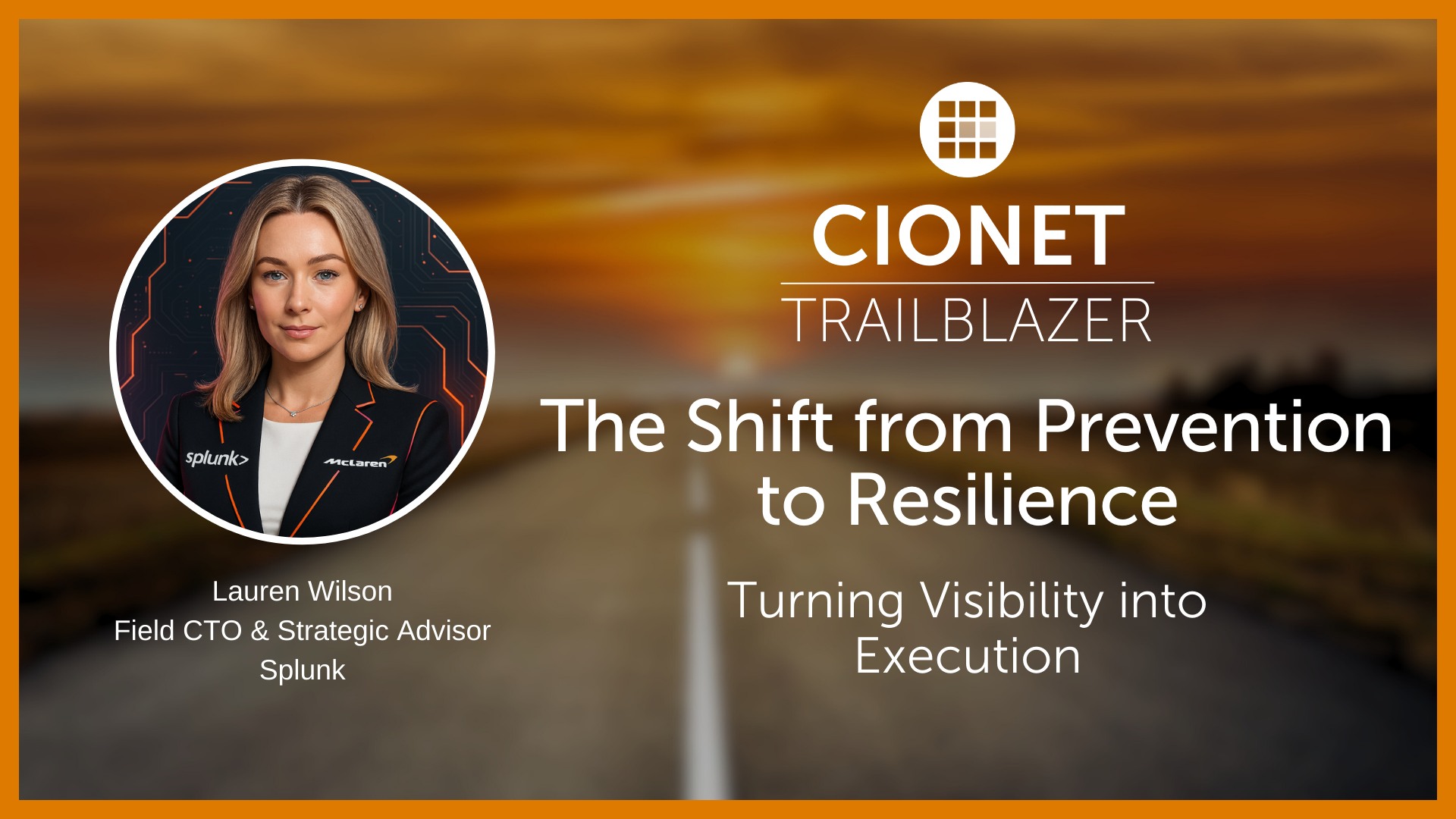
CIONET Trailblazer: CISO: The Shift from Prevention to Resilience: Turning Visibility into Execution
Published on: January 28, 2026 @ 9:48 AM

CIONET Trailblazer: AI Transformation: Bridging the Cultural Divide to Achieve Competitive Advantage
Published on: December 17, 2025 @ 9:16 AM

Published on: October 29, 2025 @ 11:31 AM
Published on: July 30, 2025 @ 9:19 AM

Published on: June 25, 2025 @ 9:14 AM
.png)
Published on: April 30, 2025 @ 9:04 AM
-1.png)
Published on: March 26, 2025 @ 9:59 AM
-1.png)
Published on: March 04, 2025 @ 5:07 PM
Published on: February 26, 2025 @ 10:51 AM
Published on: February 25, 2025 @ 4:14 PM
-4.png)
Published on: February 25, 2025 @ 10:33 AM
Published on: January 29, 2025 @ 9:58 AM
Published on: December 18, 2024 @ 9:07 AM
Published on: October 30, 2024 @ 9:34 AM
.png)
Published on: October 29, 2024 @ 11:37 AM
.png)
Published on: September 27, 2024 @ 10:41 AM

Published on: September 25, 2024 @ 8:59 AM

Published on: September 18, 2024 @ 3:44 PM

Published on: August 28, 2024 @ 10:10 AM
.png)
How Bridgestone made the digital trek
A company that never stops moving, Bridgestone is evolving from the world’s No. 1 tire and rubber company to a fully integrated, sustainable solutions enterprise. Bridgestone is using smart tire tech and advanced data analytics to improve the way people and goods move around the world.
Buying a new set of wheels is exhilarating. Picking the make, the model, the horsepower…and then enjoying the smell of a shiny new interior. Now, fast forward five years—when that new-car smell is long gone and buying replacement tires for those wheels doesn’t quite give you the same thrill. While there comes a time in everyone’s life when tread depth dips too low, most consumers rarely get excited about tires. The tire buying experience can be inconvenient, time consuming, and overwhelming.
But imagine buying a tire online, showing up for your installation appointment, and getting in, out, and on your way. As VP of the Digital Center of Excellence at Bridgestone Americas, Lack is part of a team working to make the customer journey smoother for all.
This visionary spirit encapsulates the purpose-driven character of Bridgestone. A company that never stops moving, Bridgestone is evolving from the world’s No. 1 tire and rubber company to a fully integrated, sustainable solutions enterprise. “Solutions for your journey,” isn’t just a catchy marketing motto. Bridgestone is using smart tire tech and advanced data analytics to improve the way people and goods move around the world, and that includes improving customers’ digital journeys.

Let’s travel back to 2013, when mobile marketing started to dramatically reshape the digital landscape. At the time, digital marketing accounted for over 30% of Bridgestone’s total marketing spend, but they weren’t working in as coordinated of a manner as they could be.
Their MarTech platforms were disconnected and designed for the specific needs of each business unit, with limited compatibility throughout. Their online presence, which just a few years prior was ahead of the competition, needed to be refreshed to address the latest trends, including the newer mobile and tablet-based formats. And there was an opportunity for increased coordination and alignment across the organization.
A digital audit revealed dozens of disparate technologies powering the entire enterprise — including seven different web hosting platforms, at least six content management systems, three separate mapping tools, and three unique analytics tools. Such a fragmented digital state made it impossible to share learnings and best practices, let alone update code and content across the corporation’s numerous business units.
“We realized that digitally speaking, we were miles apart and about to fragment ourselves further trying to keep up with the pace of change,” said Lack.
And with over 90% of consumers starting their tire shopping journey online, this just wouldn’t do. Lack estimates it’s a journey that consists of anywhere from 15 to 25 steps and several unnecessarily repetitive questions, like what’s your vehicle’s year, make, and model? You’re right back to selecting a tire you’ve already picked out online.
“Every time you add a step to the process, you lose between 30% and 50% of your potential buyers.”
Building an aligned tech stack would allow Bridgestone to better connect the shopping and buying experience and better support their affiliated dealers and retail partners.
To turn their digital marketing efforts into a distinct competitive advantage, they needed to move as one. So they launched the CB2 (Cross-Border, Cross-Business) program to bridge the gap between where they currently stood and where they wanted to be.
Endeavors aligned around three key elements: creating common web services, building standard platforms and web hosting capabilities, and coordinating efforts across the Americas and globally. To pull it all off, they needed a Martech stack and partner who could provide both the engine and the navigation system for their journey.
“We needed a partner who could really rise to our needs as we got bigger and more effective. We needed someone to grow with us and that we could grow into. And we needed the best-in-class partner. That’s what really drove us to the Adobe stack.”
Jeffrey Lack - VP of Digital Marketing, Bridgestone Americas
Bridgestone narrowed its systems down to just one set of robust tools anchored in Adobe Experience Cloud as its MarTech stack. And by year three, they’d shaved ample time off system updates and started to realize material savings.
“We went from six CMS solutions down to one...from far too many different web hosting platforms down to one...three mapping solutions down to one,” said Lack.
By the end of 2015, they’d launched four websites on their new platform, supporting sales for two lines of business in two countries, bringing in 250,000 incoming calls from customers. Bridgestone now has 68 websites in 19 countries supporting 14 businesses in all four Bridgestone markets, all on the same platform.
Over 50 million consumers visited Bridgestone websites in 2020, and millions of them picked up the phone and called a Bridgestone retail customer. Those calls helped retailers sell millions of tires with a material impact on their bottom line.
“If you’d asked me back in 2015 if we were saving a ton of money, the answer clearly would have been no. But looking back over the last six years, we’ve saved the organization so much that the system’s more than paid for itself many times over.”
Since 2015, Bridgestone has practically adopted the entire Adobe tech stack, including Adobe Analytics for measurement, Adobe Audience Manager for segmentation, Adobe Target for personalization, and Adobe Campaign for cross-channel marketing management.
“Adobe came with a full suite of tools that really are, in my opinion, best in class in terms of how they perform. But they also came with a partnership mindset that has been invaluable to us over the last five years,” says Lack.
No more losing data when customers click through to a retailer site. Adobe Experience Manager as Cloud Service allows for a seamless handoff so you can land on a tire quote for your selected option and make a purchase right then and there if you choose. And Adobe Analytics and Adobe Target help test and refine customers’ digital experiences. Teams across Bridgestone can stay connected and take action on customer insights, delivering relevant content and product recommendations at precisely the right moment in the customer journey.
“With this aligned tech stack, we can simplify, curate, take advantage of the shifts, and move at pace in ways that we’ve never been able to before,” said Lack.
Bridgestone’s CB2 initiative and partnership with Adobe has saved the company over 30% in operating costs. Over the last 5 years, the average infrastructure cost per business unit has fallen 35 percent. And operating costs continue to drop. Every business at Bridgestone uses a common set of tools, which opens up a world of possibilities for code sharing, site optimization, and efficiencies.
As Bridgestone’s director of enterprise digital services, Daniel Luttrell has been steering the implementation of the Adobe tech stack across the organization and can attest to its far-reaching effects on both accessibility and productivity. He says, “Adobe’s comprehensive asset management system has increased the efficiency of the way we work by making assets available to business units that may not have known they existed or been able to access them before.”
“Adobe’s comprehensive asset management system has increased the efficiency of the way we work by making assets available to business units that may not have known they existed or been able to access them before.”
Daniel Luttrell - Director of Enterprise Digital Services, Bridgestone Americas
And there are some measurables Lack is especially excited about because they reflect a better customer experience.
He says, “In 2021, we will deploy over 700 updates to our websites, and expect to only have 750 managed issues with an average resolution time of 25 minutes. For context, we had 250 deployments and 2000 managed issues with an average resolution time of 45 minutes in 2018, so that’s a 10-fold improvement in performance in the past five years.”

There’s one more “magic” ingredient behind their success — creating an aligned culture around the technology stack.
Getting everyone on board isn’t easy and takes time, Lack says. “Businesses may feel like new systems cost more money, limit their choices, or minimize their ability to control their own fate.” But it’s absolutely crucial. “More than anything else, creating an aligned culture around this technology stack has had the biggest impact in terms of what we’re able to do with it.”
Bridgestone gathered together a team of business leads, marketing leads, and IT leads to align on goals, processes, and resources. They meet each month to set short- and long-term priorities, work through any gridlock, and develop resources to support their suite of CB2 tools, all the while relying on a data-driven operating model to measure and manage CB2 performance.
“Our philosophy is if we can measure it, we can manage it,” says Lack.
They review at least a dozen reports generated by Adobe Analytics to help track the health of every system on the platform, key metrics on performance, and toolset adoption across Bridgestone. There are fewer surprises, and they can use the data to inform future investments.
Lack’s words of wisdom to other visionaries looking to become experience leaders is this: “You need to make sure you find an aligned tech stack, that your partners are able to take advantage of it, that you build a can-do culture around it, and that you keep on top of upkeep and upgrades to make sure your system stays relevant.”

CIONET’s Cyber Circle: a new three-event programme exclusively focusing on the most urgent, complex, and high-impact challenges in cybersecurity today. Launched in 2026, this initiative brings together CISOs, CIOs, and senior IT executives with a strong interest in cybersecurity for three curated gatherings each year. As part of CIONET’s trusted executive community, the Cyber Circle provides a confidential, peer-driven environment to exchange insights, share real-world experiences, and address evolving cyber threats. Each session is designed to foster strategic dialogue, strengthen resilience, and elevate cybersecurity as a core driver of business value.
Read More.png)
The Telenet Business Leadership Circle powered by CIONET, offers a platform where IT executives and thought leaders can meet to inspire each other and share best practices. We want to be a facilitator who helps you optimise the performance of your IT function and your business by embracing the endless opportunities that digital change brings.
Read More
Découvrez la dynamique du leadership numérique aux Rencontres de CIONET, le programme francophone exclusif de CIONET pour les leaders numériques en Belgique, rendu possible grâce au soutien et à l'engagement de nos partenaires de programme : Deloitte, Denodo et Red Hat. Rejoignez trois événements inspirants par an à Liège, Namur et en Brabant Wallon, où des CIOs et des experts numériques francophones de premier plan partagent leurs perspectives et expériences sur des thèmes d'affaires et de IT actuels. Laissez-vous inspirer et apprenez des meilleurs du secteur lors de sessions captivantes conçues spécialement pour soutenir et enrichir votre rôle en tant que CIO pair. Ne manquez pas cette opportunité de faire partie d'un réseau exceptionnel d'innovateurs numériques !
Read More.jpg)
CIONET is committed to highlighting and celebrating female role models in IT, Tech & Digital, creating a leadership programme that empowers and elevates women within the tech industry. This initiative is dedicated to showcasing the achievements and successes of leading women, fostering an environment where female role models are recognised, and their contributions can ignite progress and inspire the next generation of women in IT. Our mission is to shine the spotlight a little brighter on female role models in IT, Tech & Digital, and to empower each other through this inner network community.
Read More


-Apr-01-2022-10-58-34-57-AM.png)









-Dec-13-2023-10-53-15-5032-AM.png)



-Jun-12-2023-01-23-11-7540-PM.png)




-Apr-01-2022-10-58-34-68-AM.png)






.png)




%20(003).png)





.png)






.png)











-Sep-01-2022-02-47-55-60-PM.png)
-Nov-22-2023-08-56-42-6802-AM.png)
.png)


.png "be-page-banner (1)")


.png)
.png)
.png)
.png)