

.png)
Belgium 20-10-2026 Squad Only Virtual English
Cloud decisions are becoming more selective. The challenge is deciding where each workload should run based on cost, performance, control, resilience, sovereignty, and business need. Three pressure points usually drive the decision. - Cost visibility becomes harder when usage grows across cloud services, data platforms, and AI workloads. - Performance and latency matter more when systems need fast access to data or support operational processes. - Sovereignty and resilience become critical when data location, continuity, vendor dependency, and exit options enter the discussion. The working question is simple: how do we place workloads where they create the most value while keeping the hybrid landscape manageable? If these trade-offs are on your agenda, let’s compare how others are handling similar choices.
Read More.png)
Belgium 10-11-2026 Squad Only Virtual English
Data platforms are meant to simplify access and support better use of data. The challenge is choosing and governing the platform landscape in a way that creates consistency, reuse, and long-term value. Three pressure points usually appear. - Platform choice becomes difficult when teams have different needs for speed, flexibility, cost, and control. - Business meaning needs protection: customer, revenue, product, risk, and FTE need shared definitions across tools. - Ownership and governance need to be clear, so platforms grow with accountability and discipline. The working question is simple: how do we give teams the data capabilities they need while keeping the platform landscape understandable, governed, and reusable? If these questions are familiar, let’s compare approaches with others facing the same data landscape.
Read More.png)
Belgium 13-11-2026 Squad Only Physical English
Many IT capabilities are essential and difficult to fund through a simple project ROI. The challenge is showing why architecture, governance, resilience, cybersecurity maturity, data foundations, and AI readiness deserve investment before the gap becomes expensive. Three pressure points make the case harder. - Shared value means the benefit often sits across several teams, while the budget sits in one place. - Timing creates friction because the cost is immediate while the value appears over time. - Risk translation is needed so business and finance leaders understand the consequence of delaying the investment. The working question is simple: how do we turn foundational IT capabilities into credible investment cases that link cost, risk, business value, and future flexibility? If you are building these cases internally, let’s compare how others are positioning value, risk, and timing.
Read More
Published on: September 30, 2026 @ 1:17 PM

Published on: August 26, 2026 @ 9:13 AM

Published on: July 29, 2026 @ 10:08 AM

Published on: June 24, 2026 @ 5:00 PM

Published on: May 27, 2026 @ 9:21 AM
Published on: May 07, 2026 @ 4:02 PM
.png)
Published on: April 29, 2026 @ 9:11 AM
Published on: March 26, 2026 @ 3:37 PM
-2.png)
Published on: March 25, 2026 @ 9:58 AM

Published on: March 13, 2026 @ 3:43 PM
-Feb-25-2026-10-01-07-2508-AM.png)
Published on: February 25, 2026 @ 11:01 AM
.png)
Published on: February 25, 2026 @ 9:00 AM

Published on: February 24, 2026 @ 5:00 PM
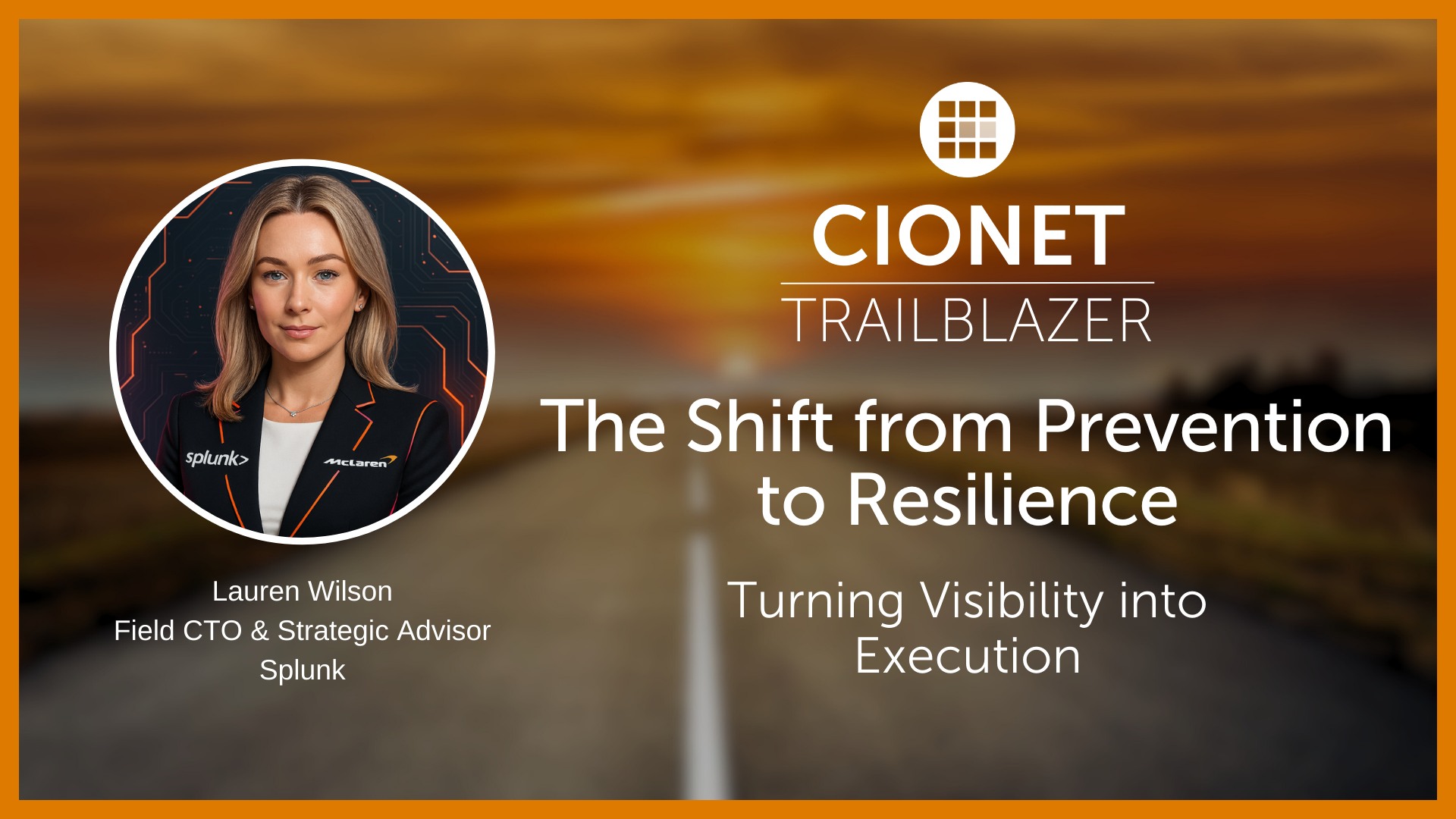
CIONET Trailblazer: CISO: The Shift from Prevention to Resilience: Turning Visibility into Execution
Published on: January 28, 2026 @ 9:48 AM

CIONET Trailblazer: AI Transformation: Bridging the Cultural Divide to Achieve Competitive Advantage
Published on: December 17, 2025 @ 9:16 AM

Published on: October 29, 2025 @ 11:31 AM
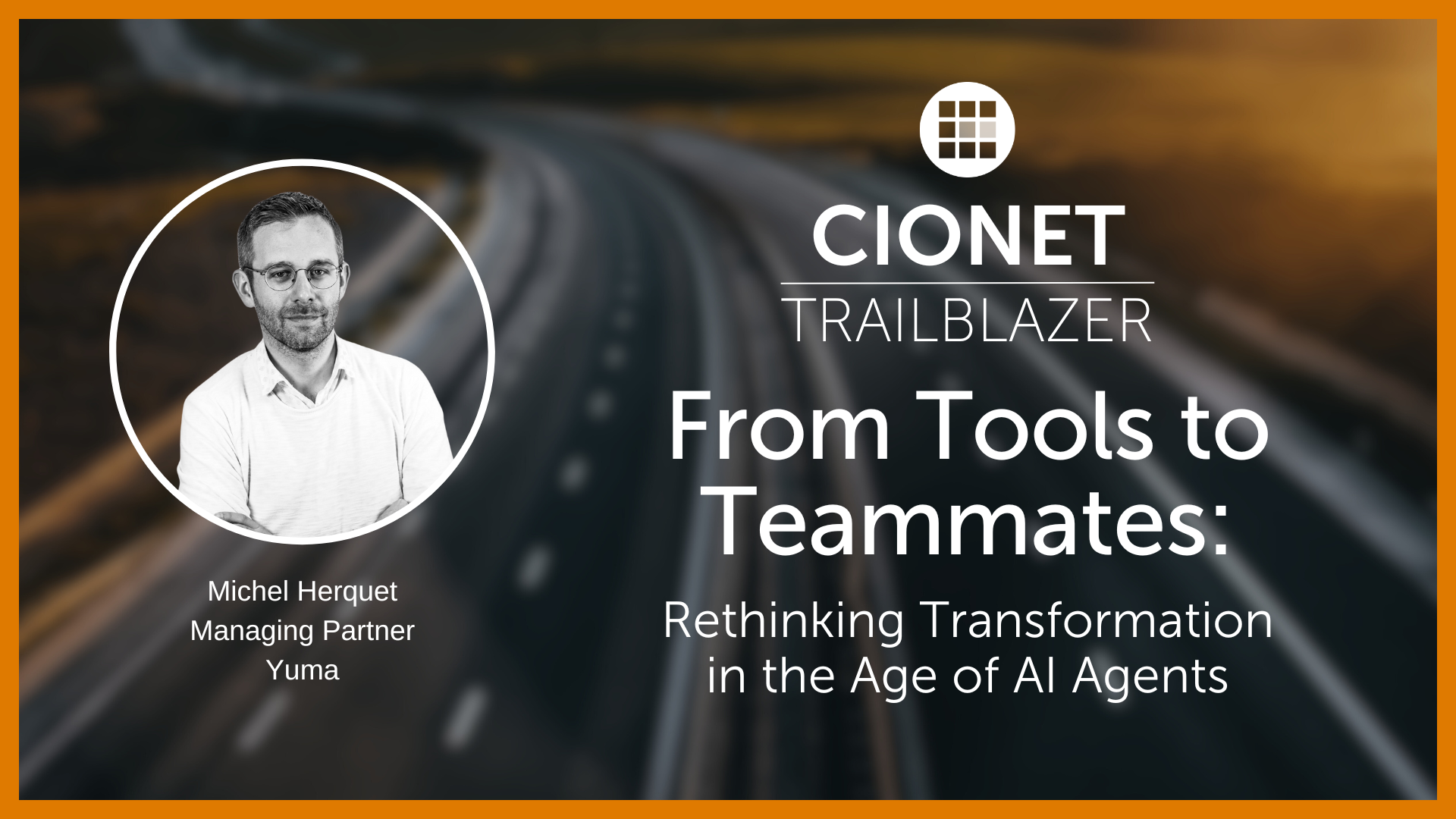
Published on: July 30, 2025 @ 9:19 AM

Published on: June 25, 2025 @ 9:14 AM
.png)
Published on: April 30, 2025 @ 9:04 AM
-1.png)
Published on: March 26, 2025 @ 9:59 AM
-1.png)
Published on: March 04, 2025 @ 5:07 PM

Published on: February 26, 2025 @ 10:51 AM
Published on: February 25, 2025 @ 4:14 PM
-4.png)
Published on: February 25, 2025 @ 10:33 AM

Published on: January 29, 2025 @ 9:58 AM
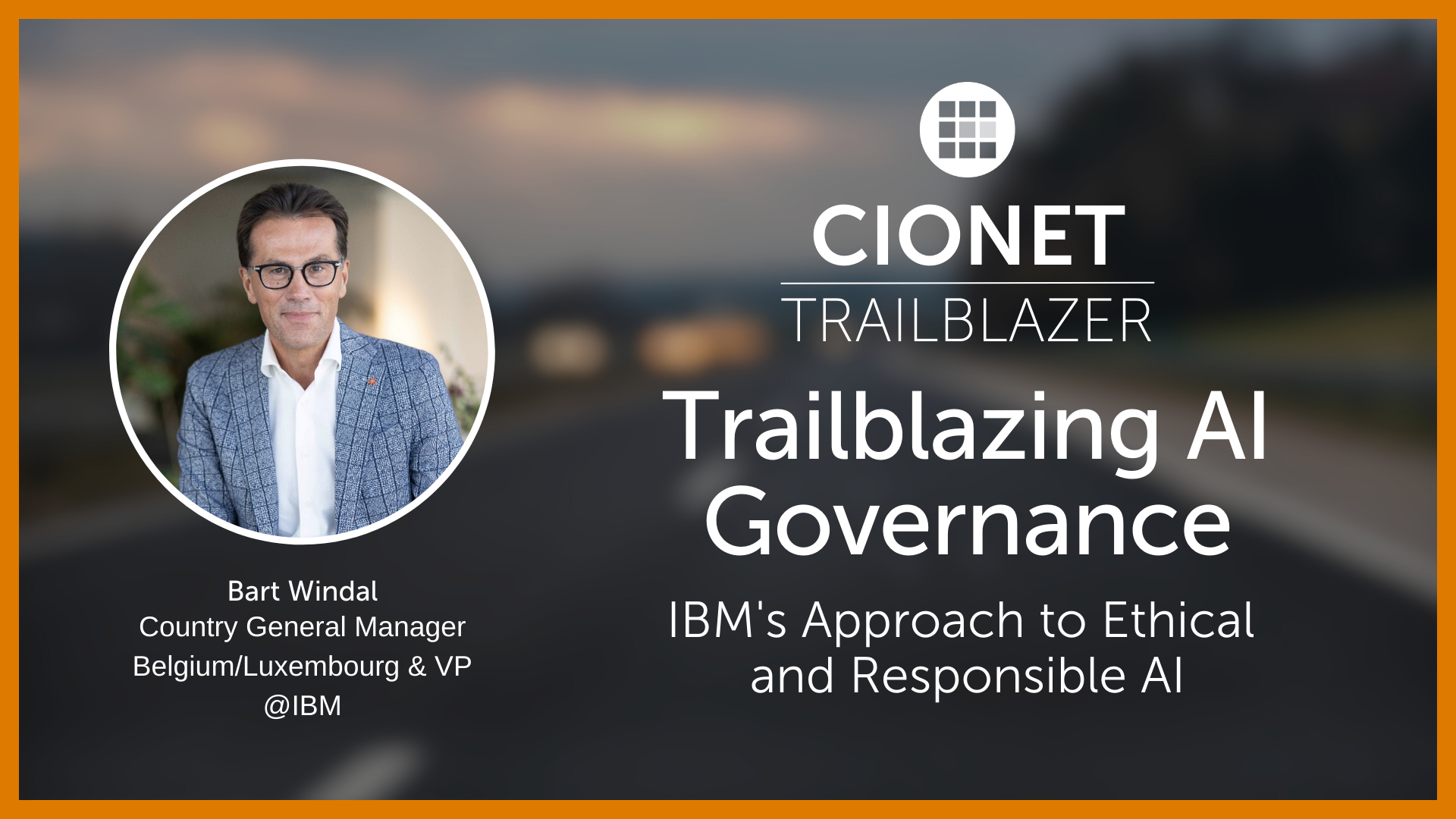
Published on: December 18, 2024 @ 9:07 AM

Published on: October 30, 2024 @ 9:34 AM
.png)
Published on: October 29, 2024 @ 11:37 AM
.png)
Published on: September 27, 2024 @ 10:41 AM

Published on: September 25, 2024 @ 8:59 AM

Published on: September 18, 2024 @ 3:44 PM

Published on: August 28, 2024 @ 10:10 AM
Domino's, renowned for its commitment to exceptional customer experiences, optimized its forecasting by tapping into Microsoft Dynamics 365 with demand planning capabilities and the game-changing capabilities of AI, automation, and analytics.
The demand planning capabilities in Dynamics 365 are helping us make the right decisions to lower wastage, avoid unnecessary deliveries, and be cybersafe. It’s a game-changer for us because it uses AI for predictive analysis ... to predict our future.Neha Batra: Head of Business Solutions
Domino’s Pizza UK & Ireland Ltd.
One of the United Kingdom’s and Ireland’s favorite pizza brands anticipates your cravings before you do. “Demand planning is knowing what our consumers want before they do. If we are doing our job, we know they’re going to have a pizza next Thursday before they do,” quips Darren O’Keefe, Head of Inventory at Domino’s Pizza UK & Ireland Ltd. In 2022, Domino’s Pizza sold more than 106 million pizzas from over 1,300 locations throughout the United Kingdom and Republic of Ireland. Domino’s Pizza UK & Ireland and its franchise partners employ 35,000 people. Working closely with its franchise partners, the company focuses on quality, value, and bringing people together over their love of pizza.
Managing the quantity of pizza orders and resources required to meet customer demand requires robust supply orchestration while also predicting unanticipated factors, such as a football game or a big storm blowing through Scotland. These external events can impact how and when customers order, and individual stores weren’t always prepared. This means Domino’s virtuoso inventory planners, who have been juggling hundreds of spreadsheets, need to understand and execute at the highest levels of forecasting, essentially manually planning for those 1,300-plus locations.
“We get our data from a lot of different sources, and a lot of it is done in spreadsheets, which can lead to human error and missing things. It’s difficult to work with that level of complication,” says Neil Runchman, Inventory Systems Development Manager at Domino’s Pizza UK & Ireland Ltd.
Although inventory planners had a very high rate of accuracy in their demand planning, the company wanted to enable an integrated, automated, and single source of truth across a simplified ecosystem. As a self-described digital company, Domino’s knew it needed a strategy to predict demand; make faster, data-driven decisions; and simplify its operations to ensure customers receive a hot, fresh pizza when and where they want it. “We want to work with partners who are seeing what’s changing in the economy and how technology can help businesses like ours cope with the change,” says Neha Batra, Head of Business Solutions at Domino’s Pizza UK & Ireland Ltd. “It’s a no-brainer that we looked to Microsoft.”
At Domino’s, creating great customer experiences is the goal, and getting the right product to the right store at the right time is the highest priority. Central to this mission is demand planning, in which the company uses AI to predict customer needs. There are a lot of variables involved, from historical sales and economic indicators to market trends and weather events. “We don’t fall victim to fashionable tech, but rather listen to our customers and internal stakeholders to understand their objectives and visions,” explains Sody Kahlon, Chief Information & Technology Officer at Domino’s Pizza UK & Ireland Ltd. “This then allows us to adopt the most relevant solution to meet their needs. The realm of AI has opened our choices to further increase our personalization, enhance internal efficiencies, derive rapid conclusions from data insights, improve our forecasting, strengthen our cybersecurity, and experiment with novel innovation.”
The planning and forecasting tasks for stores in the United Kingdom and Ireland are the responsibility of a small team of experienced, highly skilled demand planners. Historically, demand planning for the four distribution centers has largely relied on manual processes—a plan for each supplier and a plan for each product, all on different spreadsheet tabs. Stuck in a system with spotty, unreliable processes, the company aimed to improve accuracy and streamline daily operations. It turned to Microsoft for a solution that brings together Microsoft Dynamics 365 Supply Chain Management with demand planning capabilities.
Already making the most of the built-in analytics, smart integrations, and scalability in Microsoft Dynamics 365 Finance, Domino’s wanted to harness the same advantages for demand planning. “The more data we’ve got, the more accurate our forecast is, and the more we use it, the more efficient our decision making will be, and we’ll be in a much better place for our customers,” says O’Keefe.
With demand planning intelligence enhanced by Microsoft AI capabilities, planners can run what-if scenarios and make changes within the forecasting solution to make it more flexible. They can also quickly aggregate and break down data to include human insights, such as scaling demand figures up or down depending on the weather or a big sporting event. With this personalized demand planning solution, Domino’s speeds up the planning process. The company can develop and approve plans in hours, instead of days, and has the tools now to anticipate demand, minimize food wastage, and efficiently run its facilities. Using machine learning, Dynamics 365 with demand planning capabilities predicts demand with intelligence, identifying trends Domino’s doesn’t spot. The company has already experienced a 72 percent improvement in accuracy using the demand planning capabilities.
“Our tech strategy is to become a ‘cloud-native, composable ecosystem,” says Kahlon. “At Domino’s Pizza UK&I, we move at pace to address the high standards demanded by both our franchisees and our customers. Our ecosystem provides us with options to build differentiating components in-house or partner with leading enterprises such as Microsoft to adopt best-in-breed solutions. Remaining flexible is essential, and we strive to ensure we are always aligned to the business and our customers.”
Dynamics 365 with demand planning capabilities empowers Domino’s planners to make smart predictions from the data and insights. Forecasting and predicting demand is key to making sure fresh ingredients get to where they’re needed quickly and accurately. Automated forecasting models help planners make sure distribution centers get valuable info and franchise store owners can provide pizza lovers with fast, friendly service and delicious products.
“The demand planning capabilities in Dynamics 365 are helping us make the right decisions to lower wastage, avoid unnecessary deliveries, and be cybersafe. It’s a game-changer for us because it uses AI for predictive analysis ... to predict our future,” says Batra.
Domino’s is not just delivering pizzas; it’s delivering a vision of a better future through food people love. With a laser focus on creating a positive impact both for its colleagues and for the communities it serves, Domino’s is on a mission to revolutionize the way it anticipates customer desires.
The company doesn’t miss the time-consuming, error-prone manual process of using spreadsheets to make forecasts and anticipate demand. With AI, automation, and analytics, planners can make their no-code and low-code demand and forecast models quickly and efficiently using Dynamics 365 with demand planning capabilities. Plus, they now have a better understanding of how change models work and how to manage delivery and inventory more efficiently and accurately. Having the ability to plan ahead and ensure all the ingredients are fresh in Domino’s kitchens doesn’t just save money and resources; it instills confidence in franchisees, the people responsible for delivering on Domino’s promise of an exceptional customer experience.
“Our AI landscape is expanding and with the support of leading organizations like Microsoft, we are able to filter the noise of AI-hype to focus on evaluating and adopting AI solutions that drive tangible business outcomes,” says Kahlon.
Using the demand planning capabilities in Dynamics 365, Domino’s can deliver products more consistently and punctually, leading to improved customer satisfaction and repeat business. The company can also make more informed decisions about when to reorder inventory, how to distribute products, and when to ramp up or scale back production based on market fluctuations. Managing inventory more efficiently reduces the risk of overstocking and minimizes waste while increasing profitability.
“We can future-proof our business with Microsoft. It’s helping us push the boundaries of what we currently do as an industry, providing us with the tools to tell us what we need to do to make the team’s life simpler and improve the service we give to our franchisees, stores, and consumers,” says O’Keefe.

CIONET’s Cyber Circle: a new three-event programme exclusively focusing on the most urgent, complex, and high-impact challenges in cybersecurity today. Launched in 2026, this initiative brings together CISOs, CIOs, and senior IT executives with a strong interest in cybersecurity for three curated gatherings each year. As part of CIONET’s trusted executive community, the Cyber Circle provides a confidential, peer-driven environment to exchange insights, share real-world experiences, and address evolving cyber threats. Each session is designed to foster strategic dialogue, strengthen resilience, and elevate cybersecurity as a core driver of business value.
Read More.png)
The Telenet Business Leadership Circle powered by CIONET, offers a platform where IT executives and thought leaders can meet to inspire each other and share best practices. We want to be a facilitator who helps you optimise the performance of your IT function and your business by embracing the endless opportunities that digital change brings.
Read More
Découvrez la dynamique du leadership numérique aux Rencontres de CIONET, le programme francophone exclusif de CIONET pour les leaders numériques en Belgique, rendu possible grâce au soutien et à l'engagement de nos partenaires de programme : Deloitte, Denodo et Red Hat. Rejoignez trois événements inspirants par an à Liège, Namur et en Brabant Wallon, où des CIOs et des experts numériques francophones de premier plan partagent leurs perspectives et expériences sur des thèmes d'affaires et de IT actuels. Laissez-vous inspirer et apprenez des meilleurs du secteur lors de sessions captivantes conçues spécialement pour soutenir et enrichir votre rôle en tant que CIO pair. Ne manquez pas cette opportunité de faire partie d'un réseau exceptionnel d'innovateurs numériques !
Read More.jpg)
CIONET is committed to highlighting and celebrating female role models in IT, Tech & Digital, creating a leadership programme that empowers and elevates women within the tech industry. This initiative is dedicated to showcasing the achievements and successes of leading women, fostering an environment where female role models are recognised, and their contributions can ignite progress and inspire the next generation of women in IT. Our mission is to shine the spotlight a little brighter on female role models in IT, Tech & Digital, and to empower each other through this inner network community.
Read More


-Apr-01-2022-10-58-34-57-AM.png)









-Dec-13-2023-10-53-15-5032-AM.png)



-Jun-12-2023-01-23-11-7540-PM.png)




-Apr-01-2022-10-58-34-68-AM.png)






.png)




%20(003).png)




.png)




.png)











-Sep-01-2022-02-47-55-60-PM.png)
-Nov-22-2023-08-56-42-6802-AM.png)
.png)


.png "be-page-banner (1)")


.png)
.png)
.png)
.png)