

.png)
Belgium 20-10-2026 Squad Only Virtual English
Cloud decisions are becoming more selective. The challenge is deciding where each workload should run based on cost, performance, control, resilience, sovereignty, and business need. Three pressure points usually drive the decision. - Cost visibility becomes harder when usage grows across cloud services, data platforms, and AI workloads. - Performance and latency matter more when systems need fast access to data or support operational processes. - Sovereignty and resilience become critical when data location, continuity, vendor dependency, and exit options enter the discussion. The working question is simple: how do we place workloads where they create the most value while keeping the hybrid landscape manageable? If these trade-offs are on your agenda, let’s compare how others are handling similar choices.
Read More.png)
Belgium 10-11-2026 Squad Only Virtual English
Data platforms are meant to simplify access and support better use of data. The challenge is choosing and governing the platform landscape in a way that creates consistency, reuse, and long-term value. Three pressure points usually appear. - Platform choice becomes difficult when teams have different needs for speed, flexibility, cost, and control. - Business meaning needs protection: customer, revenue, product, risk, and FTE need shared definitions across tools. - Ownership and governance need to be clear, so platforms grow with accountability and discipline. The working question is simple: how do we give teams the data capabilities they need while keeping the platform landscape understandable, governed, and reusable? If these questions are familiar, let’s compare approaches with others facing the same data landscape.
Read More.png)
Belgium 13-11-2026 Squad Only Physical English
Many IT capabilities are essential and difficult to fund through a simple project ROI. The challenge is showing why architecture, governance, resilience, cybersecurity maturity, data foundations, and AI readiness deserve investment before the gap becomes expensive. Three pressure points make the case harder. - Shared value means the benefit often sits across several teams, while the budget sits in one place. - Timing creates friction because the cost is immediate while the value appears over time. - Risk translation is needed so business and finance leaders understand the consequence of delaying the investment. The working question is simple: how do we turn foundational IT capabilities into credible investment cases that link cost, risk, business value, and future flexibility? If you are building these cases internally, let’s compare how others are positioning value, risk, and timing.
Read More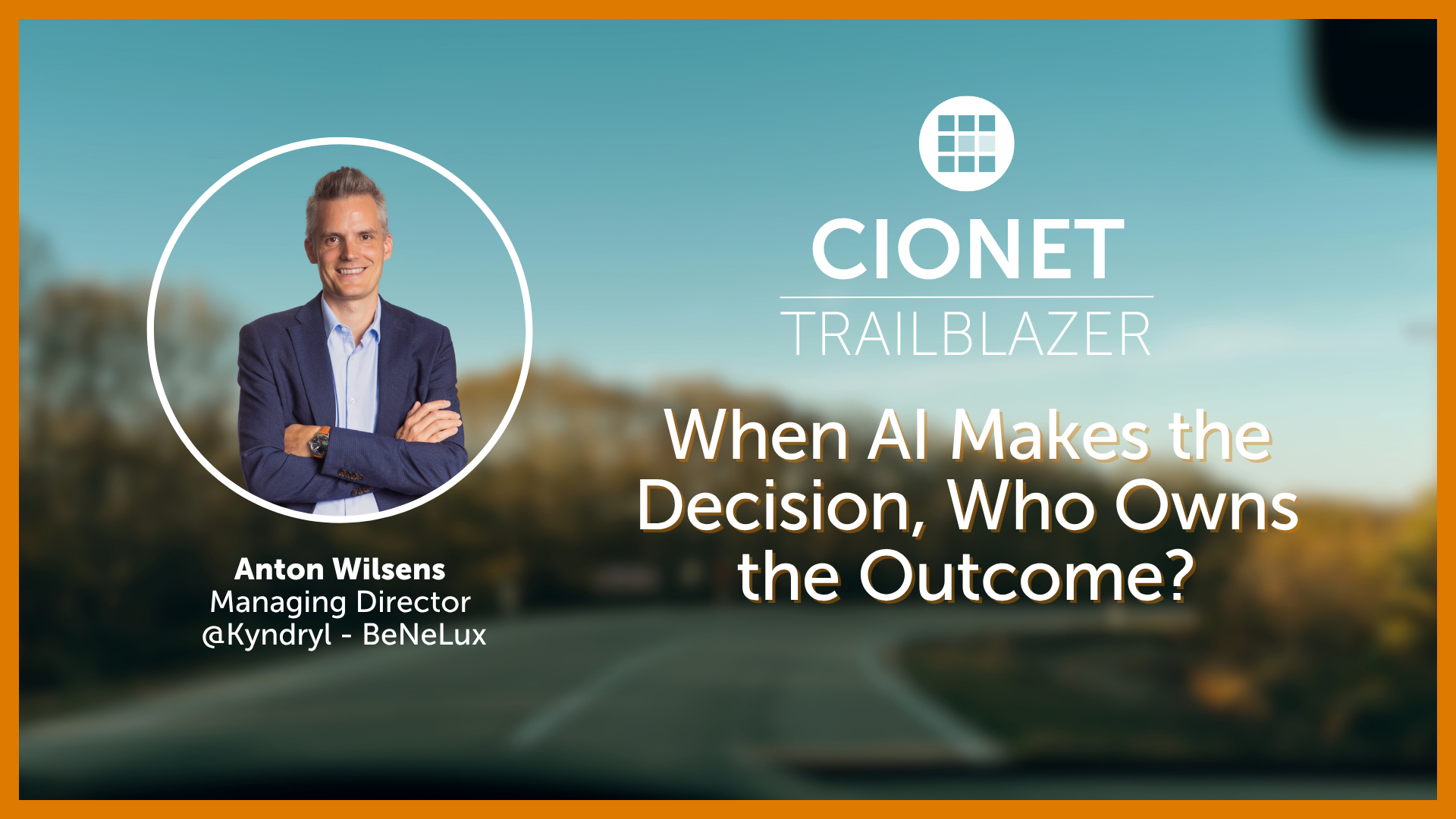
Published on: September 30, 2026 @ 1:17 PM
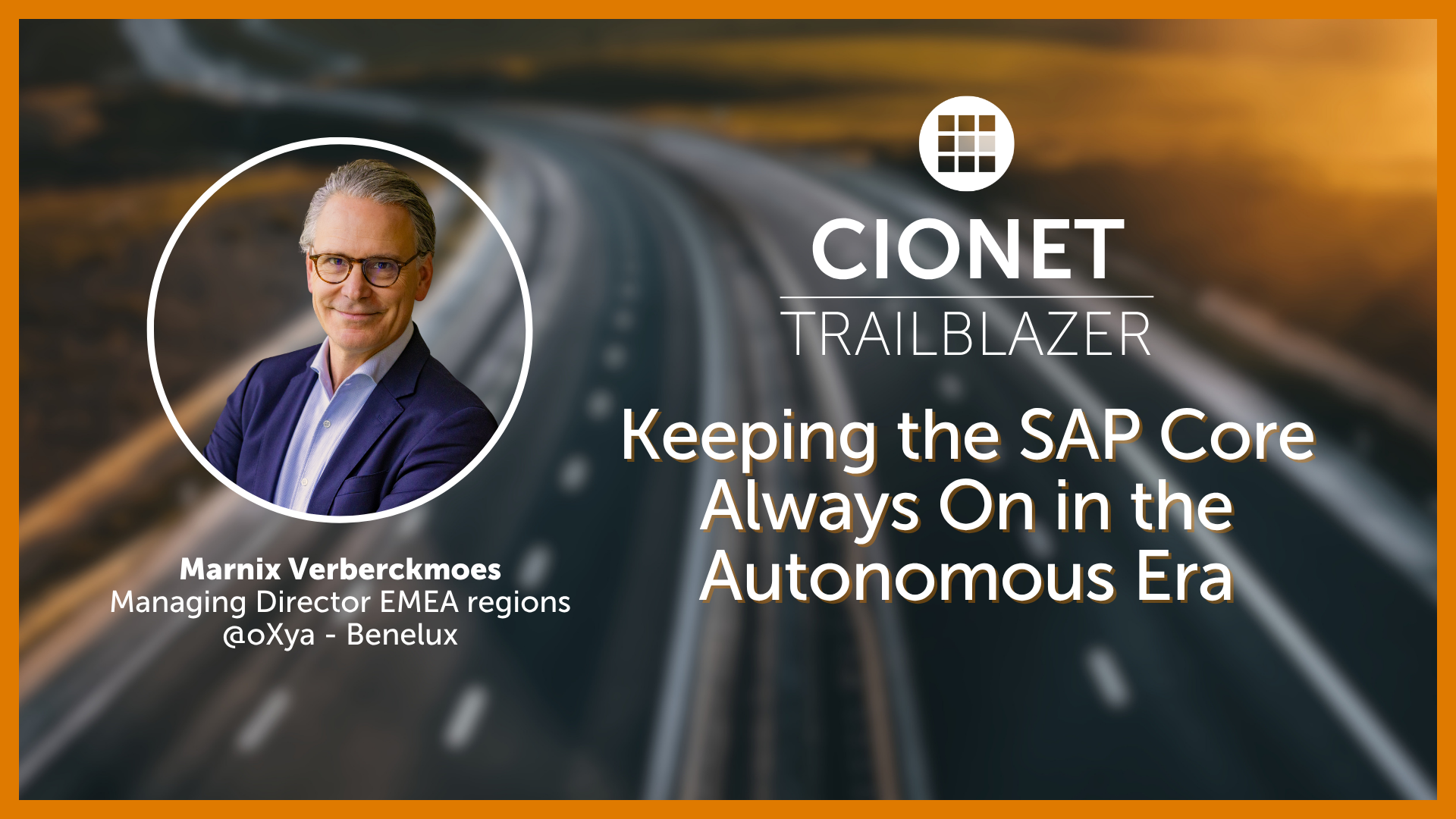
Published on: August 26, 2026 @ 9:13 AM
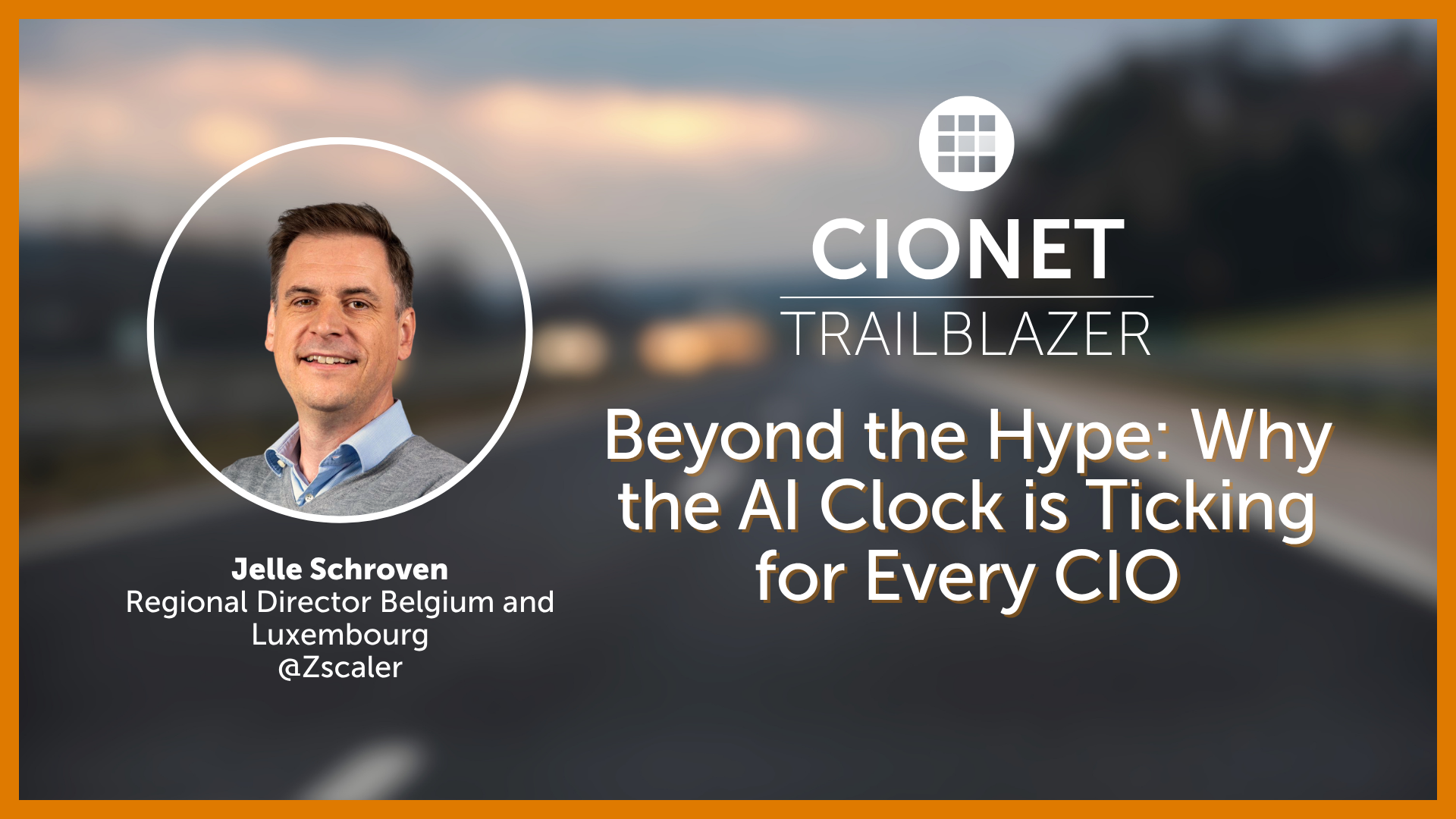
Published on: July 29, 2026 @ 10:08 AM
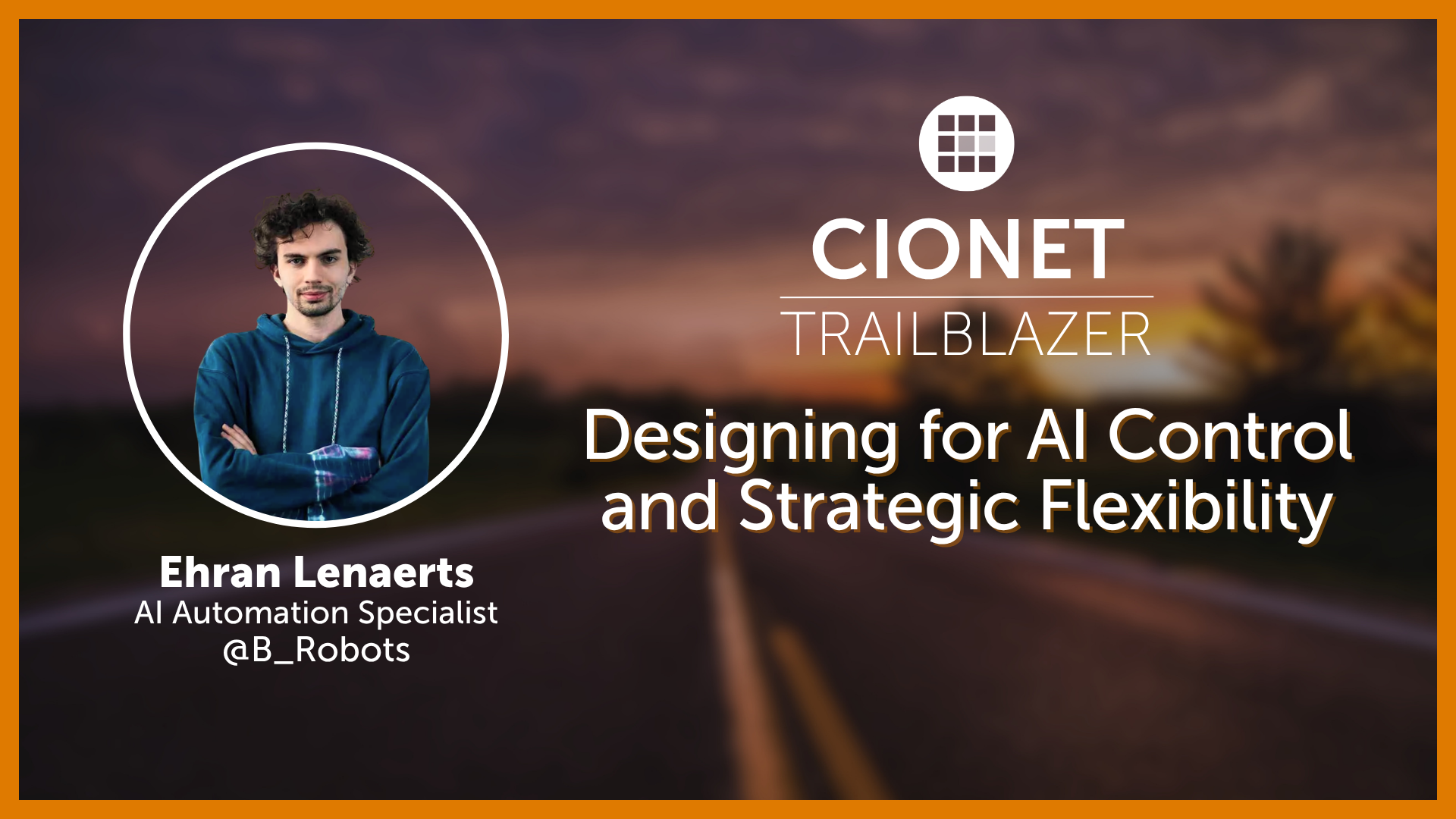
Published on: June 24, 2026 @ 5:00 PM
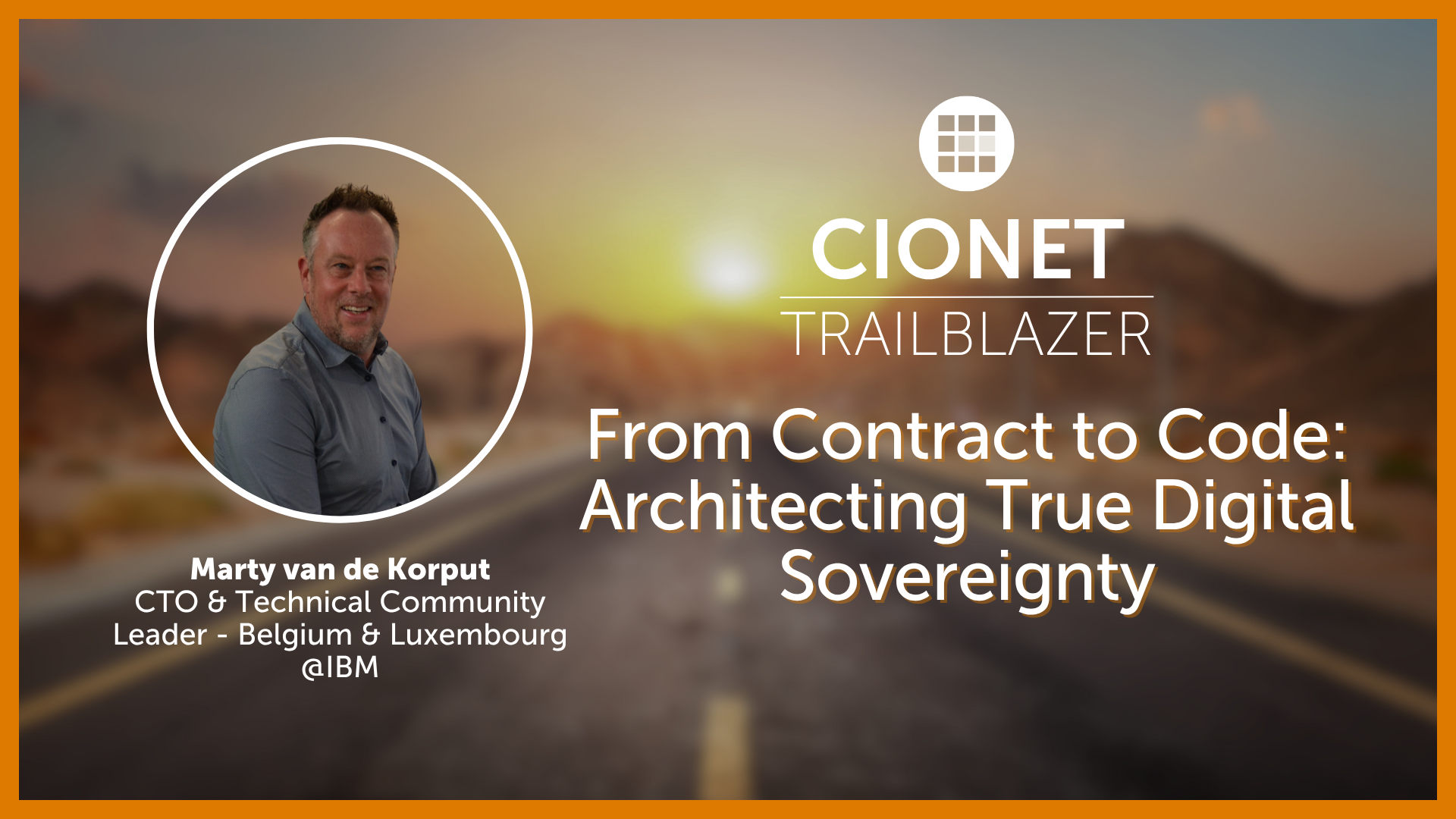
Published on: May 27, 2026 @ 9:21 AM
Published on: May 07, 2026 @ 4:02 PM
.png)
Published on: April 29, 2026 @ 9:11 AM
Published on: March 26, 2026 @ 3:37 PM
-2.png)
Published on: March 25, 2026 @ 9:58 AM
Published on: March 13, 2026 @ 3:43 PM
-Feb-25-2026-10-01-07-2508-AM.png)
Published on: February 25, 2026 @ 11:01 AM
.png)
Published on: February 25, 2026 @ 9:00 AM

Published on: February 24, 2026 @ 5:00 PM
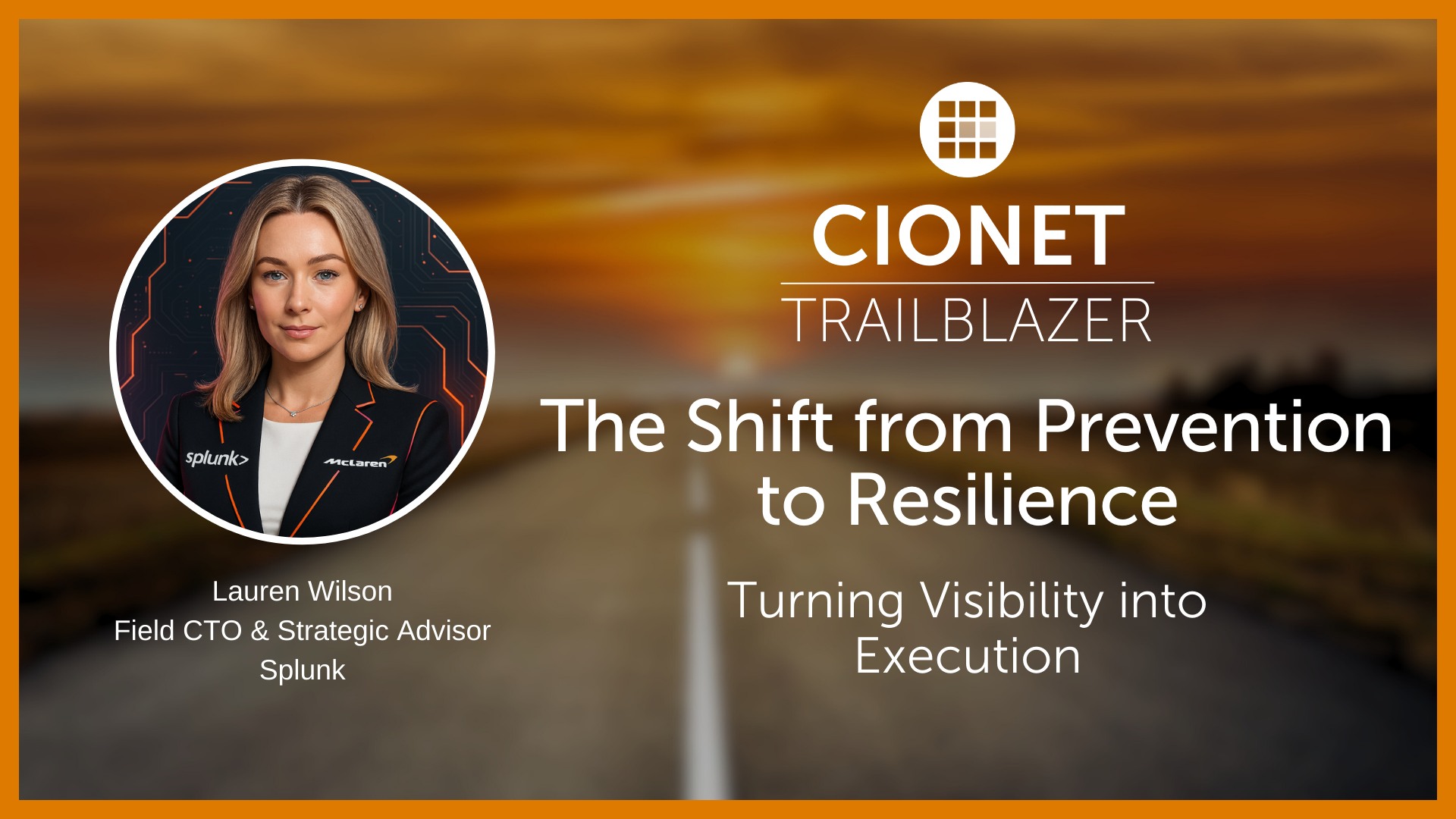
CIONET Trailblazer: CISO: The Shift from Prevention to Resilience: Turning Visibility into Execution
Published on: January 28, 2026 @ 9:48 AM
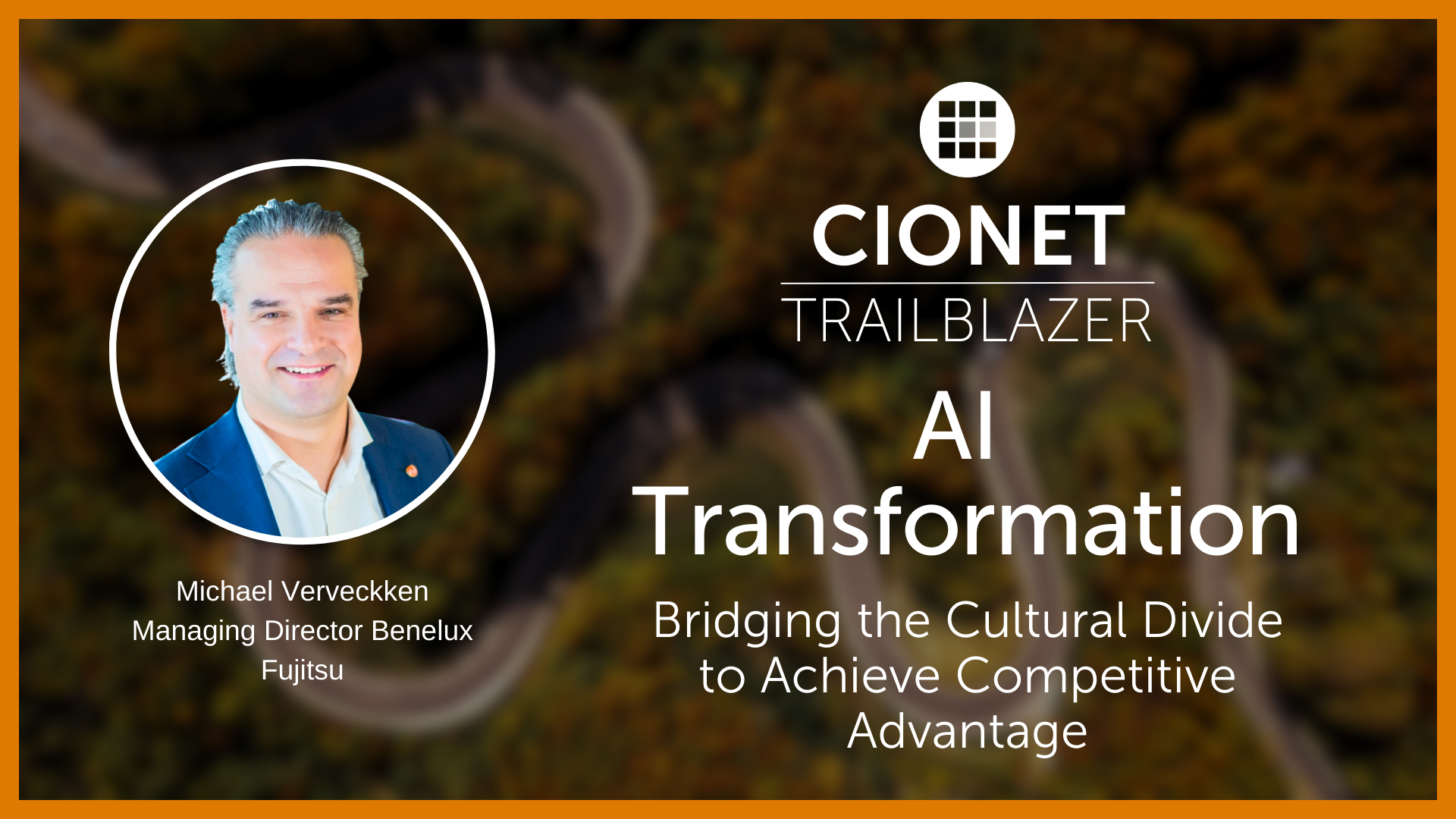
CIONET Trailblazer: AI Transformation: Bridging the Cultural Divide to Achieve Competitive Advantage
Published on: December 17, 2025 @ 9:16 AM
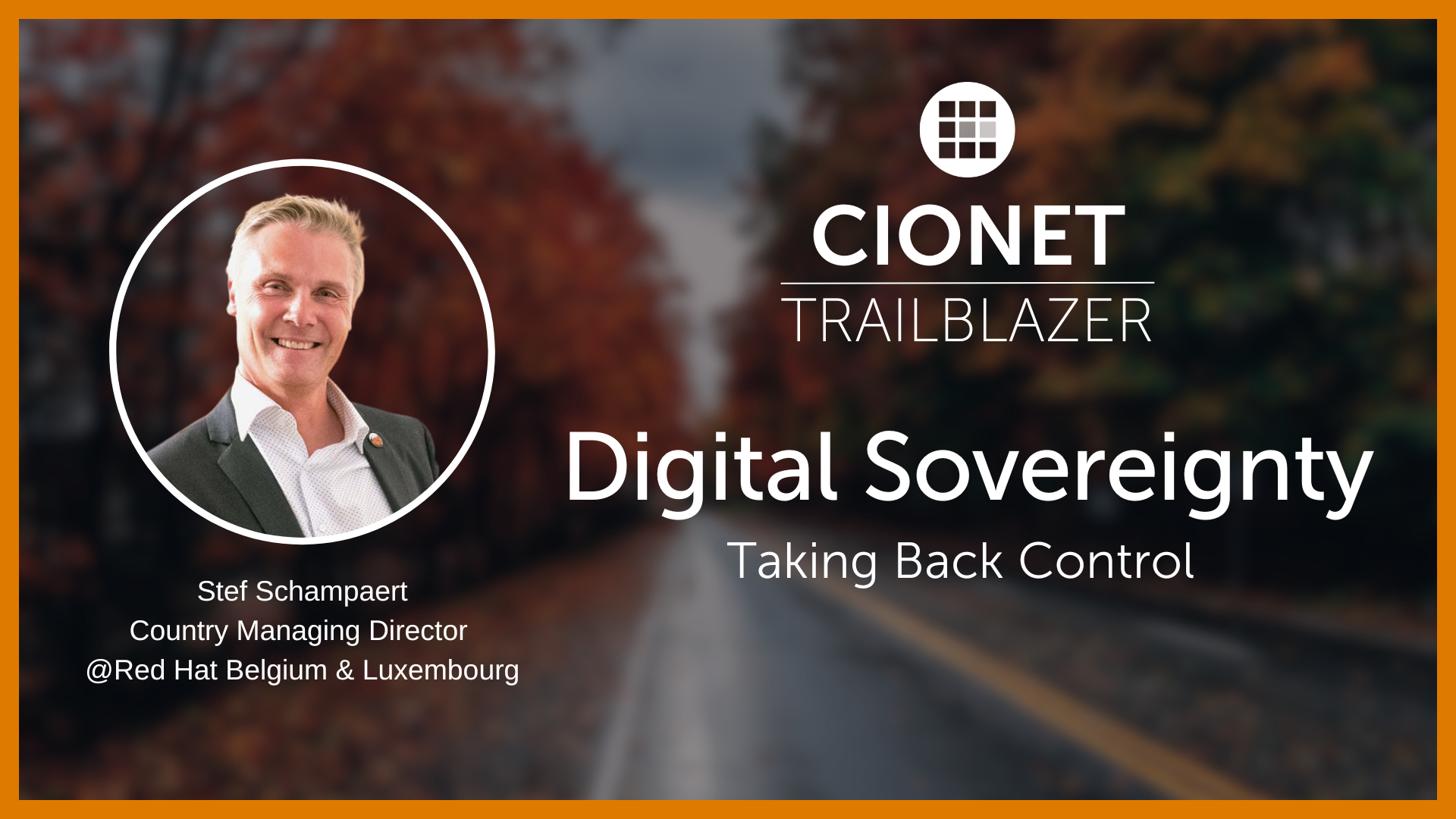
Published on: October 29, 2025 @ 11:31 AM
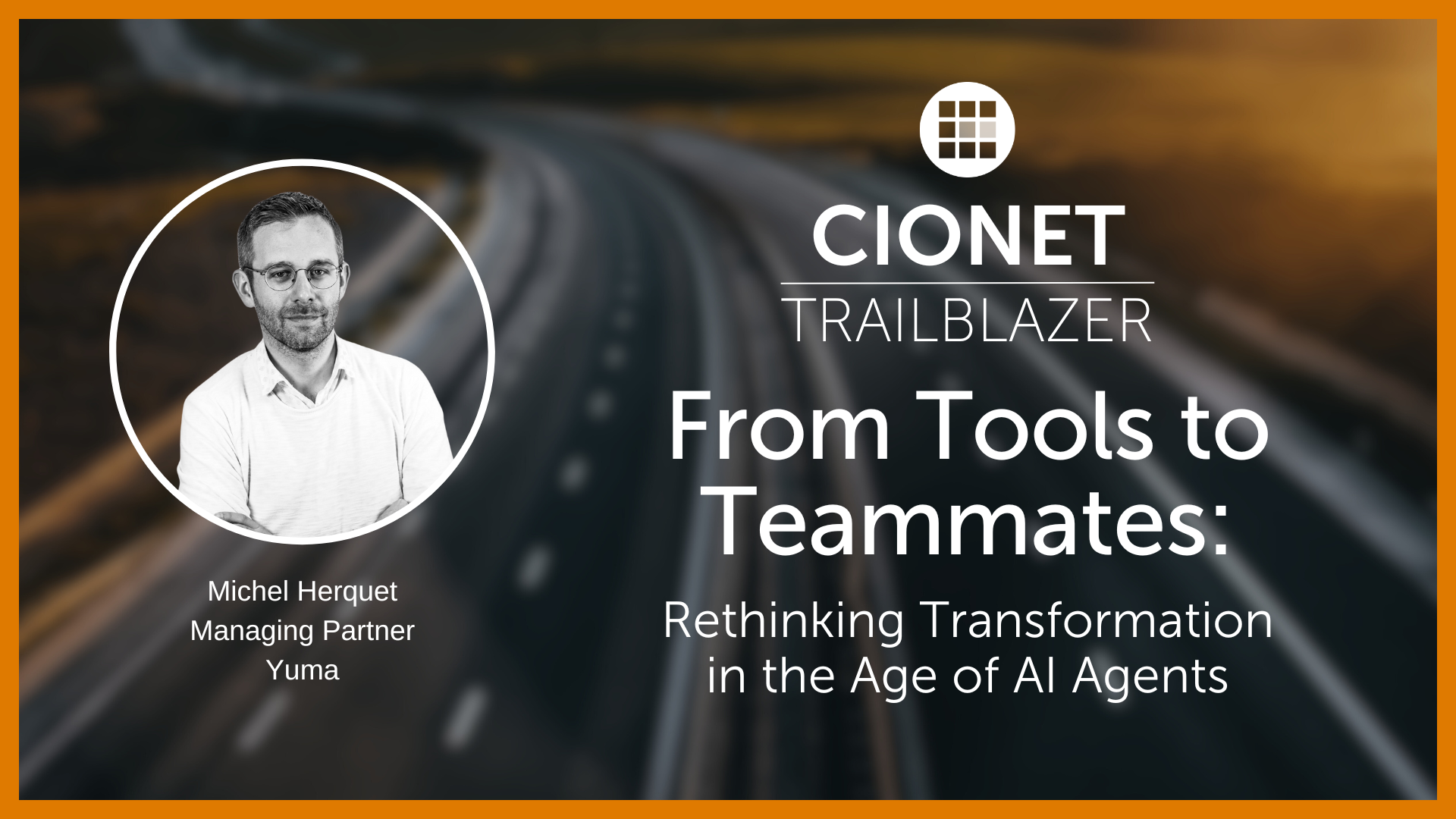
Published on: July 30, 2025 @ 9:19 AM
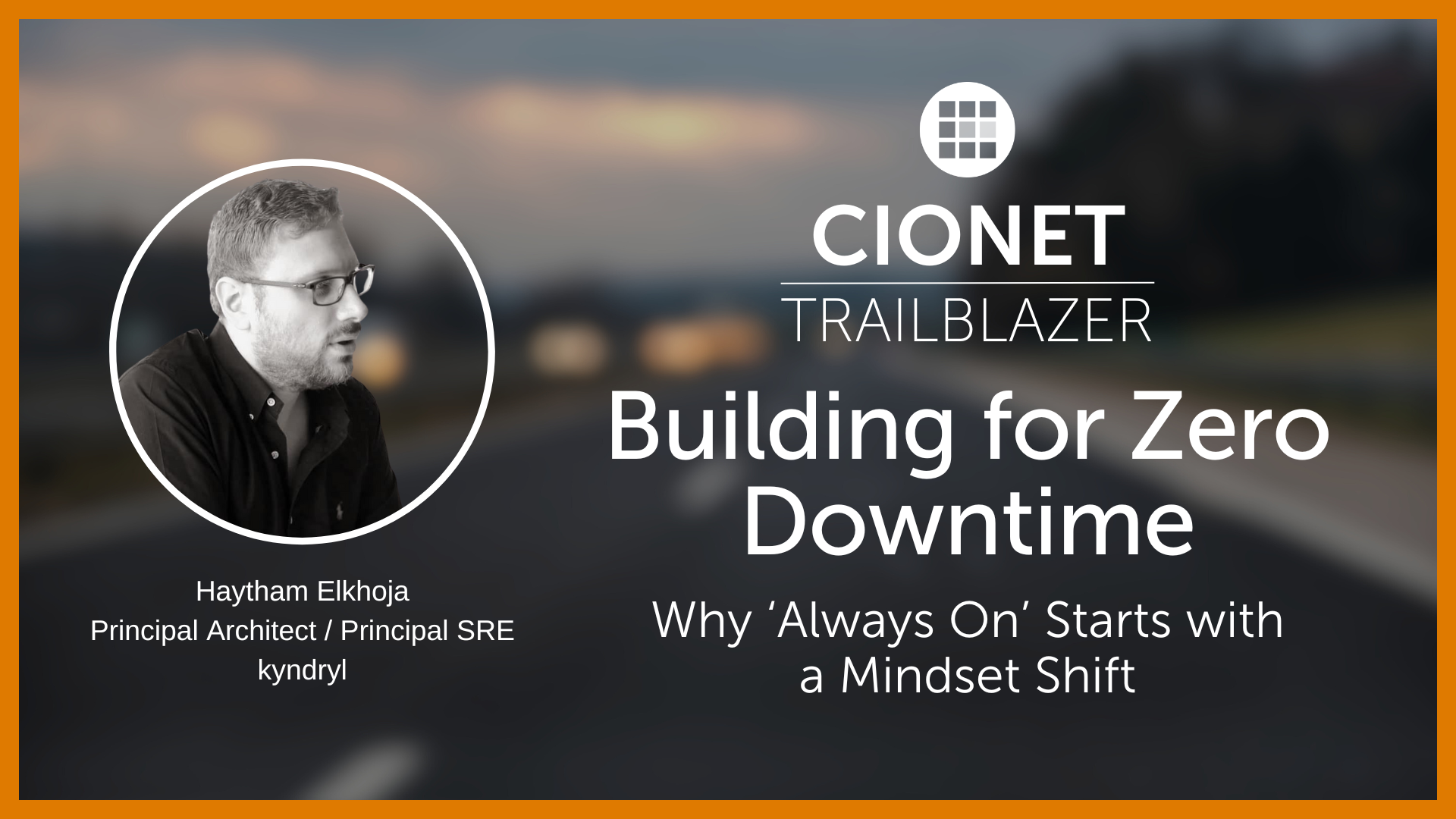
Published on: June 25, 2025 @ 9:14 AM
.png)
Published on: April 30, 2025 @ 9:04 AM
-1.png)
Published on: March 26, 2025 @ 9:59 AM
-1.png)
Published on: March 04, 2025 @ 5:07 PM
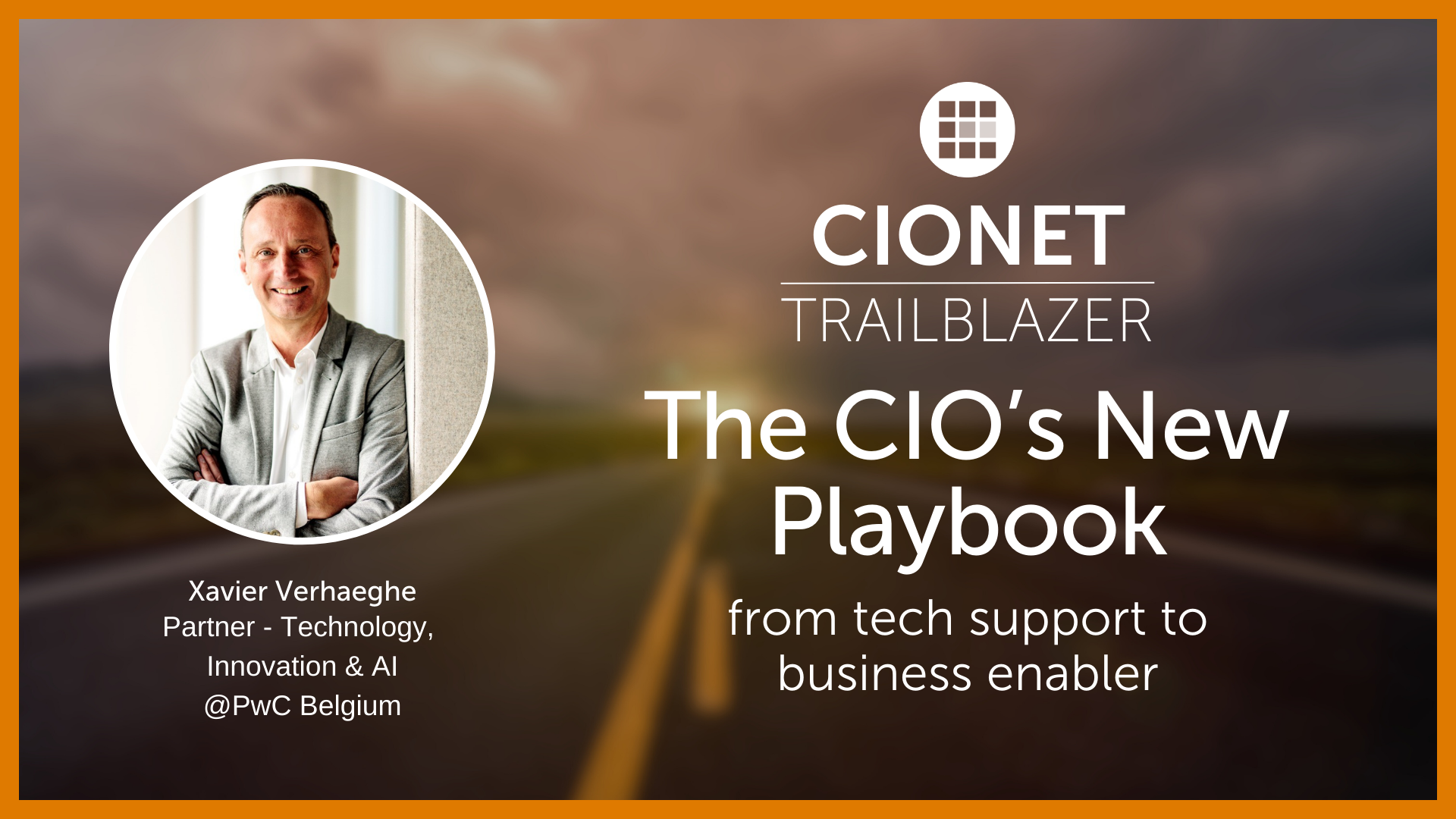
Published on: February 26, 2025 @ 10:51 AM
Published on: February 25, 2025 @ 4:14 PM
-4.png)
Published on: February 25, 2025 @ 10:33 AM
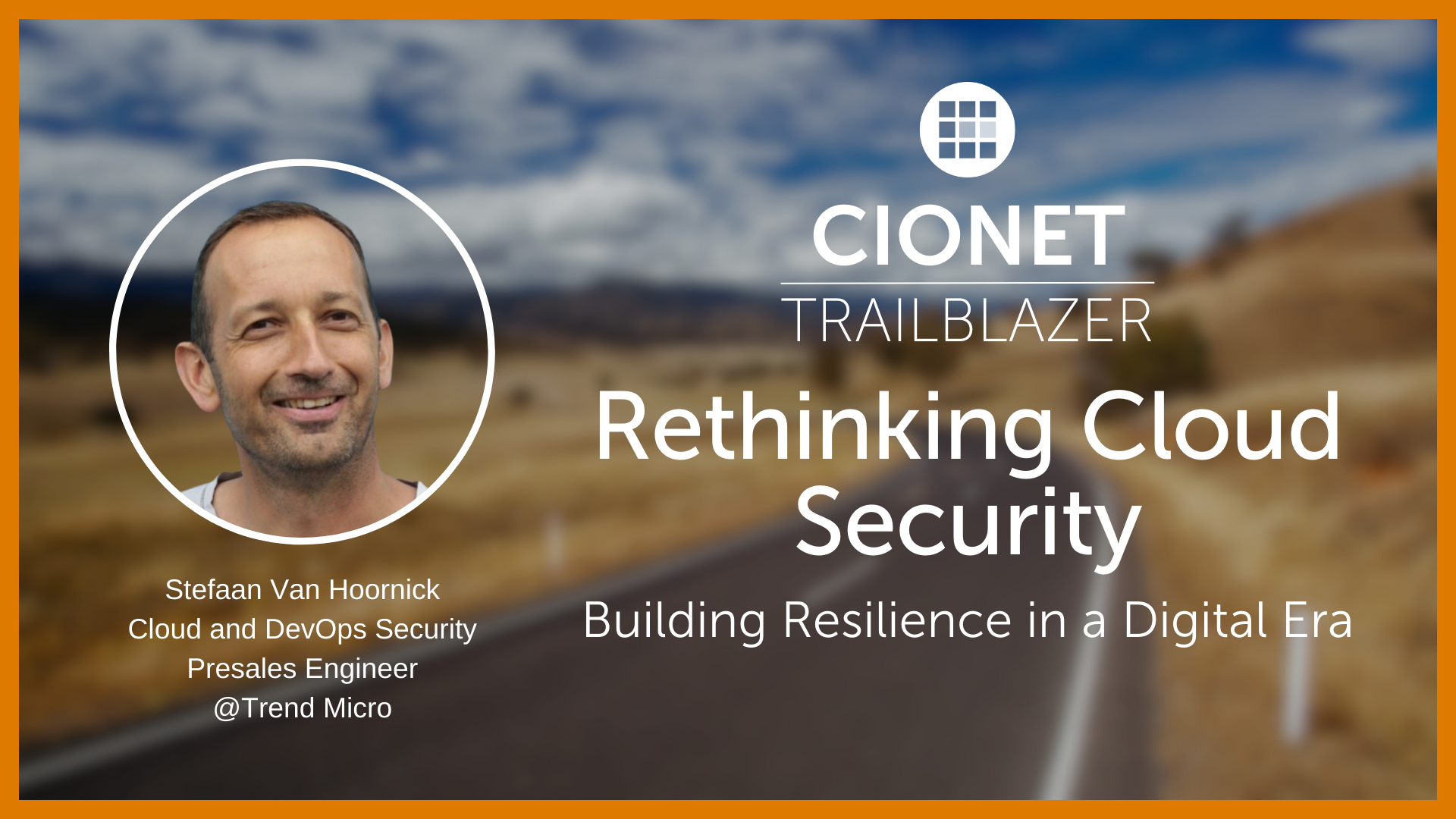
Published on: January 29, 2025 @ 9:58 AM
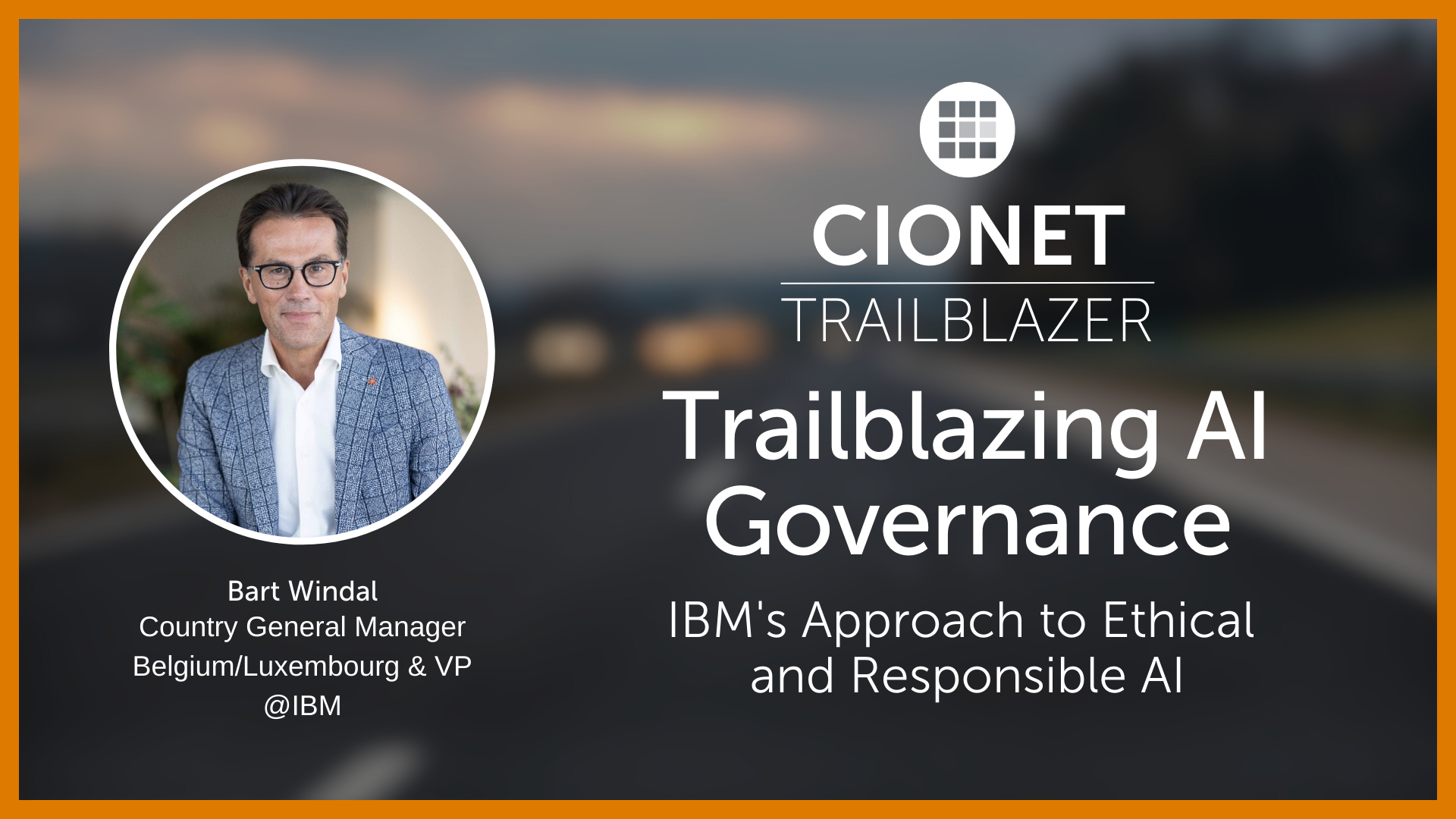
Published on: December 18, 2024 @ 9:07 AM
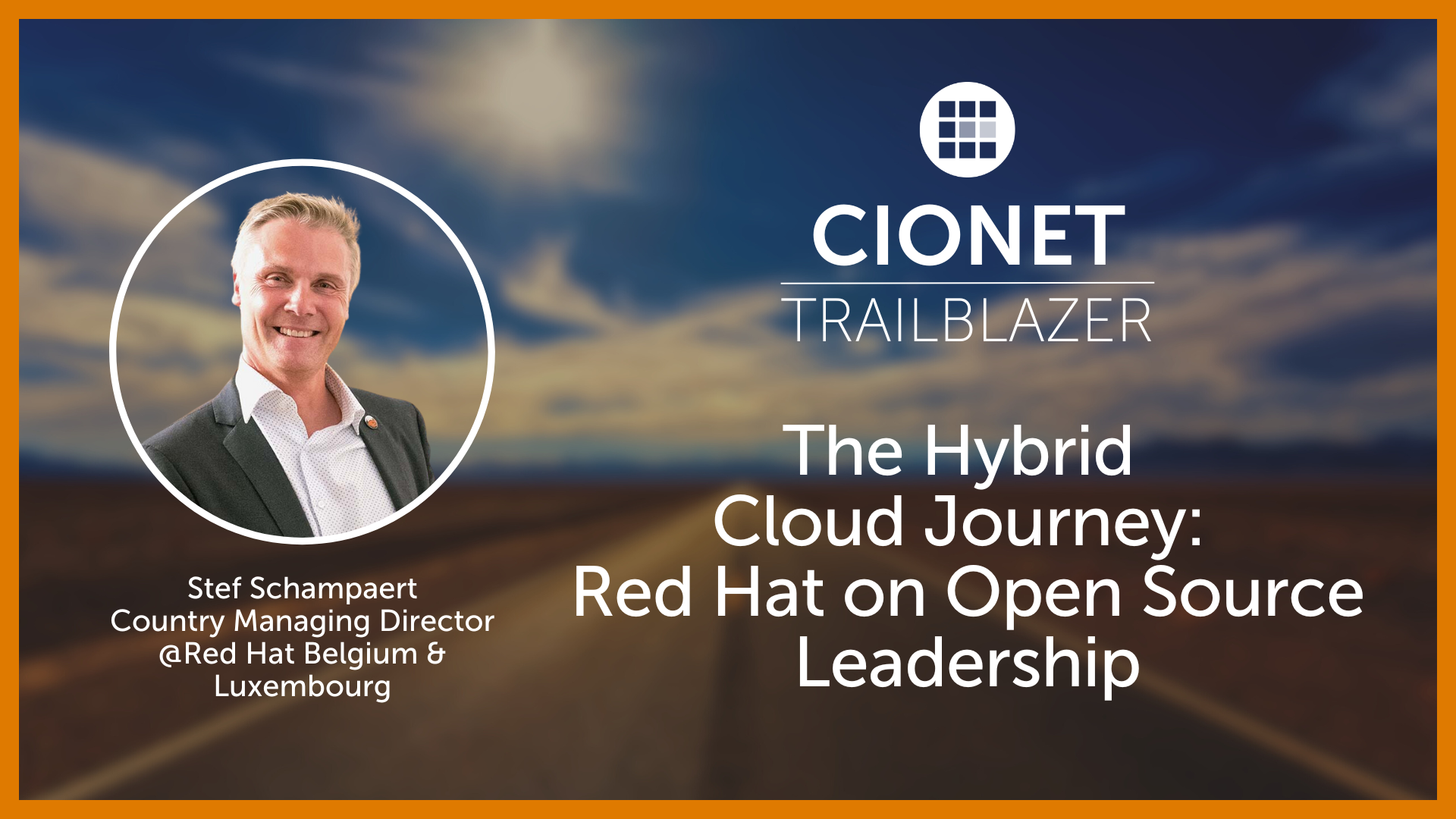
Published on: October 30, 2024 @ 9:34 AM
.png)
Published on: October 29, 2024 @ 11:37 AM
.png)
Published on: September 27, 2024 @ 10:41 AM
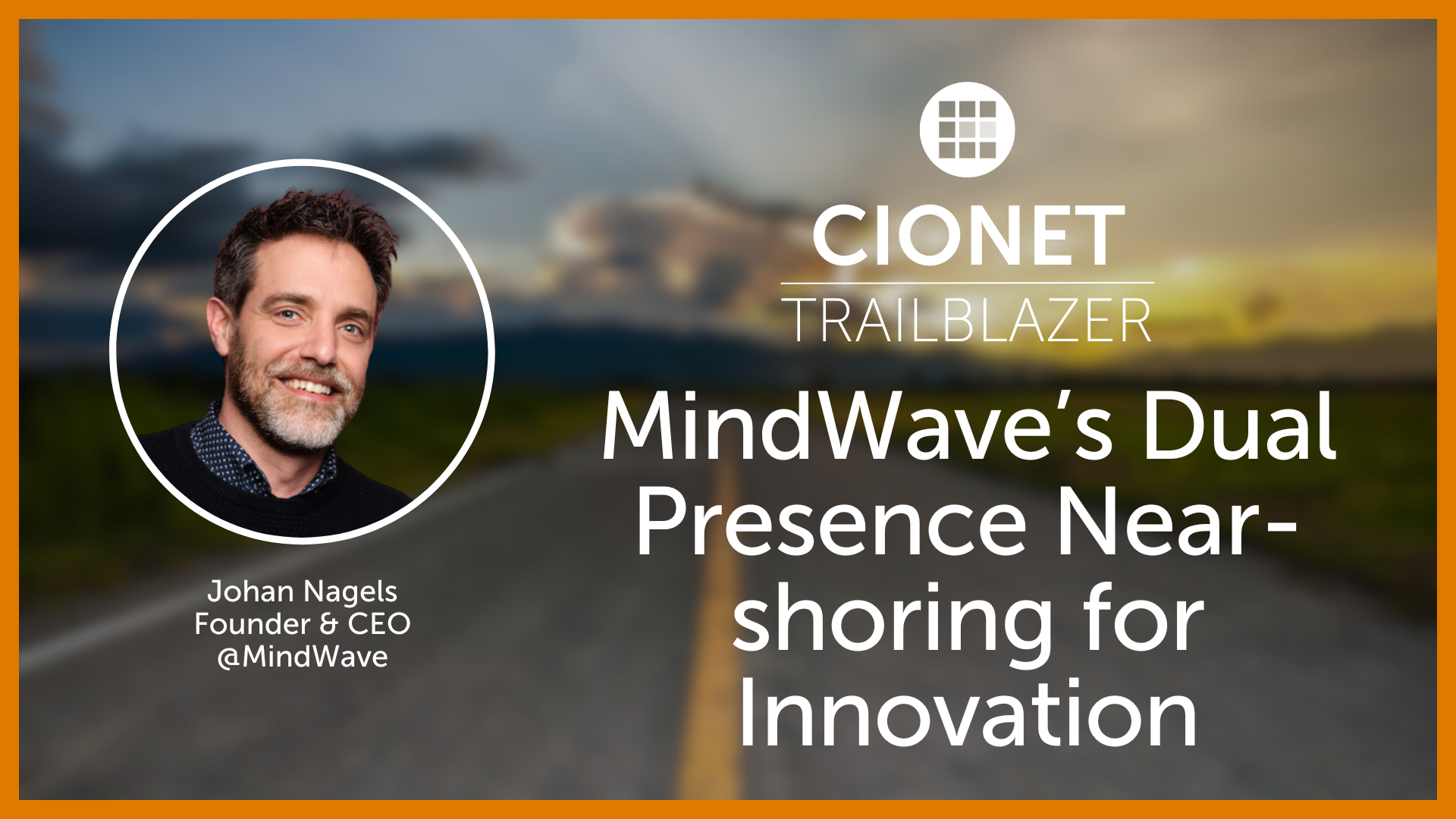
Published on: September 25, 2024 @ 8:59 AM
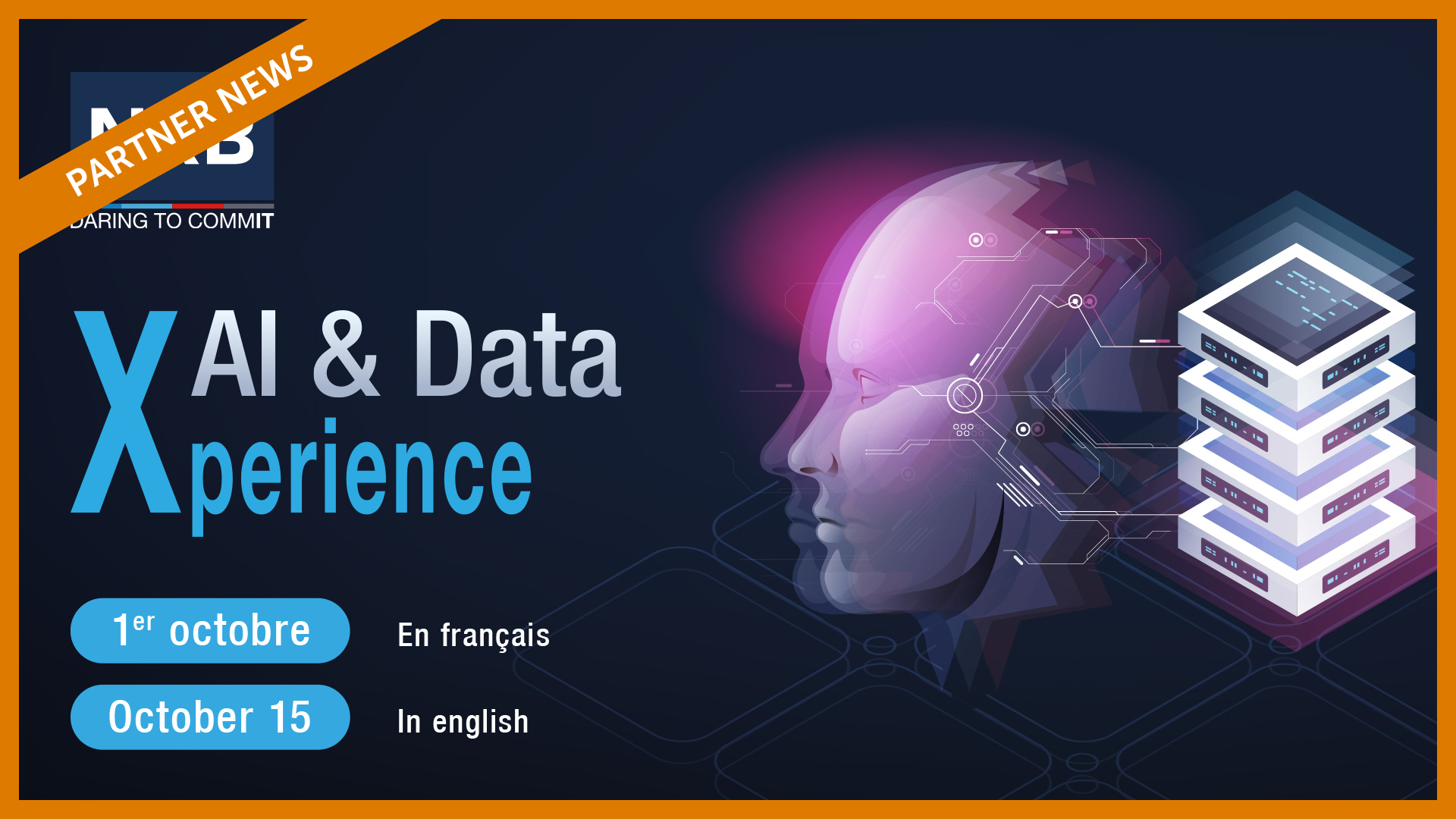
Published on: September 18, 2024 @ 3:44 PM
Published on: August 28, 2024 @ 10:10 AM
Belgian company HB Antwerp is redefining how natural diamonds are sourced, crafted, and sold. To gain better supply chains insight, HB Antwerp turned to Microsoft and its Dynamics 365 Finance, Dynamics 365 Project Operations, and Azure solutions.
If the ledger is from Microsoft, you are entering into an environment of familiarity with a quick learning curve. It’s not just scalable, it’s also easily accessible. - Shai de-Toledo: Co-founder & Managing Partner - HB Antwerp
In 2020, HB Antwerp, a Belgian diamond company with a fresh perspective, set out to challenge the age-old opacity of the industry. Co-founder Shai de-Toledo aptly summed up the problem: "You could tell me the diamonds came from Mars, and I'd have to take your word for it." Unlike luxury retail sectors with compelling stories for each item, the diamond industry lacked transparency. HB Antwerp aimed to redefine how natural diamonds are sourced and presented, introducing digital twins for every stone and unveiling each gem's journey from origin to artistry. In an era where trust is paramount, HB Antwerp is rewriting the rules, one diamond at a time.
The company wanted to build a new supply chain for diamonds to increase transparency on the origin of the diamonds for stakeholders and customers. “Since we know everything that doesn’t work, we tried to do exactly the opposite,” says de-Toledo. The reimagined supply chain ecosystem needed to be built on the idea that a diamond belongs to the community that mines it. These stakeholders include the miners themselves, community members, investors, and even the government.
First, HB Antwerp had to meet the challenge of tracing something that was previously considered untraceable. “It wasn’t considered untraceable because we’re geniuses and we discovered a new system, but because no one had the incentive to,” says de-Toledo. The biggest issue was because of segmentation; because diamonds traverse many different companies, each company did not want to know the diamond’s origin to avoid responsibility.
The company wanted to create incentives at the two ends of the supply chain. One, from the point of view of the producer of the diamond, who wants to distinguish their stones and protect their contribution to the economy. And also from the point of view of the consumer, who is eager to learn the provenance and overall story of the diamond.
HB Antwerp wants consumers to know that they are entitled to information on the diamond transformation process. The company needed a solution that could create a digital twin to the physical diamond, allowing stakeholders to tell the true story of the diamond. The solution would form a blueprint to show how all tracking could be done in one place. “We build the physical infrastructure and supply the distribution, and we allow all stakeholders to follow the journey of every single stone,” says de-Toledo.
It would also need to come from a company that consumers trust. Global familiarity and confidence in Microsoft technology was a key factor in choosing the overall partnership between Industry Solutions Delivery and HB Antwerp, including the block-chain based Azure Confidential Ledger in conjunction with Azure SQL Database, Dynamics 365 Finance, and Dynamics 365 Project Operations. “Microsoft is part of that trust. You never question if Microsoft technology is authentic, if due diligence was done, or if it’s safe,” says de-Toledo. The Microsoft solution provides a safe place to deposit information with a high level of scrutiny and auditing. De-Toledo adds, “We put the benchmark really high in the hopes that other companies will create the same level of auditing and investment and meet us there. But until they do, we want to say, ‘Look, this is how it’s done.’”
Employees use Azure Confidential Ledger and Azure SQL Database to track touchpoints through roughly 3,000 block chain nodes, the device and stakeholder pairs that record and verify transactions in a decentralized network. These touchpoints are divided into six macro sections which represent the different status of a stone, from the mine through productions. The ledger helps tell an authentic and honest story of the diamond, which transforms something as technical as a ledger into an exciting tool at the heart of the company’s mission.
"Commencing in a data-scarce landscape, we pioneered the establishment of a data benchmark, setting a precedent for others to emulate. With our innovative solution, HB Antwerp has unlocked the ability to make highly accurate profit predictions, significantly reduce errors, enhance communication, and optimize overall value creation,” says de-Toledo. A paramount advantage offered by Azure Confidential Ledger and the Azure SQL Database is their capacity to transform data into streamlined protocols, facilitating seamless scalability and ensuring accessibility. Shai de-Toledo underscores the importance, stating, “To effect change, every stone must be meticulously tracked and verified within our system. With the Microsoft ledger, we not only gain scalability but also enjoy a user-friendly environment with a short learning curve. It's not just scalable; it's effortlessly accessible.”
These factors had a part in choosing Dynamics 365 Finance and Dynamics 365 Project Operations as well, alongside the need to pick mature technology. De-Toledo adds, “It starts with how you authenticate yourself when you enter Teams, and it ends with the ease of how you input information and how you receive it. There’s an unprecedented level of maturity, collaboration, and relationship to new products like Copilot, which are crucial to growth.”
Employees use Dynamics 365 Finance and Dynamics Project Operations to manage the financial outcomes of transactions and the IoT, and Power BI and Power Apps to visualize the traceability of the stone. “Over the last year and a half, there have been so many new tools that Microsoft has added to help us get what we need,” says de-Toledo. Building an app that would speak to the same SQL used to be a question of six months, now it might take two days.
The biggest benefit to the Botswanan government and citizens is ownership, allowing producers to reap the financial benefits of their products. And in turn, giving customers the opportunity to see how their purchases are transforming the Botswanan economy and the life of its citizens.
HB Antwerp has been tracing 100 percent of the stones passing through its Mineral Infrastructure since day one. In the first three years of operation, HB Antwerp traced an amount of 500 million USD in diamonds. In 2024, the company plans to up the value of diamonds tracked to one billion US dollars. In terms of continuing to use AI like Copilot, de-Toledo says that 60 percent of emails are written with AI, suggesting the importance of AI to the future of the company. The company is also looking to grow by hiring more employees to expand the mission and track other precious stones with the Microsoft ecosystem.
What started as a mission to collect data on diamonds has developed into a robust solution that is also applicable to other minerals, but even more importantly, turned out to be a great catalyzer to mine data, finding useful data patterns and trends for better business insights and predictions. HB Antwerp has embraced the move from being just a diamond company to a data company. “It’s about how do you mine data and create scalability on it that attracts different humans, companies, and institutions who want to be a part of the story, and that’s how we aim to grow,” says de-Toledo.
There’s an unprecedented level of maturity, collaboration, and relationship to new products like Copilot, which are crucial to growth. - Shai de-Toledo: Co-founder & Managing Partner - HB Antwerp
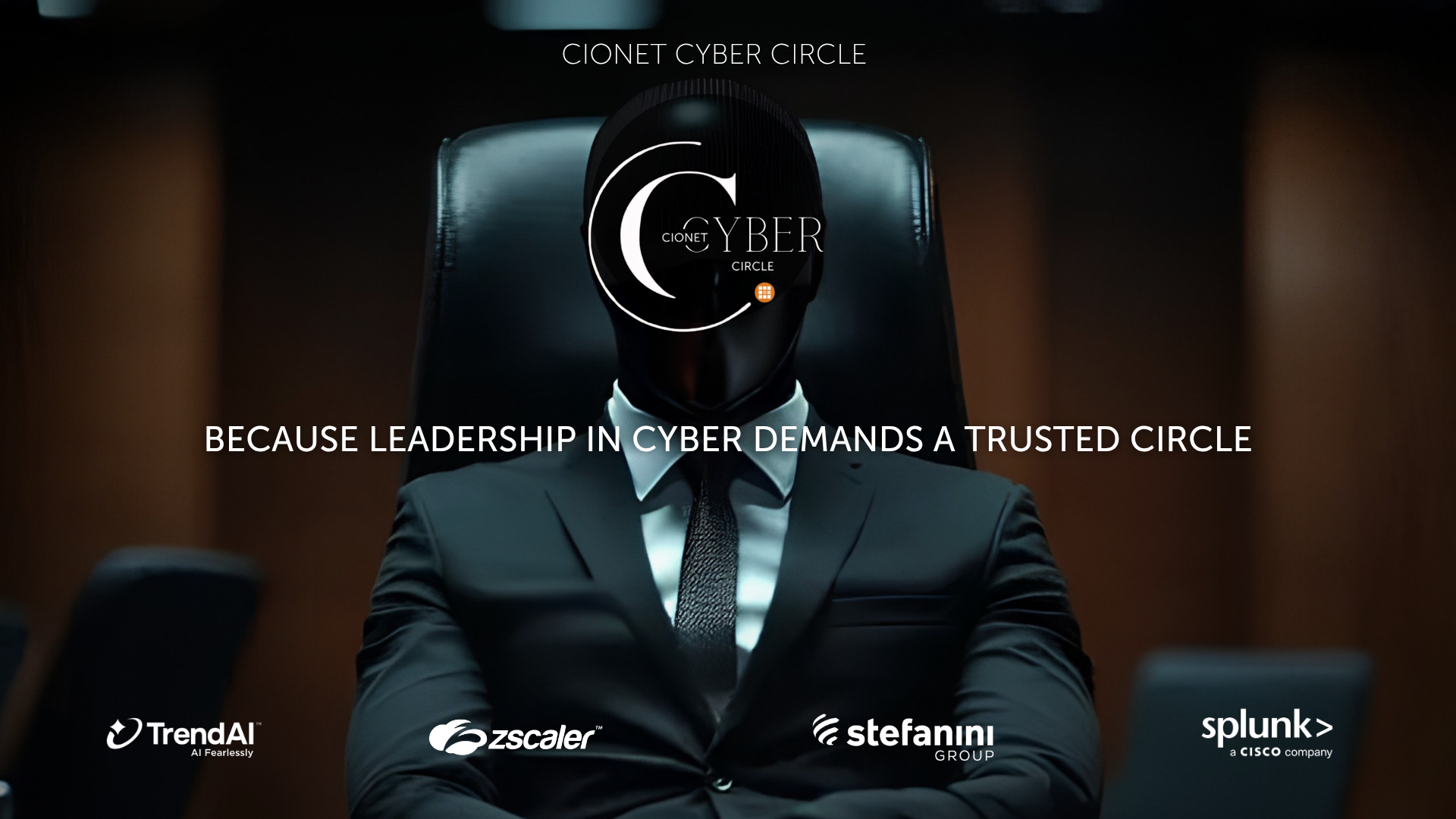
CIONET’s Cyber Circle: a new three-event programme exclusively focusing on the most urgent, complex, and high-impact challenges in cybersecurity today. Launched in 2026, this initiative brings together CISOs, CIOs, and senior IT executives with a strong interest in cybersecurity for three curated gatherings each year. As part of CIONET’s trusted executive community, the Cyber Circle provides a confidential, peer-driven environment to exchange insights, share real-world experiences, and address evolving cyber threats. Each session is designed to foster strategic dialogue, strengthen resilience, and elevate cybersecurity as a core driver of business value.
Read More.png)
The Telenet Business Leadership Circle powered by CIONET, offers a platform where IT executives and thought leaders can meet to inspire each other and share best practices. We want to be a facilitator who helps you optimise the performance of your IT function and your business by embracing the endless opportunities that digital change brings.
Read More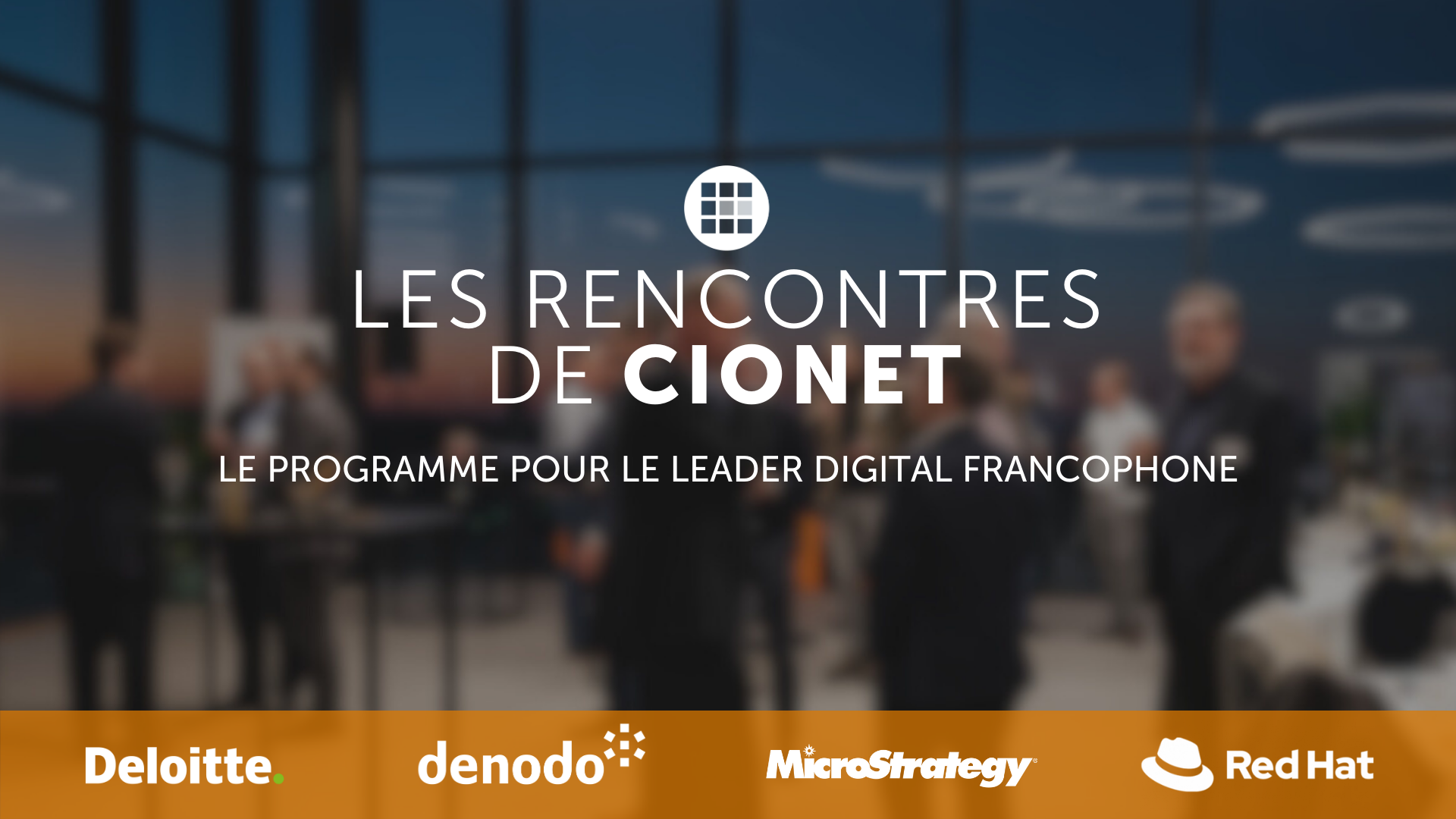
Découvrez la dynamique du leadership numérique aux Rencontres de CIONET, le programme francophone exclusif de CIONET pour les leaders numériques en Belgique, rendu possible grâce au soutien et à l'engagement de nos partenaires de programme : Deloitte, Denodo et Red Hat. Rejoignez trois événements inspirants par an à Liège, Namur et en Brabant Wallon, où des CIOs et des experts numériques francophones de premier plan partagent leurs perspectives et expériences sur des thèmes d'affaires et de IT actuels. Laissez-vous inspirer et apprenez des meilleurs du secteur lors de sessions captivantes conçues spécialement pour soutenir et enrichir votre rôle en tant que CIO pair. Ne manquez pas cette opportunité de faire partie d'un réseau exceptionnel d'innovateurs numériques !
Read More.jpg)
CIONET is committed to highlighting and celebrating female role models in IT, Tech & Digital, creating a leadership programme that empowers and elevates women within the tech industry. This initiative is dedicated to showcasing the achievements and successes of leading women, fostering an environment where female role models are recognised, and their contributions can ignite progress and inspire the next generation of women in IT. Our mission is to shine the spotlight a little brighter on female role models in IT, Tech & Digital, and to empower each other through this inner network community.
Read More


-Apr-01-2022-10-58-34-57-AM.png)









-Dec-13-2023-10-53-15-5032-AM.png)



-Jun-12-2023-01-23-11-7540-PM.png)



-Apr-01-2022-10-58-34-68-AM.png)






.png)


%20(003).png)

.png)


.png)








-Sep-01-2022-02-47-55-60-PM.png)
-Nov-22-2023-08-56-42-6802-AM.png)
.png)


.png "be-page-banner (1)")
.png)
.png)
.png)
.png)