

.png)
Belgium 20-10-2026 Squad Only Virtual English
Cloud decisions are becoming more selective. The challenge is deciding where each workload should run based on cost, performance, control, resilience, sovereignty, and business need. Three pressure points usually drive the decision. - Cost visibility becomes harder when usage grows across cloud services, data platforms, and AI workloads. - Performance and latency matter more when systems need fast access to data or support operational processes. - Sovereignty and resilience become critical when data location, continuity, vendor dependency, and exit options enter the discussion. The working question is simple: how do we place workloads where they create the most value while keeping the hybrid landscape manageable? If these trade-offs are on your agenda, let’s compare how others are handling similar choices.
Read More.png)
Belgium 10-11-2026 Squad Only Virtual English
Data platforms are meant to simplify access and support better use of data. The challenge is choosing and governing the platform landscape in a way that creates consistency, reuse, and long-term value. Three pressure points usually appear. - Platform choice becomes difficult when teams have different needs for speed, flexibility, cost, and control. - Business meaning needs protection: customer, revenue, product, risk, and FTE need shared definitions across tools. - Ownership and governance need to be clear, so platforms grow with accountability and discipline. The working question is simple: how do we give teams the data capabilities they need while keeping the platform landscape understandable, governed, and reusable? If these questions are familiar, let’s compare approaches with others facing the same data landscape.
Read More.png)
Belgium 13-11-2026 Squad Only Physical English
Many IT capabilities are essential and difficult to fund through a simple project ROI. The challenge is showing why architecture, governance, resilience, cybersecurity maturity, data foundations, and AI readiness deserve investment before the gap becomes expensive. Three pressure points make the case harder. - Shared value means the benefit often sits across several teams, while the budget sits in one place. - Timing creates friction because the cost is immediate while the value appears over time. - Risk translation is needed so business and finance leaders understand the consequence of delaying the investment. The working question is simple: how do we turn foundational IT capabilities into credible investment cases that link cost, risk, business value, and future flexibility? If you are building these cases internally, let’s compare how others are positioning value, risk, and timing.
Read More
Published on: September 30, 2026 @ 1:17 PM

Published on: August 26, 2026 @ 9:13 AM
Published on: July 29, 2026 @ 10:08 AM

Published on: June 24, 2026 @ 5:00 PM

Published on: May 27, 2026 @ 9:21 AM
Published on: May 07, 2026 @ 4:02 PM
.png)
Published on: April 29, 2026 @ 9:11 AM
Published on: March 26, 2026 @ 3:37 PM
-2.png)
Published on: March 25, 2026 @ 9:58 AM

Published on: March 13, 2026 @ 3:43 PM
-Feb-25-2026-10-01-07-2508-AM.png)
Published on: February 25, 2026 @ 11:01 AM
.png)
Published on: February 25, 2026 @ 9:00 AM

Published on: February 24, 2026 @ 5:00 PM
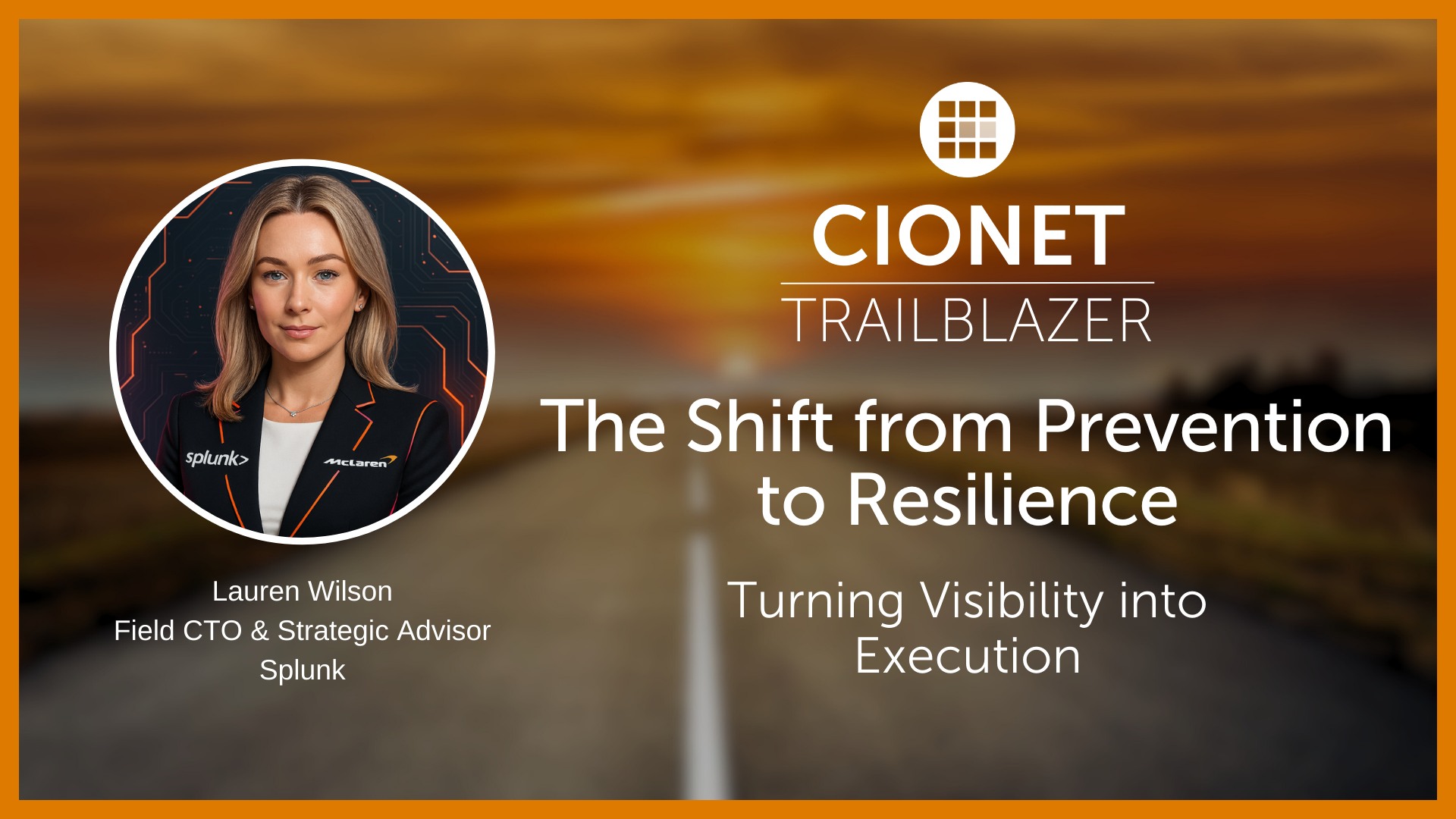
CIONET Trailblazer: CISO: The Shift from Prevention to Resilience: Turning Visibility into Execution
Published on: January 28, 2026 @ 9:48 AM

CIONET Trailblazer: AI Transformation: Bridging the Cultural Divide to Achieve Competitive Advantage
Published on: December 17, 2025 @ 9:16 AM

Published on: October 29, 2025 @ 11:31 AM
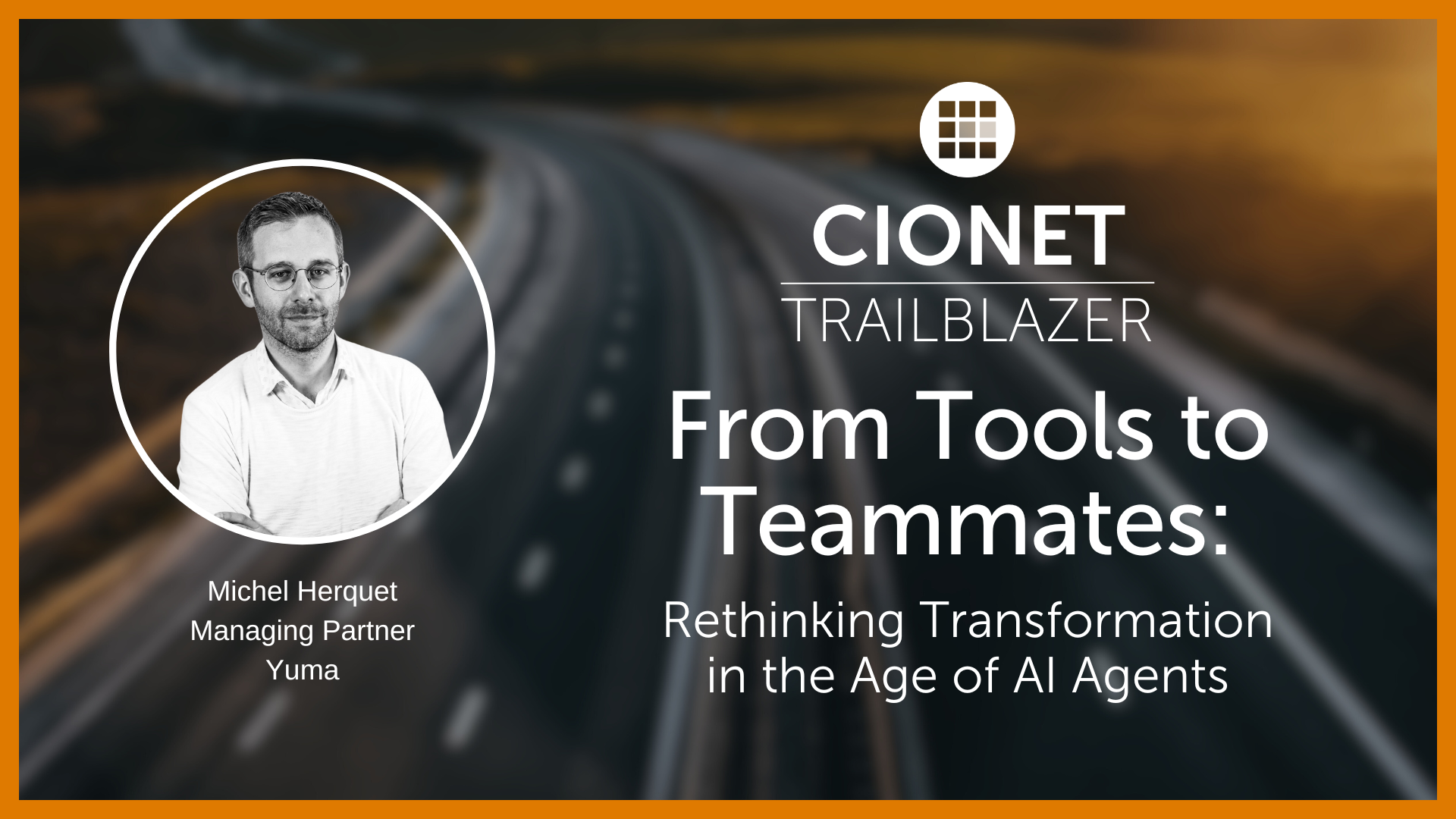
Published on: July 30, 2025 @ 9:19 AM

Published on: June 25, 2025 @ 9:14 AM
.png)
Published on: April 30, 2025 @ 9:04 AM
-1.png)
Published on: March 26, 2025 @ 9:59 AM
-1.png)
Published on: March 04, 2025 @ 5:07 PM

Published on: February 26, 2025 @ 10:51 AM
Published on: February 25, 2025 @ 4:14 PM
-4.png)
Published on: February 25, 2025 @ 10:33 AM

Published on: January 29, 2025 @ 9:58 AM
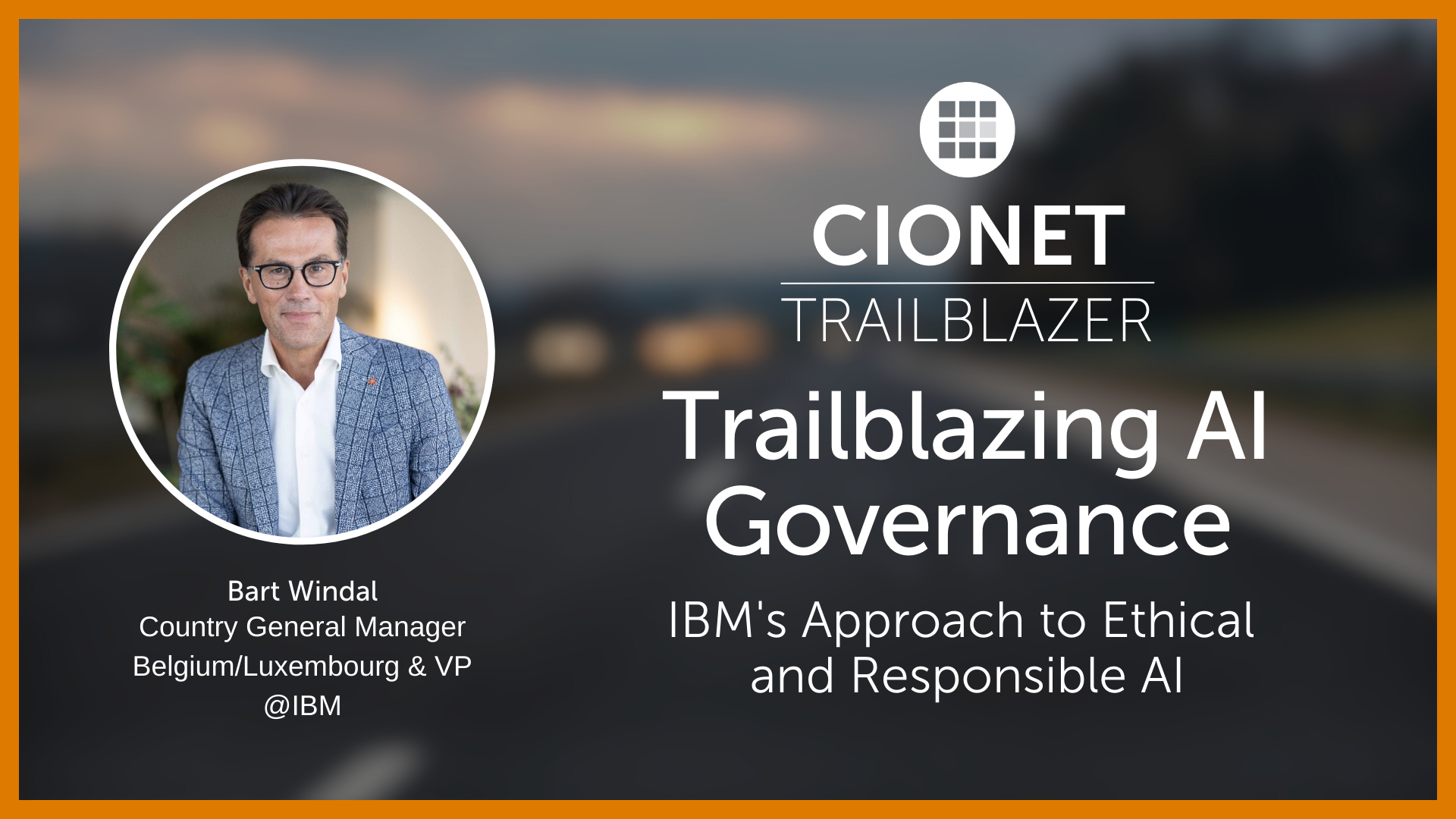
Published on: December 18, 2024 @ 9:07 AM
Published on: October 30, 2024 @ 9:34 AM
.png)
Published on: October 29, 2024 @ 11:37 AM
.png)
Published on: September 27, 2024 @ 10:41 AM
Published on: September 25, 2024 @ 8:59 AM

Published on: September 18, 2024 @ 3:44 PM

Published on: August 28, 2024 @ 10:10 AM

Bayer's employees are leveraging cutting-edge technologies, including generative AI and Microsoft Copilot, to address the challenges of promoting healthier, disease-free lives. Bayer's exploration of generative AI has yielded over 700 potential applications, and this number continues to expand.
Bayer has been committed to its purpose, “Science for a better life,” for more than a century and a half. As a leading company in life sciences, it understands the possibilities that emerging technologies bring. “We are very open to trying new technologies, such as Microsoft Copilot, to stay at the forefront of innovation. Our employees have more power to support farmers, help cure diseases, and see consumers healthier,” says Christoph Sieger, Vice President, Head of Global Digital Workplace at Bayer.
Bayer is experimenting with Microsoft Copilot across its Crop Science, Pharmaceutical, and Consumer Health divisions to understand its potential impact and value across functions. “We are seeing a lot of curiosity in our HR, R&D, IT, Procurement, and Marketing groups. Already, people are saying they are getting more productive every day,” says Sieger. Employees are getting better insights from meetings and quickly discovering documents, which makes collaboration simpler.
”We have more than 700 use cases for generative AI; we are seeing a big impact,” says Sarah Lewandowski, Global Technology & Innovation Lead at Bayer. “Copilot use cases are growing. In Microsoft 365, easily getting data from Excel files, creating a first draft in Word, or creating a PowerPoint presentation are some of the top examples.”
For many employees, including Lewandowski, Copilot reduces the overload of communications by summarizing emails and attachments, providing an initial draft of a message or content for a document, or expediting the process to search for data. As a result, it saves hundreds of hours that would be spent looking for information. Copilot also improves collaboration by making it easier to find out who is working on research projects worldwide.
“Last week I received an email with five documents attached. Each one had approximately 20 to 50 pages each. I asked Microsoft Copilot to give me a summary which saved me about 45 minutes of reading time,” Sieger explains.

Lewandowski receives feedback from employees and can attest to the benefits she is experiencing with Copilot. “We are seeing meaningful impact in our daily lives. It makes a difference when we are able to find information faster or we are shown relevant content,” she says. “We are more agile; Microsoft Copilot is helping us to have the right information at our fingertips.”
Copilot is providing value in three main areas, according to Sieger. First is increased productivity. He notes that employees are now more productive answering emails, sorting messages, and reviewing documents. Second is collaboration. It’s easier to find who is doing what on projects to be able to work collaboratively together. People can connect with each other to share and sort through ideas easily. Third is creativity. Copilot generates ideas and suggestions to start a first draft. The use cases continue to grow daily.

Bayer’s Crop Science division developed a new way to manage research models for their work on identifying potential insecticides, fungicides, and herbicides to help farmers have their crops flourish. Every day, new data is added to the decades of existing research, creating difficulties for teams using these unstructured data sources recorded in slide decks or reports. The team faced several obstacles in the process of trying to identify information in the studies, find existing models, and know who was conducting what research, because of the overwhelming volume of information.
Working with Microsoft Teams engineering, Bayer developed the Model Store, a Copilot plugin, which leverages extensibility provided by the Teams platform to search for information using natural language, as well as PowerApps embedded in Teams, as the interface to the scientific data stored in Bayer’s knowledge repository. The Model Store closes communication gaps between Bayer’s data scientists and laboratory researchers, locates the source of the data faster and reduces the barriers to finding information.
“Technology is an essential part of what I’m doing. Most of our projects are a couple of decks or reports, and digging through these is a tedious task, because often what you need is a specific chemistry detail from a model. Understanding who knows what and getting that contact to help you solve a task can take up quite some time,” says Florian Häse, Research Scientist at Bayer.

Häse reflects on the big challenges that Copilot is helping solve. In one example, a researcher in the United States was working on a project that would require a significant amount of time to complete. By using Copilot to investigate the Model Store, the researcher identified a predictive model developed by a researcher in Germany, preventing a duplicate model from being developed and saving two to three months of work. The researcher moved forward with better knowledge to solve the outstanding issues. By bridging time zones and research teams, Microsoft Copilot prevents potentially redundant work, which speeds up the time to get a product to farmers.
“Having Microsoft Copilot at my side to help me find information and point of contact immediately is incredibly helpful. You can now just use plain language, saying something like, ‘I need a model for this specific experiment,’ or, ‘Is there something with this idea.’ Previously, it could take days, if not weeks, to find the information,” explains Häse. “Microsoft Copilot immediately extracts the relevant models for a certain task and connects you to your colleagues in Microsoft Teams.”
Bayer’s IT department has piloted Microsoft Copilot with GitHub to developers to help them build their code knowledge and speed up their development process. “Developers are thrilled with a virtual assistant providing ideas on how to create the right code. For junior developers learning new languages, or someone who might not have recently used a language, it increases the speed of knowledge,” says Lewandowski.
With innovation as a core strength at Bayer, the company is continually seeking new areas where Copilot will bring value. Part of the company’s ethos is to look to trusted partners like Microsoft to help it continue to stay ahead with emerging technologies.
Bayer sees employees, both technical and non-technical, coming together to passionately discuss how Copilot can help them have a big impact every day. Lewandowski says, “The first experience with Copilot sparks the imagination of what it can do, and people are sharing how it’s working for them. Demand is increasing as we continue to use it.”
Bayer employees are experiencing a greater potential to move faster, because Microsoft Copilot is eliminating mundane tasks and providing insights into the wide range of projects happening across the company. “Copilot gives our employees more power and more freedom to focus on our mission: “Health for all, hunger for none,” says Sieger.
Bayer discovers and generates new knowledge every day in a world that is changing at an unprecedented rate. It will continue to experiment with Microsoft Copilot as a tool that helps employees spend more time on developing innovative products and getting them to market faster to support farmers with their crops, help cure diseases, and enable consumers to be healthier.

CIONET’s Cyber Circle: a new three-event programme exclusively focusing on the most urgent, complex, and high-impact challenges in cybersecurity today. Launched in 2026, this initiative brings together CISOs, CIOs, and senior IT executives with a strong interest in cybersecurity for three curated gatherings each year. As part of CIONET’s trusted executive community, the Cyber Circle provides a confidential, peer-driven environment to exchange insights, share real-world experiences, and address evolving cyber threats. Each session is designed to foster strategic dialogue, strengthen resilience, and elevate cybersecurity as a core driver of business value.
Read More.png)
The Telenet Business Leadership Circle powered by CIONET, offers a platform where IT executives and thought leaders can meet to inspire each other and share best practices. We want to be a facilitator who helps you optimise the performance of your IT function and your business by embracing the endless opportunities that digital change brings.
Read More
Découvrez la dynamique du leadership numérique aux Rencontres de CIONET, le programme francophone exclusif de CIONET pour les leaders numériques en Belgique, rendu possible grâce au soutien et à l'engagement de nos partenaires de programme : Deloitte, Denodo et Red Hat. Rejoignez trois événements inspirants par an à Liège, Namur et en Brabant Wallon, où des CIOs et des experts numériques francophones de premier plan partagent leurs perspectives et expériences sur des thèmes d'affaires et de IT actuels. Laissez-vous inspirer et apprenez des meilleurs du secteur lors de sessions captivantes conçues spécialement pour soutenir et enrichir votre rôle en tant que CIO pair. Ne manquez pas cette opportunité de faire partie d'un réseau exceptionnel d'innovateurs numériques !
Read More.jpg)
CIONET is committed to highlighting and celebrating female role models in IT, Tech & Digital, creating a leadership programme that empowers and elevates women within the tech industry. This initiative is dedicated to showcasing the achievements and successes of leading women, fostering an environment where female role models are recognised, and their contributions can ignite progress and inspire the next generation of women in IT. Our mission is to shine the spotlight a little brighter on female role models in IT, Tech & Digital, and to empower each other through this inner network community.
Read More


-Apr-01-2022-10-58-34-57-AM.png)









-Dec-13-2023-10-53-15-5032-AM.png)



-Jun-12-2023-01-23-11-7540-PM.png)




-Apr-01-2022-10-58-34-68-AM.png)






.png)





%20(003).png)





.png)






.png)











-Sep-01-2022-02-47-55-60-PM.png)
-Nov-22-2023-08-56-42-6802-AM.png)
.png)


.png "be-page-banner (1)")

.png)
.png)
.png)
.png)